Product Description
Product Description
2BE series water ring vacuum pump and compressor, based on many years of scientific research results and production experience, combined with the international advanced technology of similar products, developed high efficiency and energy saving products, usually used for pumping no CZPT particles, insoluble in water, no corrosion gas, in order to form a vacuum and pressure in a closed container. By changing the structure material, it can also be used to suck corrosive gas or to use corrosive liquid as working fluid. Widely used in papermaking, chemical, petrochemical, light industry, pharmaceutical, food, metallurgy, building materials, electrical appliances, coal washing, mineral processing, chemical fertilizer and other industries.
This series of pumps uses the CZPT single action structure, has the advantages of simple structure, convenient maintenance, reliable operation, high efficiency and energy saving, and can adapt to large displacement, load impact fluctuation and other harsh conditions.
The key components, such as the distribution plate, impeller and pump shaft, have been optimized to simplify the structure, improve the performance and achieve energy saving. The welding impeller is used, the blade is pressed and formed once, and the shape line is reasonable; Hub processing, fundamentally solve the dynamic balance problem. Impeller and pump shaft are fitted with hot filling interference, reliable performance. It runs smoothly. After the impeller is welded, the whole is subjected to good heat treatment, and the blade has good toughness, so that the impact resistance and bending resistance of the blade can be fundamentally guaranteed, and it can adapt to the bad working conditions of load impact fluctuation.
2BE series pump, with air and water separator, multi-position exhaust port, pump cover is provided with exhaust valve overhaul window, impeller and distribution plate clearance through positioning bearing gland at both ends of the adjustment, easy to install and use, simple operation, easy maintenance.
Pump structure
The performance curve of this series of pumps is measured under the following working conditions: the suction medium is 20°C saturated air, the working liquid temperature is 15°C, the exhaust pressure is 1013mbar, and the deviation of soil is 10%.
Structure declaration
2BEA-10-25 Structure diagram
1.Flat key 2. Shaft 3. Oil deflector 4. Bearing cap 5. Bearings 6. Bearing bracket 7.Brasque cover
8.Brasque body 9. Brasque ring 10. Brasque 11.Valve plate 12. Valve block
13.Front distribution plate 14.Pump body 15. Impeller 16. O seal ring.
17.Back distribution plate 18. Side cover. 19. Flat key 20. Axle sleeve 21. Elastic collar
22.Water retaining ring 23. Adjusting washer 24. Rear bearing body 25. Bearing screw cap
26.Bearing 27. Bolt
2BEA-30-70 Structure diagram
1.Flat key 2. Shaft 3. Oil deflector 4. Front bearing retainer 5. Front bearing body
6. Front bearing inner cover 7. Front side cover 8. Brasque cover 9. Brasque body 10. Brasque ring
11. Brasque 12. Front distribution plate 13. Pump body 14. Impeller 15. O seal ring
16. Valve block 17. Valve plate 18. Back distribution plate 19. Axle sleeve 20. Flat key
21. Back side cover 22. Water retaining ring 23. Rear bearing inner cover 24. Bearing
25. Adjusting washer 26. Oil block 27. Rear bearing outer cover 28. Back bearing body
29. Oil baffle disc 30. Elastic retainer or circular spiral
Product Parameters
| Model | 2BEA SERIES | |
| Minimum suction absolute pressure (hPa) | 33-160 | |
| Suction intensity(m³/min) | Absolute inhalation capacity 60hPa | 3,95-336 |
| Absolute inhalation capacity 100hPa | 4.58-342 | |
| Absolute inhalation capacity 200hPa | 4.87-352 | |
| Absolute inhalation capacity 400hPa | 4.93-353 | |
| Max. shaft power(kw) | 7-453 | |
| Motor power(kw) | 11-560 | |
| Speed(rpm) | 197-1750 | |
| Weight(kg) | 235-11800 | |
| Size | 795*375*355mm-3185*2110*2045mm | |
| Model | 2BEC SERIES | |
| Minimum suction absolute pressure (hPa) | 160 | |
| Suction intensity(m³/min) | Absolute inhalation capacity 60hPa | 63-1700 |
| Absolute inhalation capacity 100hPa | 64-1738 | |
| Absolute inhalation capacity 200hPa | 65-1785 | |
| Absolute inhalation capacity 400hPa | 67-1800 | |
| Absolute inhalation capacity 550hPa | 68-1830 | |
| Max. shaft power(kw) | 61-2100 | |
| Motor power(kw) | 75-2240 | |
| Speed(rpm) | 105-610 | |
| Weight(kg) | 2930-57500 | |
| Size | 2102*1320*1160mm-5485*3560*3400mm | |
Detailed Photos
Operation site
Company presentation
Product gallery
RFQ
Q1. What is your terms of packing?
A: Generally, we pack our goods in neutral export wooden case . If you have legally registered patent, we can pack the goods in
wooden case with your own marks after getting your authorization letters.
Q2. What is your termsof payment?
A: T/T 30% as deposit, and 70% before delivery. We’ll show you the photos of the products and packages before you pay the balance.
Q3. What is your terms of delivery?
A: EXW, FOB, CFR, CIF, etc.
Q4. How about your delivery time?
A: Generally, it will take from 10 dasys to 30 days after receiving your advance payment according to the pump’s material. The
specific delivery time also depends on the items and the quantity of your order.
Q5. Can you produce according to the samples?
A: Yes, we can produce by your samples or technical drawings. We can build the molds and fixtures.
Q6. What is your sample policy?
A: We can supply the sample if we have ready parts in stock, but the customers have to pay the sample cost and the courier cost.
Q7. Do you test all your goods before delivery?
A: Yes, we have 100% test the pumps before delivery .
Q8: How do you make our business long-term and good relationship?
A. We keep good quality and competitive price to ensure our customers benefit ;
B. We respect every customer as our friend and we sincerely do business and make friends with them, no matter where they are from.
/* January 22, 2571 19:08:37 */!function(){function s(e,r){var a,o={};try{e&&e.split(“,”).forEach(function(e,t){e&&(a=e.match(/(.*?):(.*)$/))&&1
| Warranty: | 1 Years |
|---|---|
| Oil or Not: | Oil Free |
| Structure: | Rotary Vacuum Pump |
| Exhauster Method: | Kinetic Vacuum Pump |
| Vacuum Degree: | High Vacuum |
| Work Function: | Mainsuction Pump |
| Customization: |
Available
|
|
|---|
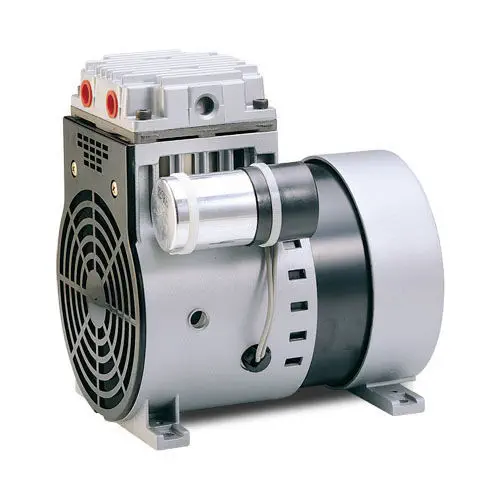
What Are the Typical Applications of Piston Vacuum Pumps?
Piston vacuum pumps find applications in various industries and processes. Here’s a detailed explanation of the typical applications of piston vacuum pumps:
1. Laboratories and Research Facilities:
– Piston vacuum pumps are commonly used in laboratories and research facilities for a wide range of applications.
– They are utilized in vacuum ovens, freeze dryers, vacuum filtration systems, and other equipment requiring controlled evacuation.
2. Pharmaceuticals and Biotechnology:
– In the pharmaceutical and biotechnology industries, piston vacuum pumps are employed for processes such as solvent evaporation, distillation, and filtration.
– They are used in drug manufacturing, vaccine production, and research involving biochemistry and molecular biology.
3. Food Processing and Packaging:
– Piston vacuum pumps play a vital role in the food processing and packaging industry.
– They are used in vacuum packaging machines to remove air from packaging containers, extending the shelf life of food products.
4. HVAC and Refrigeration Systems:
– Piston vacuum pumps are utilized in HVAC (Heating, Ventilation, and Air Conditioning) systems and refrigeration systems.
– They help evacuate air and moisture from the systems to achieve the desired pressure and prevent contamination.
5. Manufacturing and Industrial Processes:
– Piston vacuum pumps are employed in various manufacturing and industrial processes.
– They are used for degassing, vacuum impregnation, vacuum drying, and other applications that require controlled evacuation.
6. Automotive Industry:
– In the automotive industry, piston vacuum pumps are often used in brake booster systems.
– They create a vacuum to assist in brake actuation, providing the necessary power for braking.
7. Electronics and Semiconductor Manufacturing:
– Piston vacuum pumps are utilized in electronics and semiconductor manufacturing processes.
– They help create a controlled environment with low-pressure conditions during the production of microchips, integrated circuits, and other electronic components.
8. Environmental Monitoring and Analysis:
– Piston vacuum pumps are utilized in environmental monitoring and analysis equipment.
– They are used in air sampling devices, gas analyzers, and other instruments that require precise vacuum control.
9. Scientific Research and Vacuum Systems:
– Piston vacuum pumps are employed in various scientific research applications.
– They are used in vacuum systems for particle accelerators, electron microscopes, mass spectrometers, surface analysis instruments, and other scientific equipment.
In summary, piston vacuum pumps have diverse applications in laboratories, pharmaceuticals, food processing, HVAC systems, manufacturing processes, automotive industry, electronics, environmental monitoring, scientific research, and more. Their ability to provide controlled evacuation and achieve moderate vacuum levels makes them suitable for a wide range of industries and processes.
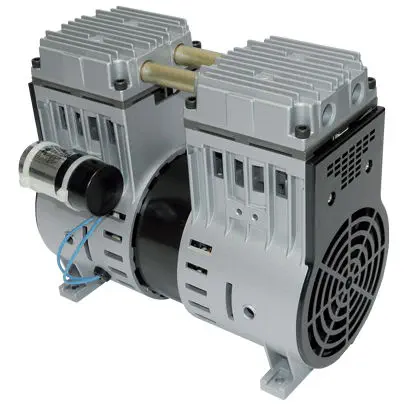
Are There Noise Considerations When Using Piston Vacuum Pumps?
Yes, there are noise considerations to take into account when using piston vacuum pumps. Here’s a detailed explanation:
– Piston vacuum pumps can generate noise during their operation, which is important to consider, especially in environments where noise levels need to be minimized.
– The noise produced by piston vacuum pumps is primarily caused by mechanical vibrations and the movement of internal components.
– The noise level can vary depending on factors such as the design and construction of the pump, the speed of operation, and the load conditions.
– Excessive noise from piston vacuum pumps can have several implications:
– Occupational Health and Safety: High noise levels can pose a risk to the health and safety of operators and personnel working in the vicinity of the pump. Prolonged exposure to loud noise can lead to hearing damage and other related health issues.
– Environmental Impact: In certain settings, such as residential areas or noise-sensitive locations, excessive noise from piston vacuum pumps may result in noise pollution and non-compliance with local noise regulations.
– Equipment Interference: Noise generated by the pump can interfere with the operation of nearby sensitive equipment, such as electronic devices or precision instruments, potentially affecting their performance.
– To mitigate the noise produced by piston vacuum pumps, several measures can be taken:
– Enclosures and Sound Insulation: Installing acoustic enclosures or sound-insulating materials around the pump can help contain and reduce the noise. These enclosures are designed to absorb or block the sound waves generated by the pump.
– Vibration Isolation: Using vibration isolation mounts or pads can help minimize the transmission of vibrations from the pump to surrounding structures, reducing the noise level.
– Maintenance and Lubrication: Regular maintenance, including lubrication of moving parts, can help reduce friction and mechanical noise generated by the pump.
– Operating Conditions: Adjusting the operating conditions of the pump, such as speed and load, within the manufacturer’s specified limits can help optimize performance and minimize noise generation.
– Location and Placement: Proper positioning and placement of the pump, considering factors such as distance from occupied areas or sensitive equipment, can help minimize the impact of noise.
– It is important to consult the manufacturer’s guidelines and recommendations regarding noise levels and any specific measures to mitigate noise for a particular piston vacuum pump model.
– Compliance with local regulations and standards regarding noise emissions should also be considered and adhered to.
In summary, noise considerations are important when using piston vacuum pumps to ensure the health and safety of personnel, minimize environmental impact, and prevent interference with other equipment. Measures such as enclosures, vibration isolation, maintenance, and proper operating conditions can help mitigate the noise generated by these pumps.
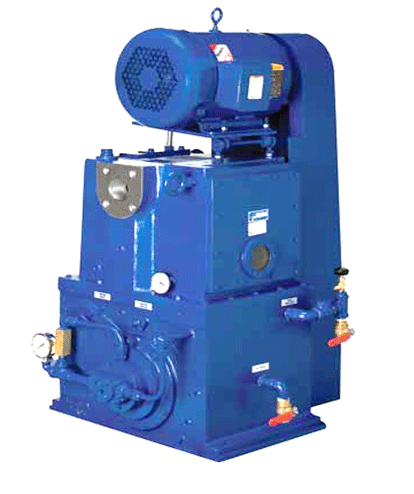
Are Piston Vacuum Pumps Suitable for Laboratory Use?
Yes, piston vacuum pumps are commonly used and well-suited for laboratory applications. Here’s a detailed explanation:
1. Versatility:
– Piston vacuum pumps offer versatility and can be utilized in a wide range of laboratory processes and equipment.
– They are compatible with various laboratory applications such as vacuum ovens, freeze dryers, vacuum filtration systems, and rotary evaporators.
2. Vacuum Generation:
– Piston vacuum pumps are capable of generating and maintaining deep vacuum levels, making them suitable for laboratory use.
– They can achieve vacuum levels ranging from millitorr (10-3 Torr) to microns (10-6 Torr), depending on the specific pump design and operating conditions.
3. Control and Precision:
– Piston vacuum pumps provide precise control over the vacuum level, allowing researchers to create and maintain the desired pressure conditions in their experiments.
– The pumps offer fine-tuning capabilities to achieve the optimal vacuum level required for specific laboratory processes.
4. Reliability and Durability:
– Piston vacuum pumps are known for their reliability and durability, which are crucial factors in laboratory environments.
– They are designed to withstand continuous operation and frequent use, ensuring consistent performance over extended periods.
5. Low Contamination Risk:
– Piston vacuum pumps are designed with airtight seals that minimize the risk of contamination.
– This is particularly important in laboratory settings where maintaining a clean and uncontaminated environment is vital for accurate and reliable experimental results.
6. Cost-Effective Solution:
– Piston vacuum pumps are generally more cost-effective compared to other types of vacuum pumps.
– They offer a balance between performance and affordability, making them a preferred choice for many laboratory budgets.
7. Ease of Maintenance:
– Piston vacuum pumps are relatively easy to maintain, with readily available spare parts and service support.
– Routine maintenance tasks such as changing oil, inspecting seals, and cleaning can be easily performed, ensuring the pump’s longevity and consistent performance.
In summary, piston vacuum pumps are highly suitable for laboratory use due to their versatility, ability to generate deep vacuum levels, precise control, reliability, low contamination risk, cost-effectiveness, and ease of maintenance. They are widely utilized in various laboratory applications and provide researchers with the necessary vacuum conditions for their experiments and processes.


editor by CX 2024-03-27