Product Description
PROFESSIONAL MANUFACTURE
— SINCE 1995
2BEC liquid ring rotary vane vacuum pump High Pressure Water Pump
The water ring pump was originally used as a self-priming water pump, and then gradually used in many industrial sectors such as petroleum, chemical industry, machinery, mining, light industry, medicine and food. In many processes of industrial production, such as vacuum filtration, vacuum water diversion, vacuum feeding, vacuum evaporation, vacuum concentration, vacuum rehydration and vacuum degassing, water ring pumps are widely used. Due to the rapid development of vacuum application technology, water ring pumps have always been valued in terms of obtaining rough vacuum. Because the gas compression in the water ring pump is isothermal, it can pump flammable and explosive gases, and also dust and water-containing gases. Therefore, the application of water ring pumps is increasing.
Product Description
The 2BEC type water ring vacuum pump and compressor are not only high efficiency and energy saving, but also very suitable for long-term, continuous operation.
Operating under rough vacuum, the working conditions of liquid ring pumps are often extremely harsh. The 2BEC water ring vacuum pump has been designed to fully consider that it must be able to pump all kinds of gases. It has been widely used in papermaking, coal mines, power plants, vacuum filtration, chemical, petrochemical, food processing and other industries.
2BEC type water ring vacuum pump can be used with a variety of driving devices, such as belt drive, gearbox, synchronous motor, frequency converter, etc. In addition, in order to save space, a series operation mode driven by 1 motor can also be adopted, and up to 4 pumps can be operated in series at the same time.
When equipped with a middle partition, the left and right parts of the 2BEC water ring vacuum pump can operate at different vacuum degrees. As long as the suction pressure difference between the 2 parts is less than 80kPa, a 2BEC water ring vacuum pump can be used as 2 independent vacuum pumps. This feature further improves the operating flexibility of the 2BEC water ring vacuum pump.
Product Parameters
| Model | Speed | Max.Power | Motor Power | Aspirating Volume | Min. hpa | Weight | |
| r/min | KW | KW | m3/h | m3/min | mbar | KG | |
| 2BEC 400 | 340 | 82 | 110 | 4850 | 80.8 | 160 | 3275 |
| 390 | 95 | 110 | 5650 | 94.2 | |||
| 440 | 115 | 132 | 6250 | 104.2 | |||
| 490 | 134 | 160 | 6900 | 115 | |||
| 530 | 148 | 185 | 7470 | 124.5 | |||
| 570 | 167 | 200 | 8000 | 133.3 | |||
| 610 | 189 | 220 | 8600 | 143.3 | |||
| 2BEC 420 | 340 | 108 | 132 | 6650 | 110.8 | 160 | 3720 |
| 390 | 132 | 160 | 7650 | 127.5 | |||
| 440 | 157 | 185 | 8550 | 142.5 | |||
| 490 | 180 | 200 | 9400 | 156.6 | |||
| 530 | 204 | 220 | 10150 | 169.2 | |||
| 570 | 229 | 250 | 10700 | 178.3 | |||
| 610 | 260 | 315 | 11600 | 193.3 | |||
| 2BEC 500 | 260 | 142 | 160 | 8700 | 145 | 160 | 6110 |
| 300 | 171 | 200 | 10150 | 169.2 | |||
| 340 | 203 | 250 | 11400 | 190 | |||
| 380 | 238 | 280 | 12700 | 211.7 | |||
| 420 | 277 | 315 | 13800 | 230 | |||
| 470 | 338 | 400 | 15500 | 258.3 | |||
| 2BEC 520 | 260 | 172 | 200 | 10700 | 178.3 | 160 | 6740 |
| 300 | 210 | 250 | 12300 | 205 | |||
| 340 | 245 | 280 | 14000 | 233.3 | |||
| 380 | 288 | 315 | 15400 | 256.7 | |||
| 420 | 337 | 400 | 16800 | 280 | |||
| 470 | 412 | 500 | 18700 | 311.7 | |||
| 2BEC 600 | 230 | 205 | 250 | 12700 | 211.7 | 160 | 9100 |
| 260 | 243 | 280 | 14400 | 240 | |||
| 290 | 285 | 315 | 16000 | 266.7 | |||
| 320 | 322 | 355 | 17500 | 291.7 | |||
| 350 | 365 | 450 | 19000 | 316.7 | |||
| 400 | 465 | 560 | 21600 | 360 | |||
| 2BEC 620 | 230 | 250 | 280 | 15600 | 260 | 160 | 10700 |
| 260 | 300 | 355 | 17700 | 295 | |||
| 290 | 340 | 400 | 19500 | 325 | |||
| 320 | 390 | 450 | 21300 | 355 | |||
| 350 | 450 | 500 | 23200 | 386.7 | |||
| 400 | 570 | 630 | 26200 | 436.7 | |||
| 2BEC 670 | 210 | 280 | 315 | 18300 | 305 | 160 | 12700 |
| 240 | 350 | 400 | 20400 | 340 | |||
| 270 | 415 | 450 | 23160 | 386 | |||
| 300 | 465 | 560 | 25500 | 425 | |||
| 320 | 523 | 630 | 27000 | 450 | |||
| 330 | 545 | 630 | 27720 | 462 | |||
| 370 | 670 | 800 | 30960 | 516 | |||
| 2BEC 720 | 190 | 345 | 400 | 21900 | 365 | 160 | 15700 |
| 210 | 395 | 450 | 24300 | 405 | |||
| 240 | 475 | 560 | 27480 | 458 | |||
| 270 | 550 | 630 | 30540 | 509 | |||
| 300 | 642 | 710 | 33780 | 563 | |||
| 340 | 795 | 900 | 38100 | 635 | |||
Features:
1. There are large inspection ports on both sides of the pump cover, which can be used to check gaps, corrosion conditions and fouling.
2. The 2BEC water ring vacuum pump is prepared with suction and exhaust flanges on the top and side at the same time, and they have the same caliber, so the on-site installation is more flexible and convenient.
3. The bearings are all imported original bearings, which ensure the precise positioning of the impeller of the 2BEC water ring vacuum pump and the high stability during operation.
4. The impeller is made of nodular cast iron or welded by steel or stainless steel plates, which fully guarantees the stability of the 2BEC vacuum pump impeller under various harsh working conditions and greatly improves the service life of the 2BEC water ring vacuum pump.
5. The pump body is all made of steel plate or stainless steel plate, which improves the service life of the 2BEC water ring vacuum pump.
6. The shaft sleeve of the 2BEC water ring vacuum pump is the most vulnerable part. The company uses all stainless steel to make it, and its life span is 5 times longer than that of ordinary materials.
7. The pulley (belt drive) adopts a standard high-precision tapered pulley, which is reliable in operation, long in belt life and easy to disassemble.
8. The unique top-mounted gas-water separator saves space and effectively reduces noise.
9. All castings are made of resin sand with good surface quality. The surface of the casting does not need to be greasy, so that the 2BEC water ring vacuum pump has the best heat dissipation effect.
10.The mechanical seals (optional parts) are all imported parts to fully ensure that the 2BEC water ring vacuum pump has no leakage during long-term operation.
Detailed Photos
Packaging & Shipping
Application
| Driven machines | |||
| Waste water treatment | Thickeners,filter presses,flocculation apparata,aerators,raking equipment,combined longitudinal and rotary rakes,pre-thickeners,screw pumps,water turbines,centrifugal pumps | Dredgers | Bucket conveyors, dumping devices, carterpillar travelling gears, bucket wheel excavators as pick up, bucket wheel excavator for primitive material, cutter head, traversing gears |
| Chemical industry | Plate bending machines, extruders, dough mills, rubbers calenders, cooling drums, mixers for uniform media, agitators for media with uniform density, toasters, centrifuges | Metal working mills | plate tilters, ingot pushers, winding machines, cooling bed transfer frames, roller straigheners, table continuous intermittent, roller tables reversing tube mills, shears continuous, casting drivers, reversing CHINAMFG mills |
| Metal working mills | Reversing slabbing mills. reversing wire mills, reversing sheet mills, reversing plate mill, roll adjustment drives | Conveyors | Bucket conveyors, hauling winches, hoists, belt conveyors, good lifts, passenger lifts, apron conveyors, escalators, rail travlling gears |
| Frequency converters | Reciprocating compressors | ||
| Cranes | Slewing gears, luffing gears, travelling gears, hoisting gear, derricking jib cranes | Cooling towers | Cooling tower fans, blowers axial and radial |
| Cane sugar production | Cane knives, cane mills | Beet sugar production | Beet cossettes macerators, extraction plants, mechanical refrigerators, juice boilers, sugar beet washing machines, sugar beet cutter |
| Paper machines | Pulper drives | Cableways | Material ropeways, continuous ropeway |
| Cement industry | Concrete mixer, breaker, rotary kilns, tube mills, separators, roll crushers | ||
Company Profile
Established in 1995 , HangZhou Boji Machinery is a professional manufacturer and exporter that is concerned with the design, development and production of Pump and Gearbox Speed Reducer. We are located in HangZhou of ZheJiang Province, with convenient transportation access. With our own brand “TianQi”, all of our products comply with international quality standards and are greatly appreciated in a variety of different markets throughout the world.
Our company possesses complete machining center, lathe, gear shaping machine, gear milling machine, gear grinding machine and assembling lines. Our well-equipped facilities and excellent quality control throughout all stages of production enables us to guarantee total customer satisfaction.
Besides, In 2005,we attained ISO9001 certification. As a result of our high quality products and outstanding customer service, we have gained a global sales network CHINAMFG South America, Saudi Arabia, Vietnam, Pakistan, Philippines, South Africa and other countries and regions.
With rich export experience, high quality products, competitive prices, good service and in-time delivery, we certain that we can meet all of your requirement and exceed your expectations. Our feature is bright with new cooperative relationships with companies from all over the world. We look CHINAMFG to speaking with you to future discuss how we can be of service to you.
FAQ
1. Who are we?
We are the Factory, with over 25 years of production experience, based in ZheJiang , China, start from 1995,sell to Domestic Market(50.00%),Mid East(10.00%),Southeast Asia(10.00%),Western Europe(5.00%),South America(5.00%),Eastern Europe(5.00%),Eastern Asia(5.00%),North America(3.00%),Africa(2.00%),Southern Europe(2.00%),South Asia(2.00%),Central America(1.00%).
2. Can you customize according to our requirements?
Yes, we can design nonstandard products according to customer’s drawing and sample.
3.What can you buy from us?
speed reducer,gearbox,gear motor,pump,crusher
4. Why should you buy from us not from other suppliers?
Founded in 1995, with over 20 years of production experience and credibility. With professional engineer team, advanced technology production and skilled workers.Specialized in the production of reducer. Map sample processing business can be undertaken.
5. What services can we provide?
Accepted Delivery Terms: FOB,CFR,CIF,EXW,DDP,DDU,Express Delivery;
Accepted Payment Currency:USD,EUR,JPY,CAD,AUD,HKD,GBP,CNY,CHF;
Accepted Payment Type: T/T,L/C,Credit Card,PayPal,Western Union,Cash;
Language Spoken:English,Chinese,Spanish,Japanese,Portuguese,German,Arabic,French,Russian,Korean,Hindi,Italian
| After-sales Service: | Assembly Assistant |
|---|---|
| Warranty: | 1 Year |
| Oil or Not: | Oil Free |
| Samples: |
US$ 10000/Piece
1 Piece(Min.Order) | Order Sample liquid ring rotary vane vacuum pump water pump
|
|---|
| Customization: |
Available
|
|
|---|
.shipping-cost-tm .tm-status-off{background: none;padding:0;color: #1470cc}
|
Shipping Cost:
Estimated freight per unit. |
about shipping cost and estimated delivery time. |
|---|
| Payment Method: |
|
|---|---|
|
Initial Payment Full Payment |
| Currency: | US$ |
|---|
| Return&refunds: | You can apply for a refund up to 30 days after receipt of the products. |
|---|
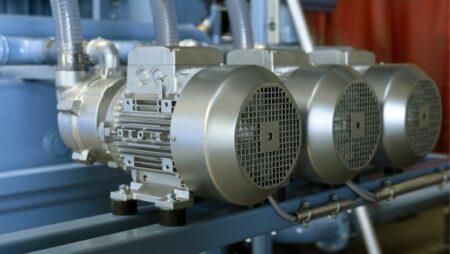
What Is the Vacuum Level and How Is It Measured in Vacuum Pumps?
The vacuum level refers to the degree of pressure below atmospheric pressure in a vacuum system. It indicates the level of “emptiness” or the absence of gas molecules in the system. Here’s a detailed explanation of vacuum level measurement in vacuum pumps:
Vacuum level is typically measured using pressure units that represent the difference between the pressure in the vacuum system and atmospheric pressure. The most common unit of measurement for vacuum level is the Pascal (Pa), which is the SI unit. Other commonly used units include Torr, millibar (mbar), and inches of mercury (inHg).
Vacuum pumps are equipped with pressure sensors or gauges that measure the pressure within the vacuum system. These gauges are specifically designed to measure the low pressures encountered in vacuum applications. There are several types of pressure gauges used for measuring vacuum levels:
1. Pirani Gauge: Pirani gauges operate based on the thermal conductivity of gases. They consist of a heated element exposed to the vacuum environment. As gas molecules collide with the heated element, they transfer heat away, causing a change in temperature. By measuring the change in temperature, the pressure can be inferred, allowing the determination of the vacuum level.
2. Thermocouple Gauge: Thermocouple gauges utilize the thermal conductivity of gases similar to Pirani gauges. They consist of two dissimilar metal wires joined together, forming a thermocouple. As gas molecules collide with the thermocouple, they cause a temperature difference between the wires, generating a voltage. The voltage is proportional to the pressure and can be calibrated to provide a reading of the vacuum level.
3. Capacitance Manometer: Capacitance manometers measure pressure by detecting the change in capacitance between two electrodes caused by the deflection of a flexible diaphragm. As the pressure in the vacuum system changes, the diaphragm moves, altering the capacitance and providing a measurement of the vacuum level.
4. Ionization Gauge: Ionization gauges operate by ionizing gas molecules in the vacuum system and measuring the resulting electrical current. The ion current is proportional to the pressure, allowing the determination of the vacuum level. There are different types of ionization gauges, such as hot cathode, cold cathode, and Bayard-Alpert gauges.
5. Baratron Gauge: Baratron gauges utilize the principle of capacitance manometry but with a different design. They consist of a pressure-sensing diaphragm separated by a small gap from a reference electrode. The pressure difference between the vacuum system and the reference electrode causes the diaphragm to deflect, changing the capacitance and providing a measurement of the vacuum level.
It’s important to note that different types of vacuum pumps may have different pressure ranges and may require specific pressure gauges suitable for their operating conditions. Additionally, vacuum pumps are often equipped with multiple gauges to provide information about the pressure at different stages of the pumping process or in different parts of the system.
In summary, vacuum level refers to the pressure below atmospheric pressure in a vacuum system. It is measured using pressure gauges specifically designed for low-pressure environments. Common types of pressure gauges used in vacuum pumps include Pirani gauges, thermocouple gauges, capacitance manometers, ionization gauges, and Baratron gauges.
\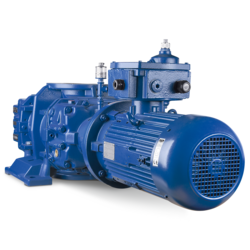
How Do Vacuum Pumps Contribute to Energy Savings?
Vacuum pumps play a significant role in energy savings in various industries and applications. Here’s a detailed explanation:
Vacuum pumps contribute to energy savings through several mechanisms and efficiencies. Some of the key ways in which vacuum pumps help conserve energy are:
1. Improved Process Efficiency: Vacuum pumps are often used to remove gases and create low-pressure or vacuum conditions in industrial processes. By reducing the pressure, vacuum pumps enable the removal of unwanted gases or vapors, improving the efficiency of the process. For example, in distillation or evaporation processes, vacuum pumps help lower the boiling points of liquids, allowing them to evaporate or distill at lower temperatures. This results in energy savings as less heat is required to achieve the desired separation or concentration.
2. Reduced Energy Consumption: Vacuum pumps are designed to operate efficiently and consume less energy compared to other types of equipment that perform similar functions. Modern vacuum pump designs incorporate advanced technologies, such as variable speed drives, energy-efficient motors, and optimized control systems. These features allow vacuum pumps to adjust their operation based on demand, reducing energy consumption during periods of lower process requirements. By consuming less energy, vacuum pumps contribute to overall energy savings in industrial operations.
3. Leak Detection and Reduction: Vacuum pumps are often used in leak detection processes to identify and locate leaks in systems or equipment. By creating a vacuum or low-pressure environment, vacuum pumps can assess the integrity of a system and identify any sources of leakage. Detecting and repairing leaks promptly helps prevent energy wastage associated with the loss of pressurized fluids or gases. By addressing leaks, vacuum pumps assist in reducing energy losses and improving the overall energy efficiency of the system.
4. Energy Recovery Systems: In some applications, vacuum pumps can be integrated into energy recovery systems. For instance, in certain manufacturing processes, the exhaust gases from vacuum pumps may contain heat or have the potential for energy recovery. By utilizing heat exchangers or other heat recovery systems, the thermal energy from the exhaust gases can be captured and reused to preheat incoming fluids or provide heat to other parts of the process. This energy recovery approach further enhances the overall energy efficiency by utilizing waste heat that would otherwise be lost.
5. System Optimization and Control: Vacuum pumps are often integrated into centralized vacuum systems that serve multiple processes or equipment. These systems allow for better control, monitoring, and optimization of the vacuum generation and distribution. By centralizing the vacuum production and employing intelligent control strategies, energy consumption can be optimized based on the specific process requirements. This ensures that vacuum pumps operate at the most efficient levels, resulting in energy savings.
6. Maintenance and Service: Proper maintenance and regular servicing of vacuum pumps are essential for their optimal performance and energy efficiency. Routine maintenance includes tasks such as cleaning, lubrication, and inspection of pump components. Well-maintained pumps operate more efficiently, reducing energy consumption. Additionally, prompt repair of any faulty parts or addressing performance issues helps maintain the pump’s efficiency and prevents energy waste.
In summary, vacuum pumps contribute to energy savings through improved process efficiency, reduced energy consumption, leak detection and reduction, integration with energy recovery systems, system optimization and control, as well as proper maintenance and service. By utilizing vacuum pumps efficiently and effectively, industries can minimize energy waste, optimize energy usage, and achieve significant energy savings in various applications and processes.
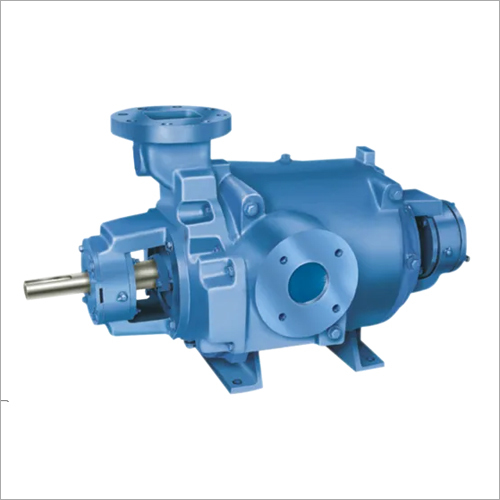
Are There Different Types of Vacuum Pumps Available?
Yes, there are various types of vacuum pumps available, each designed to suit specific applications and operating principles. Here’s a detailed explanation:
Vacuum pumps are classified based on their operating principles, mechanisms, and the type of vacuum they can generate. Some common types of vacuum pumps include:
1. Rotary Vane Vacuum Pumps:
– Description: Rotary vane pumps are positive displacement pumps that use rotating vanes to create a vacuum. The vanes slide in and out of slots in the pump rotor, trapping and compressing gas to create suction and generate a vacuum.
– Applications: Rotary vane vacuum pumps are widely used in applications requiring moderate vacuum levels, such as laboratory vacuum systems, packaging, refrigeration, and air conditioning.
2. Diaphragm Vacuum Pumps:
– Description: Diaphragm pumps use a flexible diaphragm that moves up and down to create a vacuum. The diaphragm separates the vacuum chamber from the driving mechanism, preventing contamination and oil-free operation.
– Applications: Diaphragm vacuum pumps are commonly used in laboratories, medical equipment, analysis instruments, and applications where oil-free or chemical-resistant vacuum is required.
3. Scroll Vacuum Pumps:
– Description: Scroll pumps have two spiral-shaped scrolls—one fixed and one orbiting—which create a series of moving crescent-shaped gas pockets. As the scrolls move, gas is continuously trapped and compressed, resulting in a vacuum.
– Applications: Scroll vacuum pumps are suitable for applications requiring a clean and dry vacuum, such as analytical instruments, vacuum drying, and vacuum coating.
4. Piston Vacuum Pumps:
– Description: Piston pumps use reciprocating pistons to create a vacuum by compressing gas and then releasing it through valves. They can achieve high vacuum levels but may require lubrication.
– Applications: Piston vacuum pumps are used in applications requiring high vacuum levels, such as vacuum furnaces, freeze drying, and semiconductor manufacturing.
5. Turbo Molecular Vacuum Pumps:
– Description: Turbo pumps use high-speed rotating blades or impellers to create a molecular flow, continuously pumping gas molecules out of the system. They typically require a backing pump to operate.
– Applications: Turbo molecular pumps are used in high vacuum applications, such as semiconductor fabrication, research laboratories, and mass spectrometry.
6. Diffusion Vacuum Pumps:
– Description: Diffusion pumps rely on the diffusion of gas molecules and their subsequent removal by a high-speed jet of vapor. They operate at high vacuum levels and require a backing pump.
– Applications: Diffusion pumps are commonly used in applications requiring high vacuum levels, such as vacuum metallurgy, space simulation chambers, and particle accelerators.
7. Cryogenic Vacuum Pumps:
– Description: Cryogenic pumps use extremely low temperatures to condense and capture gas molecules, creating a vacuum. They rely on cryogenic fluids, such as liquid nitrogen or helium, for operation.
– Applications: Cryogenic vacuum pumps are used in ultra-high vacuum applications, such as particle physics research, material science, and fusion reactors.
These are just a few examples of the different types of vacuum pumps available. Each type has its advantages, limitations, and suitability for specific applications. The choice of vacuum pump depends on factors like required vacuum level, gas compatibility, reliability, cost, and the specific needs of the application.


editor by CX 2023-11-08