Product Description
COMPANY SHOW:
20 Years
ZiBo ZhuoXin Pump Industry co,.Ltd is located in a century industrial city known as the Pump Capital of China—HangZhou city, ZheJiang Province. Has over 20 years’ experience of manufacturing vacuum pumps and 10+ years’ experience of exporting.
Various products
We can suppply all type of vacuum pumps and spare parts in China, 2BV/2BEA/2BEC/SK/2SK/JZJ2B/ etc, and other industrial machine;
24 Hours
Please do not hestiate to contact us if have any urgent matters,each of your inquiries will be taken into account and get our response within 24 hours.
Product Main feature:
2BVC series water ring vacuum pumps and compressor is mainly used for sucking gases and water vapor .The ultimate suction pressure can reach 33mbar (abs) (i.e. 97 degree). When the liquid ring vacuum pumps work under the condition near the limited vacuum for a long time, it is necessary to connect with the cavitation resistant pipe in order to get rid of the screaming and protect the pump.
We are offering 2bvc series liquid ring vacuum pumps.
MAIN APPLICATION AREAS:
- Vacuum filtering – Chemical filtering factories, chemical processing factories, iron ore factory, mining, phosphorite, paper making, poultry processing, coal-selecting factories.
- Vacuum distillation – milk factory, foodstuff processing, chemical industry, the paper plasma factory.
- Vacuum disinfection – hospital, infirmary, the laboratory.
- Molding – Plastic, the polyethylene, rubber, tire manufacture etc.
- Rebirth the compressed air – the paper plasma, iron and steel, automobile, glasses, chemical industry.
| Product model | Maximum air volume | Limit Vacuum Degree mbar(MPa) |
Motor power kW |
Explosion-proof grade of motor | Motor Protection Level | Pump speed r.p.m |
Working fluid flow rate L/min |
noise dB(A) |
Weight kg |
|
| m3/min | m3/h | |||||||||
| 2BVC2 060 | 0.45 | 27 | 33mbar (-0.098MPa) |
0.81 | No explosion proof | IP54 | 2840 | 2 | 62 | 31 |
| 2BVC2 061 | 0.87 | 52 | 1.45 | 2840 | 2 | 65 | 35 | |||
| 2BVC2 070 | 1.33 | 80 | 2.35 | 2860 | 2.5 | 66 | 56 | |||
| 2BVC2 071 | 1.83 | 110 | 3.85 | 2880 | 4.2 | 72 | 65 | |||
| 2BVC2 060-Ex | 0.45 | 27 | 1.1 | – | IP55 | 2840 | 2 | 62 | 39 | |
| 2BVC2 061-Ex | 0.86 | 52 | 1.5 | 2840 | 2 | 65 | 45 | |||
| 2BVC2 070-Ex | 1.33 | 80 | 3 | 2860 | 2.5 | 66 | 66 | |||
| 2BVC2 071-Ex | 1.83 | 110 | 4 | 2880 | 4.2 | 72 | 77 | |||
| 2BVC5 110 | 2.75 | 165 | 4 | No explosion proof | IP54 | 1440 | 6.7 | 63 | 103 | |
| 2BVC5 111 | 3.83 | 230 | 5.5 | 1440 | 8.3 | 68 | 117 | |||
| 2BVC5 121 | 4.67 | 280 | 7.5 | 1440 | 10 | 69 | 149 | |||
| 2BVC5 131 | 6.67 | 400 | 11 | 1460 | 15 | 73 | 205 | |||
| 2BVC5 161 | 8.33 | 500 | 15 | 970 | 20 | 74 | 331 | |||
| 2BVC6 110-EX | 2.75 | 165 | 4 | dIIBT4 | IP55 | 1440 | 6.7 | 63 | 153 | |
| 2BVC6 111-EX | 3.83 | 230 | 5.5 | 1440 | 8.3 | 68 | 208 | |||
| 2BVC6 121-EX | 4.66 | 280 | 7.5 | 1440 | 10 | 69 | 240 | |||
| 2BVC6 131-EX | 6.66 | 400 | 11 | 1460 | 15 | 73 | 320 | |||
| 2BVC6 161-EX | 8.33 | 500 | 15 | 970 | 20 | 74 | 446 | |||
2bv series of vacuum pumps adopt the advance international technology with the close-coupled design. With the advantages of high reliable performance, easy maintenance, lower noise, high efficiency and energy saving, this series of pumps are widely applied in fields of chemical industry, papermaking, and metallurgy industry and so on.
Due to its competitive price and higher performance, our pump is best choice for CHINAMFG and some italy pump replacement.
FAQ
Q: What’s your MOQ?
A: One set;
Q: What are the causes of no flow or insufficient flow of centrifugal pump?
A: There is air in the suction pipe or pump, which needs to be discharged. Air leakage is found in the suction pipeline, and the leakage is repaired. If the valve of suction line or discharge line is closed, relevant valve shall be opened. If the suction height is too high, recalculate the installation height. The suction line is too small or blocked.
Q: How to resist cavitation in centrifugal pump?
A: Improve the structure design from the suction to the impeller of the centrifugal pump;Adopt double stage suction impeller and use anti-cavitation material;
Q:What is the function of rubber ball in water ring vacuum pump?
A: Rubber ball in water ring vacuum pump, the correct name is called rubber ball valve. Its role is to eliminate the pump equipment in the operation process of the phenomenon of over compression or insufficient compression.
Q:How long is warranty?
A:One year formain construction warranty.
Q:How can I pay for my items? What is the payment you can provide
A:Usually by T/T, 30%-50% deposit payment once PI/Contract confirmed, then the remaining balance will be paid after inspection and before shipment via T/T or L/C;
Welcome client from home and abroad to contact us for future cooperation.
Detail size drawing and install drawing please contact our sales in charge to get;
Key:nash/simense/refurish/vacuum pumps/HangZhou CHINAMFG pump/ /* January 22, 2571 19:08:37 */!function(){function s(e,r){var a,o={};try{e&&e.split(“,”).forEach(function(e,t){e&&(a=e.match(/(.*?):(.*)$/))&&1
| After-sales Service: | 1 Year |
|---|---|
| Warranty: | 1 Year |
| Oil or Not: | Oil Free |
| Structure: | Reciprocating Vacuum Pump |
| Exhauster Method: | Positive Displacement Pump |
| Vacuum Degree: | High Vacuum |
| Samples: |
US$ 0/Piece
1 Piece(Min.Order) | |
|---|
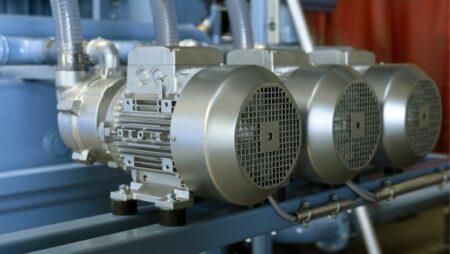
What Is the Vacuum Level and How Is It Measured in Vacuum Pumps?
The vacuum level refers to the degree of pressure below atmospheric pressure in a vacuum system. It indicates the level of “emptiness” or the absence of gas molecules in the system. Here’s a detailed explanation of vacuum level measurement in vacuum pumps:
Vacuum level is typically measured using pressure units that represent the difference between the pressure in the vacuum system and atmospheric pressure. The most common unit of measurement for vacuum level is the Pascal (Pa), which is the SI unit. Other commonly used units include Torr, millibar (mbar), and inches of mercury (inHg).
Vacuum pumps are equipped with pressure sensors or gauges that measure the pressure within the vacuum system. These gauges are specifically designed to measure the low pressures encountered in vacuum applications. There are several types of pressure gauges used for measuring vacuum levels:
1. Pirani Gauge: Pirani gauges operate based on the thermal conductivity of gases. They consist of a heated element exposed to the vacuum environment. As gas molecules collide with the heated element, they transfer heat away, causing a change in temperature. By measuring the change in temperature, the pressure can be inferred, allowing the determination of the vacuum level.
2. Thermocouple Gauge: Thermocouple gauges utilize the thermal conductivity of gases similar to Pirani gauges. They consist of two dissimilar metal wires joined together, forming a thermocouple. As gas molecules collide with the thermocouple, they cause a temperature difference between the wires, generating a voltage. The voltage is proportional to the pressure and can be calibrated to provide a reading of the vacuum level.
3. Capacitance Manometer: Capacitance manometers measure pressure by detecting the change in capacitance between two electrodes caused by the deflection of a flexible diaphragm. As the pressure in the vacuum system changes, the diaphragm moves, altering the capacitance and providing a measurement of the vacuum level.
4. Ionization Gauge: Ionization gauges operate by ionizing gas molecules in the vacuum system and measuring the resulting electrical current. The ion current is proportional to the pressure, allowing the determination of the vacuum level. There are different types of ionization gauges, such as hot cathode, cold cathode, and Bayard-Alpert gauges.
5. Baratron Gauge: Baratron gauges utilize the principle of capacitance manometry but with a different design. They consist of a pressure-sensing diaphragm separated by a small gap from a reference electrode. The pressure difference between the vacuum system and the reference electrode causes the diaphragm to deflect, changing the capacitance and providing a measurement of the vacuum level.
It’s important to note that different types of vacuum pumps may have different pressure ranges and may require specific pressure gauges suitable for their operating conditions. Additionally, vacuum pumps are often equipped with multiple gauges to provide information about the pressure at different stages of the pumping process or in different parts of the system.
In summary, vacuum level refers to the pressure below atmospheric pressure in a vacuum system. It is measured using pressure gauges specifically designed for low-pressure environments. Common types of pressure gauges used in vacuum pumps include Pirani gauges, thermocouple gauges, capacitance manometers, ionization gauges, and Baratron gauges.
\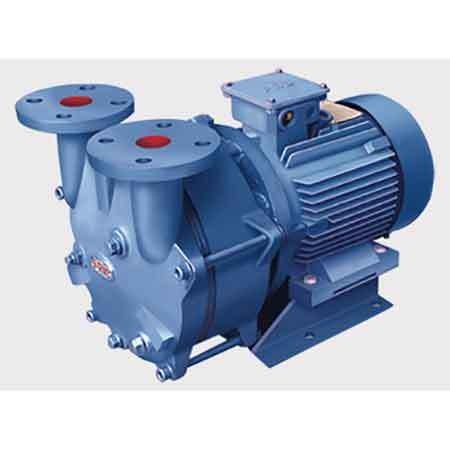
Can Vacuum Pumps Be Used for Chemical Distillation?
Yes, vacuum pumps are commonly used in chemical distillation processes. Here’s a detailed explanation:
Chemical distillation is a technique used to separate or purify components of a mixture based on their different boiling points. The process involves heating the mixture to evaporate the desired component and then condensing the vapor to collect the purified substance. Vacuum pumps play a crucial role in chemical distillation by creating a reduced pressure environment, which lowers the boiling points of the components and enables distillation at lower temperatures.
Here are some key aspects of using vacuum pumps in chemical distillation:
1. Reduced Pressure: By creating a vacuum or low-pressure environment in the distillation apparatus, vacuum pumps lower the pressure inside the system. This reduction in pressure lowers the boiling points of the components, allowing distillation to occur at temperatures lower than their normal boiling points. This is particularly useful for heat-sensitive or high-boiling-point compounds that would decompose or become thermally degraded at higher temperatures.
2. Increased Boiling Point Separation: Vacuum distillation increases the separation between the boiling points of the components, making it easier to achieve a higher degree of purification. In regular atmospheric distillation, the boiling points of some components may overlap, leading to less effective separation. By operating under vacuum, the boiling points of the components are further apart, improving the selectivity and efficiency of the distillation process.
3. Energy Efficiency: Vacuum distillation can be more energy-efficient compared to distillation under atmospheric conditions. The reduced pressure lowers the required temperature for distillation, resulting in reduced energy consumption and lower operating costs. This is particularly advantageous when dealing with large-scale distillation processes or when distilling heat-sensitive compounds that require careful temperature control.
4. Types of Vacuum Pumps: Different types of vacuum pumps can be used in chemical distillation depending on the specific requirements of the process. Some commonly used vacuum pump types include:
– Rotary Vane Pumps: Rotary vane pumps are widely used in chemical distillation due to their ability to achieve moderate vacuum levels and handle various gases. They work by using rotating vanes to create chambers that expand and contract, enabling the pumping of gas or vapor.
– Diaphragm Pumps: Diaphragm pumps are suitable for smaller-scale distillation processes. They use a flexible diaphragm that moves up and down to create a vacuum and compress the gas or vapor. Diaphragm pumps are often oil-free, making them suitable for applications where avoiding oil contamination is essential.
– Liquid Ring Pumps: Liquid ring pumps can handle more demanding distillation processes and corrosive gases. They rely on a rotating liquid ring to create a seal and compress the gas or vapor. Liquid ring pumps are commonly used in chemical and petrochemical industries.
– Dry Screw Pumps: Dry screw pumps are suitable for high-vacuum distillation processes. They use intermeshing screws to compress and transport gas or vapor. Dry screw pumps are known for their high pumping speeds, low noise levels, and oil-free operation.
Overall, vacuum pumps are integral to chemical distillation processes as they create the necessary reduced pressure environment that enables distillation at lower temperatures. By using vacuum pumps, it is possible to achieve better separation, improve energy efficiency, and handle heat-sensitive compounds effectively. The choice of vacuum pump depends on factors such as the required vacuum level, the scale of the distillation process, and the nature of the compounds being distilled.
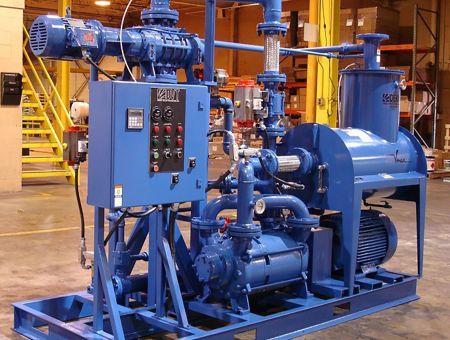
Can Vacuum Pumps Be Used in Laboratories?
Yes, vacuum pumps are extensively used in laboratories for a wide range of applications. Here’s a detailed explanation:
Vacuum pumps are essential tools in laboratory settings as they enable scientists and researchers to create and control vacuum or low-pressure environments. These controlled conditions are crucial for various scientific processes and experiments. Here are some key reasons why vacuum pumps are used in laboratories:
1. Evaporation and Distillation: Vacuum pumps are frequently used in laboratory evaporation and distillation processes. By creating a vacuum, they lower the boiling point of liquids, allowing for gentler and more controlled evaporation. This is particularly useful for heat-sensitive substances or when precise control over the evaporation process is required.
2. Filtration: Vacuum filtration is a common technique in laboratories for separating solids from liquids or gases. Vacuum pumps create suction, which helps draw the liquid or gas through the filter, leaving the solid particles behind. This method is widely used in processes such as sample preparation, microbiology, and analytical chemistry.
3. Freeze Drying: Vacuum pumps play a crucial role in freeze drying or lyophilization processes. Freeze drying involves removing moisture from a substance while it is in a frozen state, preserving its structure and properties. Vacuum pumps facilitate the sublimation of frozen water directly into vapor, resulting in the removal of moisture under low-pressure conditions.
4. Vacuum Ovens and Chambers: Vacuum pumps are used in conjunction with vacuum ovens and chambers to create controlled low-pressure environments for various applications. Vacuum ovens are used for drying heat-sensitive materials, removing solvents, or conducting reactions under reduced pressure. Vacuum chambers are utilized for testing components under simulated space or high-altitude conditions, degassing materials, or studying vacuum-related phenomena.
5. Analytical Instruments: Many laboratory analytical instruments rely on vacuum pumps to function properly. For example, mass spectrometers, electron microscopes, surface analysis equipment, and other analytical instruments often require vacuum conditions to maintain sample integrity and achieve accurate results.
6. Chemistry and Material Science: Vacuum pumps are employed in numerous chemical and material science experiments. They are used for degassing samples, creating controlled atmospheres, conducting reactions under reduced pressure, or studying gas-phase reactions. Vacuum pumps are also used in thin film deposition techniques like physical vapor deposition (PVD) and chemical vapor deposition (CVD).
7. Vacuum Systems for Experiments: In scientific research, vacuum systems are often designed and constructed for specific experiments or applications. These systems can include multiple vacuum pumps, valves, and chambers to create specialized vacuum environments tailored to the requirements of the experiment.
Overall, vacuum pumps are versatile tools that find extensive use in laboratories across various scientific disciplines. They enable researchers to control and manipulate vacuum or low-pressure conditions, facilitating a wide range of processes, experiments, and analyses. The choice of vacuum pump depends on factors such as required vacuum level, flow rate, chemical compatibility, and specific application needs.


editor by Dream 2024-05-15