Product Description
Industrial Gas filling pump for cryogenic liquid
Technical Parameters
Material:; Stainless steel
Usage:; Booster pumps
Medium:; Liquid CO2
Working principle:; By boosting pressure of CO2
Performance:; Inverter
Flow rate:; 100-4000L/h
Maximum outlet pressure:; 10Mpa
Optional Configuration:;
Frequency converter
Safety valve/Cryogenic check valve
Temperature interlocking device of inside pump
Model List
| Model | Type | Flow range (L/h); | Inlet pressure (Mpa); |
Max.; discharge pressure (Mpa); |
| BPLCO2-300-900/100 BPLCO2-600-1200/100 BPLCO2-1000-2000/100 |
single-column horizontal piston |
300-900 600-1200 1000-2000 |
1.;38-2.;4 | 10.;0 |
| BPLCO2-1500-3000/100 BPLCO2-2000-4000/100 |
double-column horizontal piston |
1500-3000 2000-4000 |
1.;38-2.;4 | 10.;0 |
Features
1.;Quick pre-cooling,; dry ice is not easy to appear within the pump.;
2.;Simple design of pump head parts,; convenient for maintenance.;
3.;New seal design,; super long service life.;
4.;Low noise
5.;Can be kept functioning continuously for 24 hours
Applications
The CO2 cylinder filling pumpis especially suitable for filling liquid CO2 storage tanks.; It is also applicable to central CO2 gas supply and distribution systems.; We can offer customized high pressure pump with flow and pressure information provided by customers.; We offer a complete range of solutions to customers.;
Product Photos
Advantages
1); Our team is highly qualified and experienced;
2); We focus on providing excellent quality products;
3); Our products is energy-saving and environment-friendly;
4); Our price is reasonable and competitive based on the same quality level;
5); Excellent after-sale service.;
WHAT WE CAN SUPPLY?
We specialize in producing air separation plants,; CO2 recovery plants,; cryogenic liquid storage tanks,; ISO tanks,; semi-trailer tankers,; vaporizers,; gas filling stations,; cylinders and dewars,; dry ice machines,; compressors and cryogenic pumps etc.;
Our Company
HangZhou CZPT General Equipment Co.;,;Ltd.; is a wholly owned subsidiary of ZheJiang Air Separation Plant Group Company-the second largest gas equipment producer in China.;
In the gas equipment field,; we are proficient in both design and manufacture,; enjoying a good reputation worldwide.; By our consistent efforts,; we turned the invisible air into visible brilliance.; With 40 years of experience,; we can provide customers with a complete range of products and the most professional services.; Taking advantage of the group company structure,; we have an in-depth and comprehensive understanding of market.; Customers can get all they need at one-stop purchase.;
| Oil or Not: | Oil Free |
|---|---|
| Structure: | Reciprocating Vacuum Pump |
| Exhauster Method: | Piston Pump |
| Usage: | Transfer R152A, Ethylene |
| Flow: | 10-20m3/H |
| Medium: | R152A, Ethylene |
| Customization: |
Available
|
|
|---|
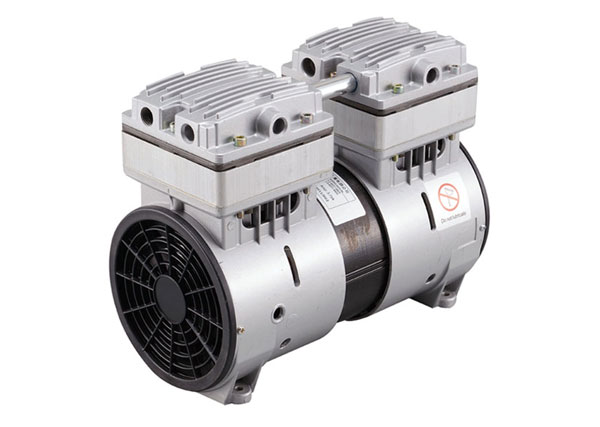
What Are the Advantages of Using Piston Vacuum Pumps?
Piston vacuum pumps offer several advantages that make them suitable for various applications. Here’s a detailed explanation of the advantages of using piston vacuum pumps:
1. High Vacuum Levels:
– Piston vacuum pumps are capable of achieving high vacuum levels, making them suitable for applications that require deep vacuum conditions.
– They can create and maintain a vacuum in the range of millitorr (10-3 Torr) to microns (10-6 Torr).
2. Low Flow Rates:
– Piston vacuum pumps are designed to handle low flow rates efficiently.
– They are suitable for applications where a steady and controlled evacuation is required rather than high-volume pumping.
3. Compact and Portable:
– Piston vacuum pumps are relatively compact and lightweight compared to other types of vacuum pumps.
– Their compact design allows for easy installation in limited spaces or portable applications where mobility is required.
4. Oil Lubrication:
– Many piston vacuum pumps utilize oil lubrication for smooth operation and to maintain airtight seals.
– The oil lubrication also helps to cool the pump by dissipating heat generated during operation.
5. Wide Range of Applications:
– Piston vacuum pumps find applications in various industries and processes.
– They are commonly used in laboratories, research facilities, pharmaceutical production, vacuum drying, vacuum filtration, and other applications that require moderate vacuum levels and low flow rates.
6. Cost-Effective:
– Piston vacuum pumps are often more cost-effective compared to other high-vacuum pumps such as turbomolecular pumps or cryogenic pumps.
– They provide a reliable and affordable solution for achieving vacuum requirements in many applications.
7. Easy Maintenance:
– Piston vacuum pumps are relatively easy to maintain.
– Regular maintenance tasks include checking and replacing lubricating oil, inspecting and cleaning valves, and ensuring proper sealing.
– Routine maintenance helps to prolong the lifespan of the pump and maintain its performance.
8. Durability:
– Piston vacuum pumps are known for their durability and long operational life.
– They are designed to withstand continuous operation and handle demanding vacuum conditions.
– With proper care and maintenance, piston vacuum pumps can provide reliable performance over an extended period.
9. Versatility:
– Piston vacuum pumps can handle a wide range of gases, including inert gases, corrosive gases, and vapors.
– This versatility makes them suitable for diverse applications in different industries.
In summary, the advantages of using piston vacuum pumps include their ability to achieve high vacuum levels, handle low flow rates, compact and portable design, oil lubrication for smooth operation, wide range of applications, cost-effectiveness, easy maintenance, durability, and versatility. These advantages make piston vacuum pumps a popular choice in various industries where moderate vacuum levels and controlled evacuation are required.
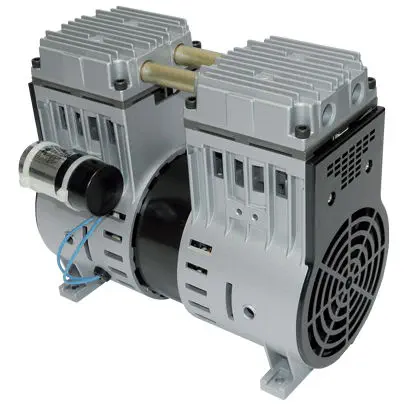
Are There Noise Considerations When Using Piston Vacuum Pumps?
Yes, there are noise considerations to take into account when using piston vacuum pumps. Here’s a detailed explanation:
– Piston vacuum pumps can generate noise during their operation, which is important to consider, especially in environments where noise levels need to be minimized.
– The noise produced by piston vacuum pumps is primarily caused by mechanical vibrations and the movement of internal components.
– The noise level can vary depending on factors such as the design and construction of the pump, the speed of operation, and the load conditions.
– Excessive noise from piston vacuum pumps can have several implications:
– Occupational Health and Safety: High noise levels can pose a risk to the health and safety of operators and personnel working in the vicinity of the pump. Prolonged exposure to loud noise can lead to hearing damage and other related health issues.
– Environmental Impact: In certain settings, such as residential areas or noise-sensitive locations, excessive noise from piston vacuum pumps may result in noise pollution and non-compliance with local noise regulations.
– Equipment Interference: Noise generated by the pump can interfere with the operation of nearby sensitive equipment, such as electronic devices or precision instruments, potentially affecting their performance.
– To mitigate the noise produced by piston vacuum pumps, several measures can be taken:
– Enclosures and Sound Insulation: Installing acoustic enclosures or sound-insulating materials around the pump can help contain and reduce the noise. These enclosures are designed to absorb or block the sound waves generated by the pump.
– Vibration Isolation: Using vibration isolation mounts or pads can help minimize the transmission of vibrations from the pump to surrounding structures, reducing the noise level.
– Maintenance and Lubrication: Regular maintenance, including lubrication of moving parts, can help reduce friction and mechanical noise generated by the pump.
– Operating Conditions: Adjusting the operating conditions of the pump, such as speed and load, within the manufacturer’s specified limits can help optimize performance and minimize noise generation.
– Location and Placement: Proper positioning and placement of the pump, considering factors such as distance from occupied areas or sensitive equipment, can help minimize the impact of noise.
– It is important to consult the manufacturer’s guidelines and recommendations regarding noise levels and any specific measures to mitigate noise for a particular piston vacuum pump model.
– Compliance with local regulations and standards regarding noise emissions should also be considered and adhered to.
In summary, noise considerations are important when using piston vacuum pumps to ensure the health and safety of personnel, minimize environmental impact, and prevent interference with other equipment. Measures such as enclosures, vibration isolation, maintenance, and proper operating conditions can help mitigate the noise generated by these pumps.

What Are the Differences Between Single-Stage and Two-Stage Piston Vacuum Pumps?
Single-stage and two-stage piston vacuum pumps are two common types of pumps used for creating a vacuum. Here’s a detailed explanation of their differences:
1. Number of Stages:
– The primary difference between single-stage and two-stage piston vacuum pumps lies in the number of stages or steps involved in the compression process.
– A single-stage pump has a single piston that compresses the gas in one stroke.
– In contrast, a two-stage pump consists of two pistons arranged in series, allowing the gas to be compressed in two stages.
2. Compression Ratio:
– Single-Stage: In a single-stage piston vacuum pump, the compression ratio is limited to the single stroke of the piston. This means that the pump can achieve a compression ratio of approximately 10:1.
– Two-Stage: In a two-stage piston vacuum pump, the compression ratio is significantly higher. The first stage compresses the gas, and then it passes through an intermediate chamber before entering the second stage for further compression. This allows for a higher compression ratio, typically around 100:1.
3. Vacuum Level:
– Single-Stage: Single-stage piston vacuum pumps are generally suitable for applications that require moderate vacuum levels.
– They can achieve vacuum levels up to approximately 10-3 Torr (millitorr) or in the low micron range (10-6 Torr).
– Two-Stage: Two-stage piston vacuum pumps are capable of reaching deeper vacuum levels compared to single-stage pumps.
– They can achieve vacuum levels in the high vacuum range, typically down to 10-6 Torr or even lower, making them suitable for applications that require a more extensive vacuum.
4. Pumping Speed:
– Single-Stage: Single-stage pumps generally have a higher pumping speed or evacuation rate compared to two-stage pumps.
– This means that single-stage pumps can evacuate a larger volume of gas per unit of time, making them suitable for applications that require faster evacuation.
– Two-Stage: Two-stage pumps have a lower pumping speed compared to single-stage pumps.
– While they may have a slower evacuation rate, they compensate for it by achieving deeper vacuum levels.
5. Applications:
– Single-Stage: Single-stage piston vacuum pumps are commonly used in applications that require moderate vacuum levels and higher pumping speeds.
– They are suitable for laboratory use, vacuum packaging, HVAC systems, and various industrial processes.
– Two-Stage: Two-stage piston vacuum pumps are well-suited for applications that require deeper vacuum levels.
– They are commonly used in scientific research, semiconductor manufacturing, analytical instruments, and other processes that demand high vacuum conditions.
6. Size and Complexity:
– Single-Stage: Single-stage pumps are generally more compact and simpler in design compared to two-stage pumps.
– They have fewer components, making them easier to install, operate, and maintain.
– Two-Stage: Two-stage pumps are relatively larger and more complex in design due to the additional components required for the two-stage compression process.
– They may require more maintenance and expertise for operation and servicing.
In summary, the main differences between single-stage and two-stage piston vacuum pumps lie in the number of stages, compression ratio, achievable vacuum levels, pumping speed, applications, and size/complexity. Selecting the appropriate pump depends on the desired vacuum level, pumping speed requirements, and specific application needs.


editor by CX 2024-01-03