Product Description
Cryogenic centrifugal vacuum liquid pump
Liquids Pumped:;
LO2,;LN2,;LAr
Applications
Tank filling
Tanker loading
Cryogenic liquid transfer.;
Technical Parameters
1.; flow rate:; 13~24m3/h
2.; medium:; liquid oxygen,; nitrogen and argon
3.; lift:; 60M; 90M; 130M
Optional Configuration:;
Frequency converter
Cryogenic check valve
Product Photos
Model list
| Model | Type | Flow range m3/h | Inlet pressure Mpa | Head M |
| SLP-24/60 | Horizontal | 24 | 0.;02-0.;8 | 60 |
| SLP-24/90 | Direct-attached | 24 | 90 | |
| SLP-13/130 | Centrifugal | 13 | 130 |
Features
1.; Direct-attached type,; easy structure
2.; Worm wheel and impeller adopts high strength bronze alloy to secure safely pumping LO2
3.; Mature mechanical sealing,; long service life
4.; High strength hollow stainless steel shaft
5.; Frequency conversion motor makes the pump applied to wide working conditions.;
6.; Flexible connection is provided for inlet and outlet liquid
Advantages
1); Our team is highly qualified and experienced;
2); We focus on providing excellent quality products;
3); Our products is energy-saving and environment-friendly;
4); Our price is reasonable and competitive based on the same quality level;
5); Excellent after-sale service.;
WHAT WE CAN SUPPLY?
We specialize in producing air separation plants,; CO2 recovery plants,; cryogenic liquid storage tanks,; ISO tanks,; semi-trailer tankers,; vaporizers,; gas filling stations,; cylinders and dewars,; dry ice machines,; compressors and cryogenic pumps etc.;
Our Company
HangZhou CZPT General Equipment Co.;,;Ltd.; is a wholly owned subsidiary of ZheJiang Air Separation Plant Group Company-the second largest gas equipment producer in China.;
In the gas equipment field,; we are proficient in both design and manufacture,; enjoying a good reputation worldwide.; By our consistent efforts,; we turned the invisible air into visible brilliance.;
With 40 years of experience,; we can provide customers with a complete range of products and the most professional services.; Taking advantage of the group company structure,; we have an in-depth and comprehensive understanding of market.; Customers can get all they need at one-stop purchase.;
| Max.Capacity: | 13~24m3/H |
|---|---|
| Driving Type: | Motor |
| Impeller Number: | Single-Stage Pump |
| Working Pressure: | High Pressure Pump |
| Position of Pump Shaft: | Horizontal Pump |
| Mounting Height: | Suction Centrifugal |
| Customization: |
Available
|
|
|---|
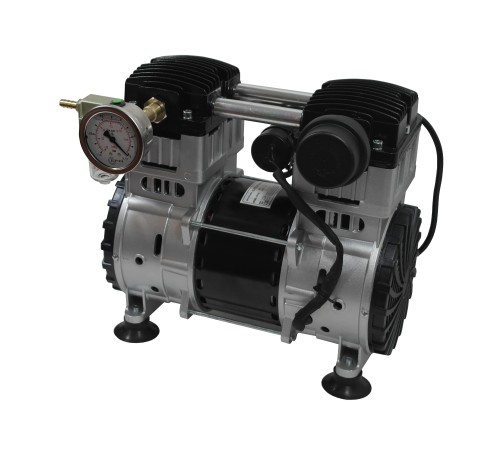
How Does Piston Displacement Affect the Pump’s Performance?
Piston displacement is a crucial factor that significantly affects the performance of a piston vacuum pump. Here’s a detailed explanation:
Piston displacement refers to the volume of gas or air that a piston vacuum pump can move during each stroke of the piston. It determines the pump’s capacity or flow rate, which is the amount of gas that the pump can evacuate per unit of time.
1. Flow Rate:
– The piston displacement directly influences the flow rate of the pump.
– A larger piston displacement corresponds to a higher flow rate, meaning the pump can evacuate a larger volume of gas per unit of time.
– Conversely, a smaller piston displacement results in a lower flow rate.
2. Pumping Speed:
– The pumping speed is a measure of how quickly a vacuum pump can remove gas molecules from a system.
– The piston displacement is directly related to the pumping speed of the pump.
– A larger piston displacement leads to a higher pumping speed, allowing for faster evacuation of the system.
– A smaller piston displacement results in a lower pumping speed, which may require more time to achieve the desired vacuum level.
3. Vacuum Level:
– The piston displacement indirectly affects the achievable vacuum level of the pump.
– A larger piston displacement can help reach lower pressures and achieve a deeper vacuum.
– However, it’s important to note that achieving a deep vacuum also depends on other factors such as the design of the pump, the quality of the seals, and the operating conditions.
4. Power Consumption:
– The piston displacement can impact the power consumption of the pump.
– A larger piston displacement typically requires more power to operate the pump due to the increased volume of gas being moved.
– Conversely, a smaller piston displacement may result in lower power consumption.
5. Size and Weight:
– The piston displacement affects the size and weight of the pump.
– A larger piston displacement generally requires a larger pump size and may increase the weight of the pump.
– On the other hand, a smaller piston displacement can result in a more compact and lightweight pump.
It’s important to select a piston vacuum pump with an appropriate piston displacement based on the specific application requirements.
In summary, the piston displacement of a vacuum pump directly influences its flow rate, pumping speed, achievable vacuum level, power consumption, and size. Understanding the relationship between piston displacement and pump performance is crucial in choosing the right pump for a given application.
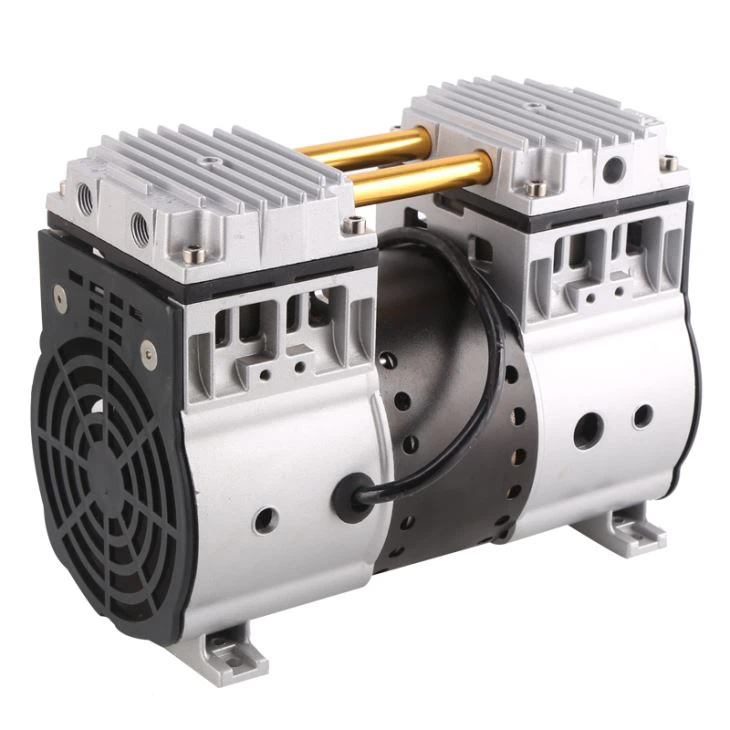
What Industries Commonly Rely on Piston Vacuum Pumps?
Various industries rely on piston vacuum pumps for their specific applications and requirements. Here’s a detailed explanation:
1. Manufacturing and Industrial Processes:
– Piston vacuum pumps find extensive use in manufacturing and industrial processes across different sectors.
– They are commonly employed in vacuum packaging, where they help create a vacuum environment to preserve and extend the shelf life of food products.
– In the automotive industry, piston vacuum pumps are utilized in brake booster systems to provide the necessary vacuum for power braking.
– Other industrial applications include vacuum molding, vacuum drying, vacuum distillation, and vacuum filtration.
2. Pharmaceuticals and Medical Industry:
– The pharmaceutical and medical industry extensively relies on piston vacuum pumps for various critical processes.
– These pumps are used in pharmaceutical manufacturing for vacuum drying, solvent recovery, and distillation processes.
– In medical applications, piston vacuum pumps are utilized in vacuum suction devices and medical laboratory equipment.
– They are also employed in vacuum autoclaves for sterilization purposes.
3. Research and Laboratory Settings:
– Piston vacuum pumps are commonly found in research laboratories and scientific facilities.
– They are used for creating vacuum conditions in laboratory equipment such as vacuum ovens, freeze dryers, and vacuum desiccators.
– These pumps are crucial for applications like sample preparation, material testing, and scientific experiments requiring controlled environments.
4. Electronics and Semiconductor Manufacturing:
– The electronics and semiconductor industry heavily relies on piston vacuum pumps for various manufacturing processes.
– They are utilized in vacuum deposition systems for thin film coating, such as physical vapor deposition (PVD) and chemical vapor deposition (CVD).
– Piston pumps are also employed in vacuum furnaces for heat treatment processes in semiconductor fabrication.
– Other applications include vacuum packaging of electronic components and devices.
5. Food Processing and Packaging:
– Piston vacuum pumps play a significant role in the food processing and packaging industry.
– They are used for vacuum packaging of perishable food items, preventing spoilage and extending shelf life.
– In food processing, these pumps assist in vacuum concentration, freeze drying, and deaeration processes.
6. Environmental and Waste Management:
– Piston vacuum pumps find applications in environmental and waste management sectors.
– They are used in vacuum systems for wastewater treatment, including processes like aeration, filtration, and sludge dewatering.
– Piston pumps also assist in industrial and municipal waste management systems for vacuum collection or transfer of waste materials.
7. Other Industries:
– Piston vacuum pumps have diverse applications in additional industries:
– They are used in the glass manufacturing industry for vacuum lifting and handling of glass sheets or products.
– Piston pumps find application in the printing industry for vacuum feeding and ink transfer systems.
– They are employed in the power generation industry for steam condenser evacuation and turbine sealing systems.
In summary, piston vacuum pumps find widespread use in industries such as manufacturing and industrial processes, pharmaceuticals and medical, research and laboratory settings, electronics and semiconductor manufacturing, food processing and packaging, environmental and waste management, as well as in other sectors like glass manufacturing, printing, and power generation.
What Is the Role of Lubrication in Piston Vacuum Pump Operation?
Lubrication plays a crucial role in the operation of a piston vacuum pump. Here’s a detailed explanation:
1. Reduction of Friction:
– Lubrication is essential for reducing friction between moving parts within the pump.
– In a piston vacuum pump, the piston moves up and down inside the cylinder, and lubrication helps to minimize the friction between the piston rings and the cylinder wall.
– By reducing friction, lubrication prevents excessive wear and heat generation, ensuring smooth and efficient operation of the pump.
2. Sealing and Leakage Prevention:
– Lubrication helps to maintain proper sealing between the piston rings and the cylinder wall.
– The lubricating oil forms a thin film between these surfaces, creating a barrier that prevents gas leakage during the compression and vacuum creation process.
– Effective sealing is crucial for maintaining the desired vacuum level and preventing air or gas from entering the pump.
3. Cooling and Heat Dissipation:
– Piston vacuum pumps generate heat during operation, particularly due to the compression of gases.
– Lubricating oil helps in dissipating the heat generated, preventing the pump from overheating.
– The oil absorbs heat from the pump’s internal components and transfers it to the pump’s housing or cooling system.
– Proper cooling and heat dissipation contribute to the pump’s overall performance and prevent damage due to excessive heat buildup.
4. Contaminant Removal:
– Lubrication also aids in removing contaminants or particles that may enter the pump.
– The oil acts as a carrier, trapping and carrying away small particles or debris that could potentially damage the pump’s components.
– The oil passes through filters that help to remove these contaminants, keeping the pump’s internal parts clean and functioning properly.
5. Corrosion Prevention:
– Some lubricating oils contain additives that provide corrosion protection.
– These additives form a protective film on the pump’s internal surfaces, preventing corrosion caused by exposure to moisture or corrosive gases.
– Corrosion prevention is crucial for maintaining the pump’s performance, extending its lifespan, and minimizing the need for repairs or component replacement.
6. Proper Lubrication Selection:
– Selecting the appropriate lubricating oil is essential for the proper functioning of a piston vacuum pump.
– Different pump models and manufacturers may recommend specific oil types or viscosities to ensure optimal performance and longevity.
– It is crucial to follow the manufacturer’s guidelines regarding oil selection, oil level, and oil change intervals.
In summary, lubrication plays a vital role in piston vacuum pump operation by reducing friction, maintaining proper sealing, dissipating heat, removing contaminants, and preventing corrosion. Proper lubrication selection and adherence to manufacturer’s guidelines are crucial for ensuring the pump’s efficient and reliable performance.


editor by CX 2023-12-22