Product Description
Quick Details
Model Number:P7/P8/P9/P10/P11
Place of Origin:ZheJiang , China
Pressure:High Pressure
Structure:PISTON PUMP
Product name:pump
Usage:Water
Fuel:Diesel
Standard or Nonstandard:Standard
Power:Electric
Application:inject mud
Supply Ability
Supply Ability:30 Set/Sets per Month
Packaging & Delivery
Packaging Details:exporting package/container package
Port:HangZhou
Lead Time :depond on the quantity
After- sales service :
1. Sample order
2. After sending, we will track the products for you once every 2 days, until you get the products. When you got the goods, test it, and give me a feedback.If you have any questions about the problem, contact with us, we will offer the solution for you.
| Quantity(Sets) | 1 – 1 | >1 |
| Est. Time(days) | 10 | To be negotiated |
Products Description
1.Mud Pump Package
We can supply the unitized mud pump packages driven by DC/AC electric motors or diesel engines for electric and mechanical drilling rigs. The client can select DC or AC motors and diesel engine brands such as , Detroit, or others. Our unitized mud pump packages including everything on the skid and usually they are ready to work at delivery. According to the drive type, it can divided into 4 types as: Air Clutch Transmission, Hydraulic Coupling Transmission, Electric Motor Drive and Chain Drive.
2.Air Clutch Transmission
Air Clutch Transmission is the traditional drive way, usually the power is diesel engine, diesel engine transmit its power to the pump through the transmission(composed of gear box, air clutch, cardan shaft, big pulley etc). as a traditional one, this kind of structure are widely used in the oilfields.
3.Hydraulic Coupling Transmission
Hydraulic Coupling Transmission is a new drive way, Diesel engine and hydraulic coupling connected together thus compose the diesel engine unit, the diesel engine unit connect the mud pump through only a cardan shaft directly, this kind of structure saved more space of the oilfield and easy to delivery, so it is now very popular in the oilfields.
4.Electric Motor Drive
Electric Motor Drive Mud Pump Package usually equip the electric drilling rig, it can equip with DC Motor or AC Motor according to customer’s requirement. The advantage of the this structure is that the pump is controlled by electric, with the electric control panel, the pump is very easy to run.
5.Chain Drive
Chain Drive Mud Pump Package is also a traditional way, instead of V belt and pulley, here use the chain and sprocket wheel with more good performance. But 1 disadvantage is that the maintenance of the chain and sprocket is very expensive.
Detailed Photos
FAQ
1. How do I buy or post an RFQ on UPET platform?
Buy or post an RFQ on UPET UPET platform, You can use the following 3 ways:
1.1 Click contact now, fill in the form and submit.
1.3 Create an account, add the product to the inquiry cart and submit.
After receiving your request, we will get in touch with you within 48 hours.
2. How to view more product details, such as price, MOQ, shipping fee?
In addition to viewing all product information from this page, you can also send your needs to our email, we will introduce you more details.
3. What is the quality of the product and is it genuine?
UPET has an independent third-party inspection team, which strictly controls the quality of products, guarantees genuine products and eliminates fakes.
4.How is the product cost-effective?
UPET has been deeply engaged in the field of oil and gas equipments for many years, integrating a large number of high-quality supply channels. Our products are comprehensive and the price advantage is obvious.
5. When will I receive my order?
The time depends on the MOQ of the order. The delivery time for spare parts usually take 1-3 days, and equipments take 7-30 days. In addition, contact us to get the full time of the order.
6. How do you make our business long-term and good relationship?
We keep good quality and competitive price to ensure our customers benefit ;We respect every customer as our friend and we sincerely do business and make friends with them, no matter where they come from.
Company Information
UPET GROUP consist of following companies:Upet Oilfield Equipments Co.,Limited,Upet Industry Co.,Limited,HangZhou Youpat Machinery Equipments Co.,Ltd and HangZhou Uelion International Trade Co.,Ltd.
We mainly run the business of Oil and Gas Equipments,Industrial and Mining Equipments,Engineering Machinery,Agricultural Machinery Equipments,Metallurgical and Foundry Raw Materials etc, we are not big but very strong in these fields with our persistant efforts step by step in the pasting years.
Our subsidiary company Upet Oilfield Equipments Co.,Limited is 1 of the most CZPT suppliers for the oil and gas equipments in the world, UPET products cover the whole areas of the wellsites, from a very small spare part to a big complete rig system. CZPT designs, manufactures and markets various kinds of oil and gas equipments including drilling equipments,production equipments, well service equipments and line pipes etc. Our main products are: mud pump and mud pump parts,drilling rig and drilling rig parts,coiled tubing, CZPT control equipments, drilling motors,drilling pipes and drilling tools,pneumatic and hydraulic parts etc. All of our products are manufactured according to the API Standard, and we are authorized to use API monogram.
We understand the needs of the operators and drilling contractors around the world. high quality, competitive prices and fast delivery are our top priorities.Our oil and gas equipments have been exported to more than 30 countries& areas around the world, 90% of our exsisting customers have done the business with us by more than 5 times, no one-off customer. We will continue to expand our range, and win more customers’ trust with our better and better performance.
Another of our subsidiary company HangZhou Uelion International Trade Co.,Ltd is mainly engaged in the supply of foundry coke,carbon raiser,ferro alloy,non-ferrous metal,abrasive,other metallurgical and foundry raw materials,casting machinery equipments and parts to our cooperative customers.We have established joint venture factories in Western of China where rich of raw materials,carbon and alloys,and we have warehouses in ZheJiang and HangZhou,China.We export to steel mills and foundry factories in Japan,South Korea,Southeast Asia,Middle East and other countries,and has a relatively high market share in the export market.
We welcome the CZPT cooperation relationship with the partners from any places in the world, each customer is our god and helper. Warmly welcome you to come to China and visit us!
With us, you will save money, time, trouble, and most important point is that you can sleep better.
/* May 10, 2571 16:49:51 */!function(){function d(e,r){var a,o={};try{e&&e.split(“,”).forEach(function(e,t){e&&(a=e.match(/(.*?):(.*)$/))&&1
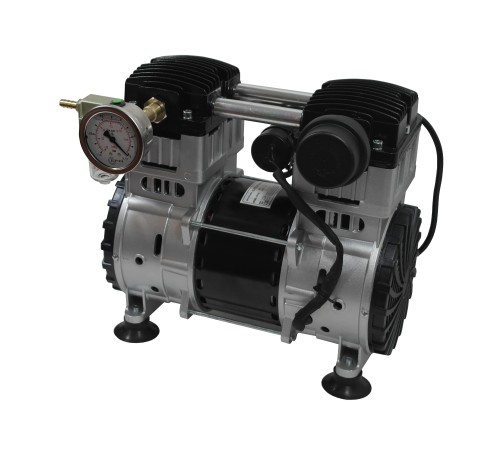
How Does Piston Displacement Affect the Pump’s Performance?
Piston displacement is a crucial factor that significantly affects the performance of a piston vacuum pump. Here’s a detailed explanation:
Piston displacement refers to the volume of gas or air that a piston vacuum pump can move during each stroke of the piston. It determines the pump’s capacity or flow rate, which is the amount of gas that the pump can evacuate per unit of time.
1. Flow Rate:
– The piston displacement directly influences the flow rate of the pump.
– A larger piston displacement corresponds to a higher flow rate, meaning the pump can evacuate a larger volume of gas per unit of time.
– Conversely, a smaller piston displacement results in a lower flow rate.
2. Pumping Speed:
– The pumping speed is a measure of how quickly a vacuum pump can remove gas molecules from a system.
– The piston displacement is directly related to the pumping speed of the pump.
– A larger piston displacement leads to a higher pumping speed, allowing for faster evacuation of the system.
– A smaller piston displacement results in a lower pumping speed, which may require more time to achieve the desired vacuum level.
3. Vacuum Level:
– The piston displacement indirectly affects the achievable vacuum level of the pump.
– A larger piston displacement can help reach lower pressures and achieve a deeper vacuum.
– However, it’s important to note that achieving a deep vacuum also depends on other factors such as the design of the pump, the quality of the seals, and the operating conditions.
4. Power Consumption:
– The piston displacement can impact the power consumption of the pump.
– A larger piston displacement typically requires more power to operate the pump due to the increased volume of gas being moved.
– Conversely, a smaller piston displacement may result in lower power consumption.
5. Size and Weight:
– The piston displacement affects the size and weight of the pump.
– A larger piston displacement generally requires a larger pump size and may increase the weight of the pump.
– On the other hand, a smaller piston displacement can result in a more compact and lightweight pump.
It’s important to select a piston vacuum pump with an appropriate piston displacement based on the specific application requirements.
In summary, the piston displacement of a vacuum pump directly influences its flow rate, pumping speed, achievable vacuum level, power consumption, and size. Understanding the relationship between piston displacement and pump performance is crucial in choosing the right pump for a given application.
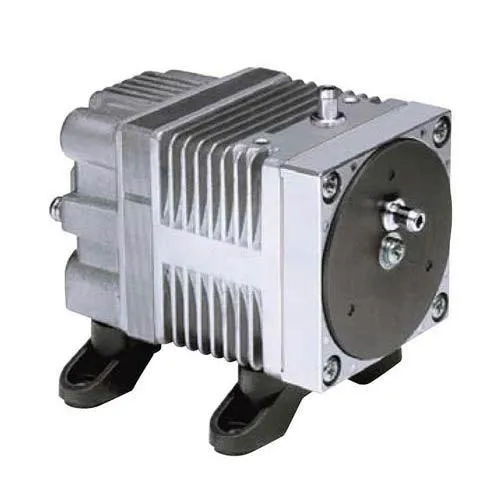
How Do You Troubleshoot Common Issues with Piston Vacuum Pumps?
Troubleshooting common issues with piston vacuum pumps involves a systematic approach to identify and resolve problems. Here’s a detailed explanation:
1. Insufficient Vacuum Level:
– If the vacuum level achieved by the piston pump is lower than expected:
– Check for leaks: Inspect all connections, seals, and fittings for any signs of leakage. Repair or replace any damaged components.
– Verify valve operation: Ensure that the valves in the pump are functioning correctly. Clean or replace any faulty valves that may be impeding the pump’s performance.
– Check for worn piston or cylinder: Examine the piston and cylinder for signs of wear. If necessary, replace these components to restore optimal vacuum performance.
2. Excessive Noise or Vibrations:
– If the piston pump is producing excessive noise or vibrations:
– Check for misalignment: Ensure that the pump is properly aligned with its drive mechanism. Adjust or realign as necessary.
– Inspect mounting and support: Examine the pump’s mounting and support structure to ensure it is stable and secure. Reinforce or repair any weak or damaged mounts.
– Verify lubrication: Adequate lubrication is crucial for smooth pump operation. Check the lubrication system and ensure it is supplying sufficient lubricant to all necessary components.
3. Overheating:
– If the piston pump is overheating:
– Check cooling system: Inspect the cooling system, including fans, heat exchangers, and cooling fins. Clean or replace any clogged or malfunctioning cooling components.
– Verify airflow: Ensure that there is proper airflow around the pump. Remove any obstructions or debris that may be impeding the flow of cooling air.
– Evaluate operating conditions: Examine the pump’s operating conditions, such as ambient temperature and duty cycle. Adjust these factors if necessary to prevent overheating.
4. Oil Contamination:
– If there is oil contamination in the vacuum system:
– Check oil seals: Inspect the seals in the pump for any signs of damage or wear. Replace any faulty seals that may be allowing oil leakage.
– Verify oil level and quality: Ensure that the pump’s oil level is correct and that the oil is clean and free from contaminants. Replace the oil if necessary.
– Evaluate oil mist separation: If the pump is equipped with oil mist separation mechanisms, verify their effectiveness. Clean or replace any filters or separators that may be compromised.
5. Insufficient Pumping Capacity:
– If the pump is unable to meet the required pumping capacity:
– Check for blockages: Inspect the intake and exhaust ports for any blockages or obstructions. Clear any debris or foreign objects that may be impeding the pump’s operation.
– Verify valve operation: Ensure that the valves are opening and closing properly. Clean or replace any valves that may be stuck or malfunctioning.
– Evaluate motor performance: Assess the motor driving the pump for any issues such as insufficient power or improper speed. Repair or replace the motor if necessary.
6. Manufacturer’s Guidelines:
– It’s important to consult the manufacturer’s guidelines and documentation for specific troubleshooting procedures and recommendations tailored to the particular piston vacuum pump model.
– Follow the manufacturer’s instructions for routine maintenance, inspections, and any specific troubleshooting steps provided.
In summary, troubleshooting common issues with piston vacuum pumps involves steps such as checking for leaks, verifying valve operation, inspecting for wear or misalignment, ensuring proper lubrication and cooling, addressing oil contamination, clearing blockages, and evaluating motor performance. Following the manufacturer’s guidelines and documentation is essential for accurate troubleshooting and resolving problems effectively.

What Are the Differences Between Single-Stage and Two-Stage Piston Vacuum Pumps?
Single-stage and two-stage piston vacuum pumps are two common types of pumps used for creating a vacuum. Here’s a detailed explanation of their differences:
1. Number of Stages:
– The primary difference between single-stage and two-stage piston vacuum pumps lies in the number of stages or steps involved in the compression process.
– A single-stage pump has a single piston that compresses the gas in one stroke.
– In contrast, a two-stage pump consists of two pistons arranged in series, allowing the gas to be compressed in two stages.
2. Compression Ratio:
– Single-Stage: In a single-stage piston vacuum pump, the compression ratio is limited to the single stroke of the piston. This means that the pump can achieve a compression ratio of approximately 10:1.
– Two-Stage: In a two-stage piston vacuum pump, the compression ratio is significantly higher. The first stage compresses the gas, and then it passes through an intermediate chamber before entering the second stage for further compression. This allows for a higher compression ratio, typically around 100:1.
3. Vacuum Level:
– Single-Stage: Single-stage piston vacuum pumps are generally suitable for applications that require moderate vacuum levels.
– They can achieve vacuum levels up to approximately 10-3 Torr (millitorr) or in the low micron range (10-6 Torr).
– Two-Stage: Two-stage piston vacuum pumps are capable of reaching deeper vacuum levels compared to single-stage pumps.
– They can achieve vacuum levels in the high vacuum range, typically down to 10-6 Torr or even lower, making them suitable for applications that require a more extensive vacuum.
4. Pumping Speed:
– Single-Stage: Single-stage pumps generally have a higher pumping speed or evacuation rate compared to two-stage pumps.
– This means that single-stage pumps can evacuate a larger volume of gas per unit of time, making them suitable for applications that require faster evacuation.
– Two-Stage: Two-stage pumps have a lower pumping speed compared to single-stage pumps.
– While they may have a slower evacuation rate, they compensate for it by achieving deeper vacuum levels.
5. Applications:
– Single-Stage: Single-stage piston vacuum pumps are commonly used in applications that require moderate vacuum levels and higher pumping speeds.
– They are suitable for laboratory use, vacuum packaging, HVAC systems, and various industrial processes.
– Two-Stage: Two-stage piston vacuum pumps are well-suited for applications that require deeper vacuum levels.
– They are commonly used in scientific research, semiconductor manufacturing, analytical instruments, and other processes that demand high vacuum conditions.
6. Size and Complexity:
– Single-Stage: Single-stage pumps are generally more compact and simpler in design compared to two-stage pumps.
– They have fewer components, making them easier to install, operate, and maintain.
– Two-Stage: Two-stage pumps are relatively larger and more complex in design due to the additional components required for the two-stage compression process.
– They may require more maintenance and expertise for operation and servicing.
In summary, the main differences between single-stage and two-stage piston vacuum pumps lie in the number of stages, compression ratio, achievable vacuum levels, pumping speed, applications, and size/complexity. Selecting the appropriate pump depends on the desired vacuum level, pumping speed requirements, and specific application needs.
<img src="https://img.hzpt.com/img/VacuumPump/VacuumPumps-l1.webp" alt="China wholesaler Triplex Drilling Mud Pump Emsco/Bomco Series /Hh Seriesgardner Denver/Oilwell/Piston Pump/Water Pump F-500/F-800/F-1000f/F-1300/F-1600 vacuum pump connector “><img src="https://img.hzpt.com/img/VacuumPump/VacuumPumps-l2.webp" alt="China wholesaler Triplex Drilling Mud Pump Emsco/Bomco Series /Hh Seriesgardner Denver/Oilwell/Piston Pump/Water Pump F-500/F-800/F-1000f/F-1300/F-1600 vacuum pump connector “>
editor by Dream 2024-10-08