Product Description
Dental Medical Portable Electric Vacuum Pump
ANGELBISS Innovative Direct Plug-in Bottle System & Double anti-overflow protection system.
Features
1. Powerful suction up to 0.07Mpa
2. Double anti-overflow protection system
3. Direct Plug-in Bottle System, only 1 push to take out bottle
4. 1400ml capacity suction bottle
5. Innovative filter technology which prevents penetration of micro organisms and secretion into the device
6. Only 1 inlet for suction hose, avoid misleading of air inlet and outlet
7. Easy clean & sterilize & user-friendly operations
8. 18L air flow options
Body Structure Graphic
Accessories
1 Silicone suction hose Ø6mm, L=1.30m
1 Universal PC power cord wires
1 filter
1 Suction catheter (free)
Technical Specifications
| System Map | Functions | AVERLAST 18 |
| Pump Driving System | Max. Air Flow | 18L/min |
| Max. Vacuum Pressure | 0.07Mpa | |
| Work Mode | Intermittent Run | |
| Bottle System | Max. Jar capacity | 1400ml |
| Overflow Protection | Double Safety Protection | |
| Innovative Filter | Waterproof Reusable | |
| Inlet Cover | One only, and no need outlet | |
| Operate System | Vacuum Gauge Range | 0.00Mpa ~ 0.1Mpa (0psi ~14psi) |
| Vacuum Control Range | 0.02Mpa ~ 0.07Mpa | |
| Suction Hose Hang Groove | One, at the left | |
| Wall mounted Hang Tip | Two, at the back | |
| Hidden Rotatable Handle | Yes, at the top | |
| 3 Safety System | Floating method | First level stop overflow |
| Filter method | Second level stop overflow | |
| Overheated Protection | Yes | |
| Electrical System | Power Consumption | 100 W |
| Auto Power off | Every 30 minutes | |
| Power Fuse | 1.0 A -φ5×20mm | |
| Noise Level | <50dB(A) | |
| Packaging Details | Machine Body Size | 283x195x273mm |
| Import Carton Size | 415x360x300 mm for 2 units | |
| Net Weight per Unit | 3.8 kg | |
| Import Gross Weight per Carton | 8.8 kg | |
| Operating Condition | Operating Temperature | 41ºF to 104ºF (5ºC to 40ºC) |
| Operating Humidity | 10% to 90% RH | |
| Operating Atmospheric Pressure | 700-1060hpa | |
| Storage Temperature | -4ºF to 131ºF (-20ºC to 55ºC) | |
| Storage Humidity | 10 to 95% RH | |
| Pump Driving System | Max. Air Flow | 18L/min |
| Max. Vacuum Pressure | 0.07Mpa | |
| Work Mode | Intermittent Run |
Company profile
AngelBiss Medical Technology Co.,Ltd is a Chinese manufacturer specializing in 5L Oxygen Concentrator and Portable Suction Machine.
AngelBiss is a technology holder supplier from United States, establish her first production facility in ZheJiang , mainly engage in development, exportation and manufacturing quality products on the field of Oxygen Therapy, Surgery Therapy, Asthma Therapy and Diagnostic Therapy. AngelBiss has provided many quality-pricing medical products to world customers.
AngelBiss is the brand can be sourced from end of last century.The critical technologies are brought in USA and Germany. And now having complete services networks on Malaysia,China, Nepal, Bangladesh, Ukraine, Italy, UK,and Iran. AngelBiss having the most professional talent engineering managements, experienced workers and sales managements team, which make her customers to believe AngelBiss can always be holding the progressive critical manufacturing equipments and better off quality control system that will continuously creat more values for her customers.
Production, product inspection and packaging
AngelBiss Medical Technology Co.,Ltd implements strict quality control and product testing, and adheres to the principle of quality first.
Quality policy: Continuously improve professionalism, Continuously optimize the workflow, Ensure the safety and effectiveness of the product.
Quality goal: The pass rate of raw materials inspection exceeded 95%, Product assembly qualification rate exceeds 98%, The factory pass rate is 100%.
After sales service
We offer a one-year warranty to our global distributors and customers.
Choose AngelBiss, Now level up faithfullness of our health
Contact us
Ms. Elice
AneglBiss Medical Technology Co.,Ltd.
Mob:
Web: szcarvindu
| Customized: | Non-Customized |
|---|---|
| Certification: | CE, ISO13485 |
| Colour: | White |
| Type of Body Fluid-Processing Device: | Suction Machine |
| Transport Package: | Gift Boxes and Pallets |
| Specification: | According to Model |
| Customization: |
Available
|
|
|---|
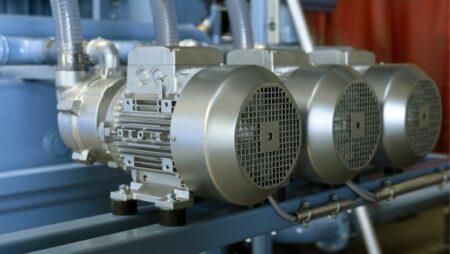
What Is the Vacuum Level and How Is It Measured in Vacuum Pumps?
The vacuum level refers to the degree of pressure below atmospheric pressure in a vacuum system. It indicates the level of “emptiness” or the absence of gas molecules in the system. Here’s a detailed explanation of vacuum level measurement in vacuum pumps:
Vacuum level is typically measured using pressure units that represent the difference between the pressure in the vacuum system and atmospheric pressure. The most common unit of measurement for vacuum level is the Pascal (Pa), which is the SI unit. Other commonly used units include Torr, millibar (mbar), and inches of mercury (inHg).
Vacuum pumps are equipped with pressure sensors or gauges that measure the pressure within the vacuum system. These gauges are specifically designed to measure the low pressures encountered in vacuum applications. There are several types of pressure gauges used for measuring vacuum levels:
1. Pirani Gauge: Pirani gauges operate based on the thermal conductivity of gases. They consist of a heated element exposed to the vacuum environment. As gas molecules collide with the heated element, they transfer heat away, causing a change in temperature. By measuring the change in temperature, the pressure can be inferred, allowing the determination of the vacuum level.
2. Thermocouple Gauge: Thermocouple gauges utilize the thermal conductivity of gases similar to Pirani gauges. They consist of two dissimilar metal wires joined together, forming a thermocouple. As gas molecules collide with the thermocouple, they cause a temperature difference between the wires, generating a voltage. The voltage is proportional to the pressure and can be calibrated to provide a reading of the vacuum level.
3. Capacitance Manometer: Capacitance manometers measure pressure by detecting the change in capacitance between two electrodes caused by the deflection of a flexible diaphragm. As the pressure in the vacuum system changes, the diaphragm moves, altering the capacitance and providing a measurement of the vacuum level.
4. Ionization Gauge: Ionization gauges operate by ionizing gas molecules in the vacuum system and measuring the resulting electrical current. The ion current is proportional to the pressure, allowing the determination of the vacuum level. There are different types of ionization gauges, such as hot cathode, cold cathode, and Bayard-Alpert gauges.
5. Baratron Gauge: Baratron gauges utilize the principle of capacitance manometry but with a different design. They consist of a pressure-sensing diaphragm separated by a small gap from a reference electrode. The pressure difference between the vacuum system and the reference electrode causes the diaphragm to deflect, changing the capacitance and providing a measurement of the vacuum level.
It’s important to note that different types of vacuum pumps may have different pressure ranges and may require specific pressure gauges suitable for their operating conditions. Additionally, vacuum pumps are often equipped with multiple gauges to provide information about the pressure at different stages of the pumping process or in different parts of the system.
In summary, vacuum level refers to the pressure below atmospheric pressure in a vacuum system. It is measured using pressure gauges specifically designed for low-pressure environments. Common types of pressure gauges used in vacuum pumps include Pirani gauges, thermocouple gauges, capacitance manometers, ionization gauges, and Baratron gauges.
\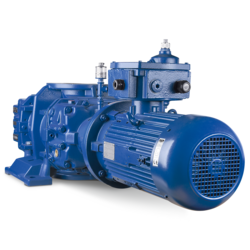
How Do Vacuum Pumps Contribute to Energy Savings?
Vacuum pumps play a significant role in energy savings in various industries and applications. Here’s a detailed explanation:
Vacuum pumps contribute to energy savings through several mechanisms and efficiencies. Some of the key ways in which vacuum pumps help conserve energy are:
1. Improved Process Efficiency: Vacuum pumps are often used to remove gases and create low-pressure or vacuum conditions in industrial processes. By reducing the pressure, vacuum pumps enable the removal of unwanted gases or vapors, improving the efficiency of the process. For example, in distillation or evaporation processes, vacuum pumps help lower the boiling points of liquids, allowing them to evaporate or distill at lower temperatures. This results in energy savings as less heat is required to achieve the desired separation or concentration.
2. Reduced Energy Consumption: Vacuum pumps are designed to operate efficiently and consume less energy compared to other types of equipment that perform similar functions. Modern vacuum pump designs incorporate advanced technologies, such as variable speed drives, energy-efficient motors, and optimized control systems. These features allow vacuum pumps to adjust their operation based on demand, reducing energy consumption during periods of lower process requirements. By consuming less energy, vacuum pumps contribute to overall energy savings in industrial operations.
3. Leak Detection and Reduction: Vacuum pumps are often used in leak detection processes to identify and locate leaks in systems or equipment. By creating a vacuum or low-pressure environment, vacuum pumps can assess the integrity of a system and identify any sources of leakage. Detecting and repairing leaks promptly helps prevent energy wastage associated with the loss of pressurized fluids or gases. By addressing leaks, vacuum pumps assist in reducing energy losses and improving the overall energy efficiency of the system.
4. Energy Recovery Systems: In some applications, vacuum pumps can be integrated into energy recovery systems. For instance, in certain manufacturing processes, the exhaust gases from vacuum pumps may contain heat or have the potential for energy recovery. By utilizing heat exchangers or other heat recovery systems, the thermal energy from the exhaust gases can be captured and reused to preheat incoming fluids or provide heat to other parts of the process. This energy recovery approach further enhances the overall energy efficiency by utilizing waste heat that would otherwise be lost.
5. System Optimization and Control: Vacuum pumps are often integrated into centralized vacuum systems that serve multiple processes or equipment. These systems allow for better control, monitoring, and optimization of the vacuum generation and distribution. By centralizing the vacuum production and employing intelligent control strategies, energy consumption can be optimized based on the specific process requirements. This ensures that vacuum pumps operate at the most efficient levels, resulting in energy savings.
6. Maintenance and Service: Proper maintenance and regular servicing of vacuum pumps are essential for their optimal performance and energy efficiency. Routine maintenance includes tasks such as cleaning, lubrication, and inspection of pump components. Well-maintained pumps operate more efficiently, reducing energy consumption. Additionally, prompt repair of any faulty parts or addressing performance issues helps maintain the pump’s efficiency and prevents energy waste.
In summary, vacuum pumps contribute to energy savings through improved process efficiency, reduced energy consumption, leak detection and reduction, integration with energy recovery systems, system optimization and control, as well as proper maintenance and service. By utilizing vacuum pumps efficiently and effectively, industries can minimize energy waste, optimize energy usage, and achieve significant energy savings in various applications and processes.
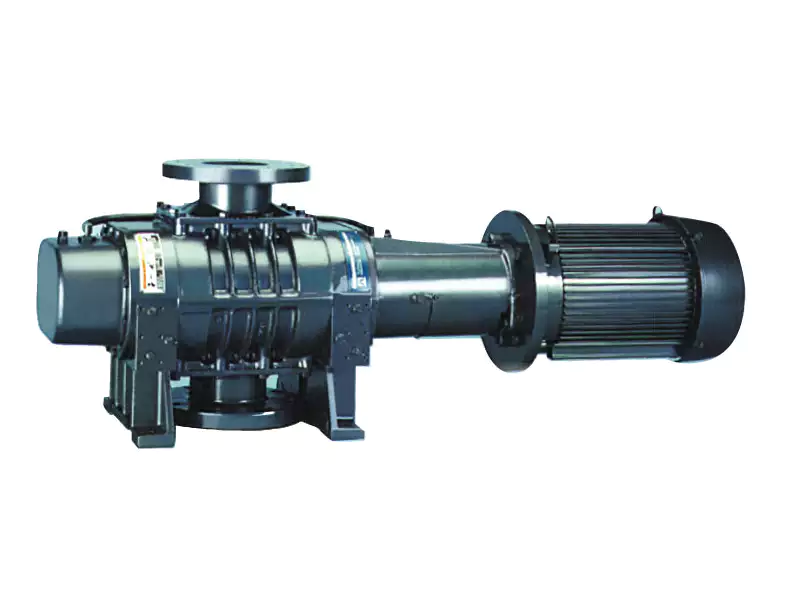
Can Vacuum Pumps Be Used in the Medical Field?
Yes, vacuum pumps have a wide range of applications in the medical field. Here’s a detailed explanation:
Vacuum pumps play a crucial role in various medical applications, providing suction or creating controlled vacuum environments. Here are some key areas where vacuum pumps are used in the medical field:
1. Negative Pressure Wound Therapy (NPWT):
Vacuum pumps are extensively utilized in negative pressure wound therapy, a technique used to promote wound healing. In NPWT, a vacuum pump creates a controlled low-pressure environment within a wound dressing, facilitating the removal of excess fluid, promoting blood flow, and accelerating the healing process.
2. Surgical Suction:
Vacuum pumps are an integral part of surgical suction systems. They provide the necessary suction force to remove fluids, gases, or debris from the surgical site during procedures. Surgical suction helps maintain a clear field of view for surgeons, enhances tissue visualization, and contributes to a sterile operating environment.
3. Anesthesia:
In anesthesia machines, vacuum pumps are used to create suction for various purposes:
– Airway Suction: Vacuum pumps assist in airway suctioning to clear secretions or obstructions from the patient’s airway during anesthesia or emergency situations.
– Evacuation of Gases: Vacuum pumps aid in removing exhaled gases from the patient’s breathing circuit, ensuring the delivery of fresh gas mixtures and maintaining appropriate anesthesia levels.
4. Laboratory Equipment:
Vacuum pumps are essential components in various medical laboratory equipment:
– Vacuum Ovens: Vacuum pumps are used in vacuum drying ovens, which are utilized for controlled drying or heat treatment of sensitive materials, samples, or laboratory glassware.
– Centrifugal Concentrators: Vacuum pumps are employed in centrifugal concentrators to facilitate the concentration or dehydration of biological samples, such as DNA, proteins, or viruses.
– Freeze Dryers: Vacuum pumps play a vital role in freeze-drying processes, where samples are frozen and then subjected to vacuum conditions to remove water via sublimation, preserving the sample’s structure and integrity.
5. Medical Suction Devices:
Vacuum pumps are utilized in standalone medical suction devices, commonly found in hospitals, clinics, and emergency settings. These devices create suction required for various medical procedures, including:
– Suctioning of Respiratory Secretions: Vacuum pumps assist in removing respiratory secretions or excess fluids from the airways of patients who have difficulty coughing or clearing their airways effectively.
– Thoracic Drainage: Vacuum pumps are used in chest drainage systems to evacuate air or fluid from the pleural cavity, helping in the treatment of conditions such as pneumothorax or pleural effusion.
– Obstetrics and Gynecology: Vacuum pumps are employed in devices used for vacuum-assisted deliveries, such as vacuum extractors, to aid in the safe delivery of babies during childbirth.
6. Blood Collection and Processing:
Vacuum pumps are utilized in blood collection systems and blood processing equipment:
– Blood Collection Tubes: Vacuum pumps are responsible for creating the vacuum inside blood collection tubes, facilitating the collection of blood samples for diagnostic testing.
– Blood Separation and Centrifugation: In blood processing equipment, vacuum pumps assist in the separation of blood components, such as red blood cells, plasma, and platelets, for various medical procedures and treatments.
7. Medical Imaging:
Vacuum pumps are used in certain medical imaging techniques:
– Electron Microscopy: Electron microscopes, including scanning electron microscopes and transmission electron microscopes, require a vacuum environment for high-resolution imaging. Vacuum pumps are employed to maintain the necessary vacuum conditions within the microscope chambers.
These are just a few examples of the wide-ranging applications of vacuum pumps in the medical field. Their ability to create suction and controlled vacuum environments makes them indispensable in medical procedures, wound healing, laboratory processes, anesthesia, and various other medical applications.


editor by CX 2023-12-01