Product Description
|
Model |
BST850AFZ/BSZ |
|
Voltage/frequency (V/Hz) |
220-240V/50Hz 100v-120v/60Hz |
|
Input power(W) |
≤550 |
|
Speed (r/min) |
≥1350 1650 |
|
Primary vacuumKPa |
-93KPa |
|
Secondary vacuumKPa |
-98KPa |
|
Restart pressure (KPa) |
0KPa |
|
Rated volume flow (m3/h) |
≥12m3/h @0KPa; |
|
Noise dB(A) |
≤62dB(A) |
|
Ambient temperature ºC |
-5-40 ºC |
|
Insulation Class |
F |
|
Cold insulation resistance (MΩ) |
≥100MΩ |
|
Voltage resistance |
1500V/50Hz 1min(No breakdown) |
|
Thermal protector |
Automatic reset 135±5ºC |
|
Capacitance (μF) |
25μF±5% 75μF±5% |
|
Net weight (Kg) |
10.5Kg |
|
Installation Dimensions (mm) |
223.2×88.9 mm(4XM6) |
|
External Dimensions (mm) |
268.8*128*214.7mm |
| Typical application | |
| Respirator (ventilator) | oxygenerator |
| Disinfectant sprayer | Blood analyzer |
| Clinical aspirator | Dialysis / hemodialysis |
| Dental vacuum drying oven | Air suspension system |
| Vending machines / coffee blenders and coffee machines | Massage chair |
| Chromatographic analyzer | Teaching instrument platform |
| On board access control system | Airborne oxygen generator |
Why choose CHINAMFG air compressor
1. It saves 10-30% energy than the air compressor produced by ordinary manufacturers.
2. It is widely used in medical oxygen generator and ventilator .
3. A large number of high-speed train and automobile application cases, supporting – 41 to 70 ºC, 0-6000 CHINAMFG above sea level .
4. Medium and high-end quality, with more than 7000 hours of trouble free operation for conventional products and more than 15000 hours of trouble free operation for high-end products.
5. Simple operation, convenient maintenance and remote guidance.
6. Faster delivery time, generally completed within 25 days within 1000 PCs.
Machine Parts
Name: Motor
Brand: COMBESTAIR
Original: China
1.The coil adopts the fine pure copper enameled wire, and the rotor adopts the famous brand silicon steel sheet such as ZheJiang baosteel.
2.The customer can choose the insulation grade B or F motor according to What he wants.
3.The motor has a built-in thermal protector, which can select external heat sensor.
4.Voltage from AC100V ~120V, 200V ~240V, 50Hz / 60Hz, DC6V~200V optional ; AC motor can choose double voltage double frequency ; DC Motor can choose the control of the infinitely variable speed.
Machine Parts
Name: Bearing
Brand: ERB , CHINAMFG , NSK
Original: China ect.
1.Standard products choose the special bearing ‘ERB’ in oil-free compressor, and the environment temperature tolerance from -50ºC to 180 ºC . Ensure no fault operation for 20,000 hours.
2.Customers can select TPI, NSK and other imported bearings according to the working condition.
Machine Parts
Name: Valve plates
Brand: SANDVIK
Original: Sweden
1.Custom the valve steel of Sweden SANDVIK; Good flexibility and long durability.
2.Thickness from 0.08mm to 1.2mm, suitable for maximum pressure from 0.8 MPa to 1.2 MPa.
Machine Parts
Name: Piston ring
Brand: COMBESTAIR-OEM , Saint-Gobain
Original: China , France
1.Using domestic famous brand–Polytetrafluoroethylene composite material; Wear-resistant high temperature; Ensure more than 10,000 hours of service life.
2.High-end products: you can choose the ST.gobain’s piston ring from the American import.
| serial number |
Code number | Name and specification | Quantity | Material | Note |
| 1 | 212571109 | Fan cover | 2 | Reinforced nylon 1571 | |
| 2 | 212571106 | Left fan | 1 | Reinforced nylon 1571 | |
| 3 | 212571101 | Left box | 1 | Die-cast aluminum alloy YL104 | |
| 4 | 212571301 | Connecting rod | 2 | Die-cast aluminum alloy YL104 | |
| 5 | 212571304 | Piston cup | 2 | PHB filled PTFE | |
| 6 | 212571302 | Clamp | 2 | Die-cast aluminum alloy YL102 | |
| 7 | 7050616 | Screw of cross head | 2 | Carbon structural steel of cold heading | M6•16 |
| 8 | 212571501 | Air cylinder | 2 | Thin wall pipe of aluninun alloy 6A02T4 | |
| 9 | 17103 | Seal ring of Cylinder | 2 | Silicone rubber | |
| 10 | 212571417 | Sealing ring of cylinder cover | 2 | Silicone rubber | |
| 11 | 212571401 | Cylinder head | 2 | Die-cast aluminum alloy YL102 | |
| 12 | 7571525 | Screw of inner hexagon Cylinder head | 12 | M5•25 | |
| 13 | 17113 | Sealing ring of connecting pipe | 4 | Silicong rubber | |
| 14 | 212571801 | Connecting pipe | 2 | Aluminum and aluminum alloy connecting rod LY12 | |
| 15 | 7100406 | Screw of Cross head | 4 | 1Cr13N19 | M4•6 |
| 16 | 212571409 | Limit block | 2 | Die-cast aluminum alloy YL102 | |
| 17 | 000402.2 | Air outlet valve | 2 | 7Cr27 quenching steel belt of The Swedish sandvik | |
| 18 | 212571403 | valve | 2 | Die-cast aluminum alloy YL102 | |
| 19 | 212571404 | Air inlet valve | 2 | 7Cr27 quenching steel belt of The Swedish sandvik | |
| 20 | 212571406 | Metal gasket | 2 | Stainless steel plate of heat and acidresistance | |
| 21 | 212571107 | Right fan | 1 | Reinforced nylon 1571 | |
| 22 | 212571201 | Crank | 2 | Gray castiron H20-40 | |
| 23 | 14040 | Bearing 6006-2Z | 2 | ||
| 24 | 70305 | Tighten screw of inner hexagon flat end | 2 | M8•8 | |
| 25 | 7571520 | Screw of inner hexagon Cylinder head | 2 | M5•20 | |
| 26 | 212571102 | Right box | 1 | Die-cast aluminum alloy YL104 | |
| 27 | 6P-4 | Lead protective ring | 1 | ||
| 28 | 7095712-211 | Hexagon head bolt | 2 | Carbon structural steel of cold heading | M5•152 |
| 29 | 715710-211 | Screw of Cross head | 2 | Carbon structural steel of cold heading | M5•120 |
| 30 | 16602 | Light spring washer | 4 | ø5 | |
| 31 | 212571600 | Stator | 1 | ||
| 32 | 70305 | Lock nut of hexagon flange faces | 2 | ||
| 33 | 212571700 | Rotor | 1 | ||
| 34 | 14032 | Bearing 6203-2Z | 2 |
FAQ
Q1: Are you factory or trade company?
A1: We are factory.
Q2: What the exactly address of your factory?
A2: Our factory is located in Linbei industrial area No.30 HangZhou City of ZHangZhoug Province, China
Q3: Warranty terms of your machine?
A3: Two years warranty for the machine and technical support according to your needs.
Q4: Will you provide some spare parts of the machines?
A4: Yes, of course.
Q5: How long will you take to arrange production?
A5: Generally, 1000 pcs can be delivered within 25 days
Q6: Can you accept OEM orders?
A6: Yes, with professional design team, OEM orders are highly welcome
Q7:Can you accept non-standard customization?
A7:We have the ability to develop new products and can customize, develop and research according to your requirements
| After-sales Service: | Remote Guided Maintenance |
|---|---|
| Warranty: | 2 Years |
| Principle: | Mixed-Flow Compressor |
| Samples: |
US$ 65/Piece
1 Piece(Min.Order) | Order Sample |
|---|
| Customization: |
Available
|
|
|---|
.shipping-cost-tm .tm-status-off{background: none;padding:0;color: #1470cc}
| Shipping Cost:
Estimated freight per unit. |
about shipping cost and estimated delivery time. |
|---|
| Payment Method: |
|
|---|---|
|
Initial Payment Full Payment |
| Currency: | US$ |
|---|
| Return&refunds: | You can apply for a refund up to 30 days after receipt of the products. |
|---|
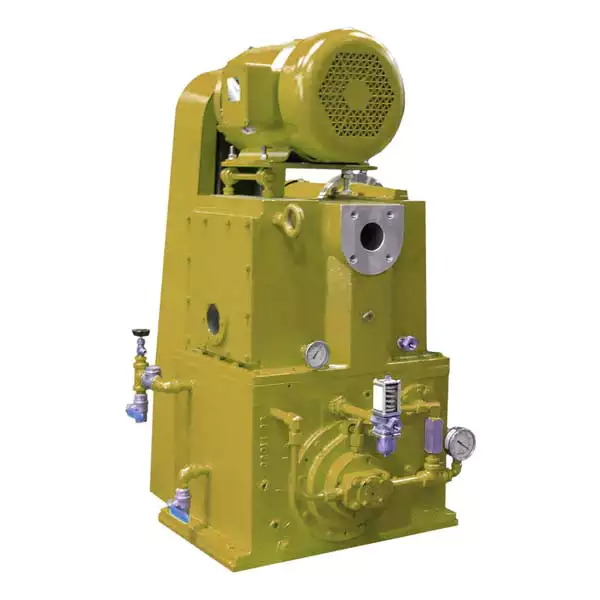
Can Vacuum Pumps Be Used for Vacuum Packaging?
Yes, vacuum pumps can be used for vacuum packaging. Here’s a detailed explanation:
Vacuum packaging is a method used to remove air from a package or container, creating a vacuum environment. This process helps to extend the shelf life of perishable products, prevent spoilage, and maintain product freshness. Vacuum pumps play a crucial role in achieving the desired vacuum level for effective packaging.
When it comes to vacuum packaging, there are primarily two types of vacuum pumps commonly used:
1. Single-Stage Vacuum Pumps: Single-stage vacuum pumps are commonly used for vacuum packaging applications. These pumps use a single rotating vane or piston to create a vacuum. They can achieve moderate vacuum levels suitable for most packaging requirements. Single-stage pumps are relatively simple in design, compact, and cost-effective.
2. Rotary Vane Vacuum Pumps: Rotary vane vacuum pumps are another popular choice for vacuum packaging. These pumps utilize multiple vanes mounted on a rotor to create a vacuum. They offer higher vacuum levels compared to single-stage pumps, making them suitable for applications that require deeper levels of vacuum. Rotary vane pumps are known for their reliability, consistent performance, and durability.
When using vacuum pumps for vacuum packaging, the following steps are typically involved:
1. Preparation: Ensure that the packaging material, such as vacuum bags or containers, is suitable for vacuum packaging and can withstand the vacuum pressure without leakage. Place the product to be packaged inside the appropriate packaging material.
2. Sealing: Properly seal the packaging material, either by heat sealing or using specialized vacuum sealing equipment. This ensures an airtight enclosure for the product.
3. Vacuum Pump Operation: Connect the vacuum pump to the packaging equipment or directly to the packaging material. Start the vacuum pump to initiate the vacuuming process. The pump will remove the air from the packaging, creating a vacuum environment.
4. Vacuum Level Control: Monitor the vacuum level during the packaging process using pressure gauges or vacuum sensors. Depending on the specific packaging requirements, adjust the vacuum level accordingly. The goal is to achieve the desired vacuum level suitable for the product being packaged.
5. Sealing and Closure: Once the desired vacuum level is reached, seal the packaging material completely to maintain the vacuum environment. This can be done by heat sealing the packaging material or using specialized sealing mechanisms designed for vacuum packaging.
6. Product Labeling and Storage: After sealing, label the packaged product as necessary and store it appropriately, considering factors such as temperature, humidity, and light exposure, to maximize product shelf life.
It’s important to note that the specific vacuum level required for vacuum packaging may vary depending on the product being packaged. Some products may require a partial vacuum, while others may require a more stringent vacuum level. The choice of vacuum pump and the control mechanisms employed will depend on the specific vacuum packaging requirements.
Vacuum pumps are widely used in various industries for vacuum packaging applications, including food and beverage, pharmaceuticals, electronics, and more. They provide an efficient and reliable means of creating a vacuum environment, helping to preserve product quality and extend shelf life.
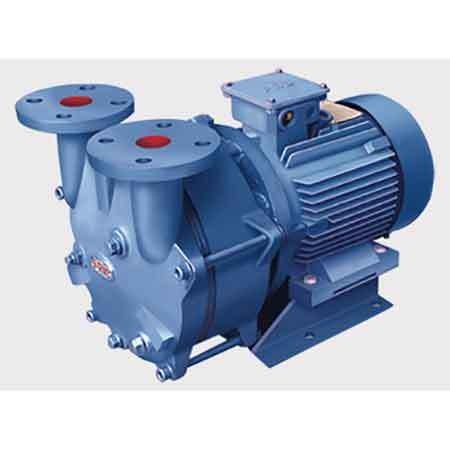
Can Vacuum Pumps Be Used for Chemical Distillation?
Yes, vacuum pumps are commonly used in chemical distillation processes. Here’s a detailed explanation:
Chemical distillation is a technique used to separate or purify components of a mixture based on their different boiling points. The process involves heating the mixture to evaporate the desired component and then condensing the vapor to collect the purified substance. Vacuum pumps play a crucial role in chemical distillation by creating a reduced pressure environment, which lowers the boiling points of the components and enables distillation at lower temperatures.
Here are some key aspects of using vacuum pumps in chemical distillation:
1. Reduced Pressure: By creating a vacuum or low-pressure environment in the distillation apparatus, vacuum pumps lower the pressure inside the system. This reduction in pressure lowers the boiling points of the components, allowing distillation to occur at temperatures lower than their normal boiling points. This is particularly useful for heat-sensitive or high-boiling-point compounds that would decompose or become thermally degraded at higher temperatures.
2. Increased Boiling Point Separation: Vacuum distillation increases the separation between the boiling points of the components, making it easier to achieve a higher degree of purification. In regular atmospheric distillation, the boiling points of some components may overlap, leading to less effective separation. By operating under vacuum, the boiling points of the components are further apart, improving the selectivity and efficiency of the distillation process.
3. Energy Efficiency: Vacuum distillation can be more energy-efficient compared to distillation under atmospheric conditions. The reduced pressure lowers the required temperature for distillation, resulting in reduced energy consumption and lower operating costs. This is particularly advantageous when dealing with large-scale distillation processes or when distilling heat-sensitive compounds that require careful temperature control.
4. Types of Vacuum Pumps: Different types of vacuum pumps can be used in chemical distillation depending on the specific requirements of the process. Some commonly used vacuum pump types include:
– Rotary Vane Pumps: Rotary vane pumps are widely used in chemical distillation due to their ability to achieve moderate vacuum levels and handle various gases. They work by using rotating vanes to create chambers that expand and contract, enabling the pumping of gas or vapor.
– Diaphragm Pumps: Diaphragm pumps are suitable for smaller-scale distillation processes. They use a flexible diaphragm that moves up and down to create a vacuum and compress the gas or vapor. Diaphragm pumps are often oil-free, making them suitable for applications where avoiding oil contamination is essential.
– Liquid Ring Pumps: Liquid ring pumps can handle more demanding distillation processes and corrosive gases. They rely on a rotating liquid ring to create a seal and compress the gas or vapor. Liquid ring pumps are commonly used in chemical and petrochemical industries.
– Dry Screw Pumps: Dry screw pumps are suitable for high-vacuum distillation processes. They use intermeshing screws to compress and transport gas or vapor. Dry screw pumps are known for their high pumping speeds, low noise levels, and oil-free operation.
Overall, vacuum pumps are integral to chemical distillation processes as they create the necessary reduced pressure environment that enables distillation at lower temperatures. By using vacuum pumps, it is possible to achieve better separation, improve energy efficiency, and handle heat-sensitive compounds effectively. The choice of vacuum pump depends on factors such as the required vacuum level, the scale of the distillation process, and the nature of the compounds being distilled.
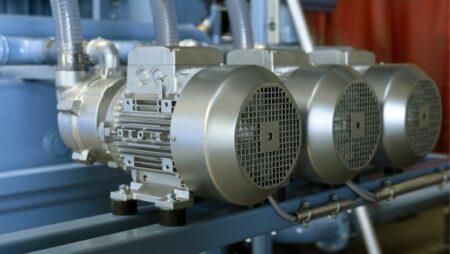
How Do You Choose the Right Size Vacuum Pump for a Specific Application?
Choosing the right size vacuum pump for a specific application involves considering several factors to ensure optimal performance and efficiency. Here’s a detailed explanation:
1. Required Vacuum Level: The first consideration is the desired vacuum level for your application. Different applications have varying vacuum level requirements, ranging from low vacuum to high vacuum or even ultra-high vacuum. Determine the specific vacuum level needed, such as microns of mercury (mmHg) or pascals (Pa), and choose a vacuum pump capable of achieving and maintaining that level.
2. Pumping Speed: The pumping speed, also known as the displacement or flow rate, is the volume of gas a vacuum pump can remove from a system per unit of time. It is typically expressed in liters per second (L/s) or cubic feet per minute (CFM). Consider the required pumping speed for your application, which depends on factors such as the volume of the system, the gas load, and the desired evacuation time.
3. Gas Load and Composition: The type and composition of the gas or vapor being pumped play a significant role in selecting the right vacuum pump. Different pumps have varying capabilities and compatibilities with specific gases. Some pumps may be suitable for pumping only non-reactive gases, while others can handle corrosive gases or vapors. Consider the gas load and its potential impact on the pump’s performance and materials of construction.
4. Backing Pump Requirements: In some applications, a vacuum pump may require a backing pump to reach and maintain the desired vacuum level. A backing pump provides a rough vacuum, which is then further processed by the primary vacuum pump. Consider whether your application requires a backing pump and ensure compatibility and proper sizing between the primary pump and the backing pump.
5. System Leakage: Evaluate the potential leakage in your system. If your system has significant leakage, you may need a vacuum pump with a higher pumping speed to compensate for the continuous influx of gas. Additionally, consider the impact of leakage on the required vacuum level and the pump’s ability to maintain it.
6. Power Requirements and Operating Cost: Consider the power requirements of the vacuum pump and ensure that your facility can provide the necessary electrical supply. Additionally, assess the operating cost, including energy consumption and maintenance requirements, to choose a pump that aligns with your budget and operational considerations.
7. Size and Space Constraints: Take into account the physical size of the vacuum pump and whether it can fit within the available space in your facility. Consider factors such as pump dimensions, weight, and the need for any additional accessories or support equipment.
8. Manufacturer’s Recommendations and Expert Advice: Consult the manufacturer’s specifications, guidelines, and recommendations for selecting the right pump for your specific application. Additionally, seek expert advice from vacuum pump specialists or engineers who can provide insights based on their experience and knowledge.
By considering these factors and evaluating the specific requirements of your application, you can select the right size vacuum pump that meets the desired vacuum level, pumping speed, gas compatibility, and other essential criteria. Choosing the appropriate vacuum pump ensures efficient operation, optimal performance, and longevity for your application.


editor by CX 2023-12-04