Product Description
Roots Pump with Rotary Piston Pump Vacuum System
Roots Rotary Piston Pump System is made up with the Roots Vacuum Pump and Rotary Piston Vacuum Pump in series connection. Rotary Piston Vacuum Pump is used as the pre-vacuum pump and the backing vacuum pump of the Roots Vacuum Pump, while the Roots Vacuum Pump is the main vacuum pump. The selection of displacement ratio, between the Roots Vacuum Pump and the Rotary Piston Vacuum Pump, is mainly referrd to the vacuum value of the vacuum system under long term running; when working in low vacuum, it is advised to select small displacement ratio(2:1 to 4:1); If working in medium or high vacuum, the bigger displacement ratio(4:1to10:1)should be preferred.
Features:
1. High vacuum, high exhausting efficiency in medium or high vacuum, wide working range, obvious energy-saving results.
2. Integrated rack, compact structure, small required space.
3. High automation, simple operation, easy maintenance, safe, reliable and durable running.
4. To customize a special pump system as per the specific needs of the end user.
APPLICATIONS
Widely used in vacuum coating, vacuum metallurgy, vacuum heat treatment, vacuum drying, vacuum impregnation, vacuum strainer, poly-silicon production, aerospace simulation and so on.
Main Specifications for One Roots Pump with CZPT Rotary Piston Punmp Vacuum System
|
Model |
Main Pump
|
Backing Pump |
Displacement (L/s) |
Ultimate Partial |
Ultimate Total Pressure |
Motor Power(kW) |
Suction |
Discharge |
| JZH75-3 | ZJ-75 | H-25DVA | 75 | 0.05 | 0.8 | 4.4,3.7 | 100 | 40 |
| JZH110-4 | ZJ-110 | H-25DVA | 110 | 0.05 | 0.8 | 4.4,3.7 | 100 | 40 |
| JZH150-6 | ZJ-150 | H-25DVA | 150 |
0.05 |
0.8 | 5.2,4.5 | 100 | 40 |
| JZH220-4 | ZJ-220 | H-50DV | 220 | 0.05 | 0.8 | 8,6 | 100 | 50 |
| JZH220-3 | ZJ-220 | H-60DVA | 220 | 0.05 | 0.8 | 8,7 | 100 | 50 |
| JZH300-4 | ZJ-300 | H-70DV | 300 | 0.05 | 0.8 | 9.5 | 150 | 63 |
| JZH300-3 | ZJ-300 | H-100DV | 300 | 0.05 | 0.8 | 11.5 | 150 | 63 |
| JZH600-6 | ZJ-600 | H-100DV | 600 | 0.05 | 0.8 | 15,13 | 200 | 63 |
| JZH600-5 | ZJ-600 | H-120DV | 600 | 0.05 | 0.8 | 15,13 | 200 | 63 |
| JZH600-4 | ZJ-600 | H-150DV | 600 | 0.05 | 0.8 | 18.5,16.5 | 200 | 80 |
| JZH600-3.5 | ZJ-600 | H-160DV | 600 | 0.05 | 0.8 | 18.5,16.5 | 200 | 80 |
| JZH600-3 | ZJ-600 | H-220DV | 600 | 0.05 | 0.8 | 22.5,20.5 | 200 | 100 |
| JZH1200-8 | ZJ-1200 | H-150DV | 1200 | 0.05 | 0.8 | 22 | 250 | 80 |
| JZH1200-7.5 | ZJ-1200 | H-160DV | 1200 | 0.05 | 0.8 | 22 | 250 | 80 |
| JZH1200-5 | ZJ-1200 | H-220DV | 1200 | 0.05 | 0.8 | 26 | 250 | 100 |
| JZH1200-4 | ZJ-1200 | H-300DV | 1200 | 0.05 | 0.8 | 33 | 250 | 100 |
| JZH1800-8 | ZJ-1800 | H-220DV | 1800 | 0.05 | 0.8 | 30 | 250 | 100 |
| JZH1800-6 | ZJ-1800 | H-300DV | 1800 | 0.05 | 0.8 | 37 | 250 | 100 |
| JZH1800-3 | ZJ-1800 | H-600DV | 1800 | 0.05 | 0.8 | 60 | 250 | 150 |
| JZH2500-11 | ZJ-2500 | H-220DV | 2500 | 0.05 | 0.8 | 37 | 300 | 100 |
| JZH2500-8 | ZJ-2500 | H-300DV | 2500 | 0.05 | 0.8 | 44 | 300 | 100 |
| JZH2500-4 | ZJ-2500 | H-600DV | 2500 | 0.05 | 0.8 | 67 | 300 | 150 |
| JZH5000-8 | ZJ-5000 | H-600DV | 5000 | 0.05 | 0.8 | 82 | 400 | 150 |
Note:1,If roots vacuum pump is operated at 60HZ,the displacement should be increaced to 1.2times.
2,For the ZJP roots vacuum pumps with bapass valve,the unit model must be changed to JZPH,other parameters are unchanged.
Main Specifications for One Roots Pump with Double Stages Rotary Piston Pump Vacuum System
|
Model |
Main Pump |
Backing Pump |
Displacement |
Ultimate Parlial |
Ultimate Total Pressure |
Power |
Suction |
Discharge |
| ZJ2H75-5 | ZJ-75 | 2H-15DVA | 75 | 0.02 | 0.5 | 4.4,3.7 | 100 | 40 |
| ZJ2H110-7 | ZJ-110 | 2H-15DVA | 110 | 0.02 | 0.5 | 4.4,3.7 | 100 | 40 |
| ZJ2H150-5 | ZJ-150 | 2H-30DV | 150 | 0.02 | 0.5 | 7,6 | 100 | 50 |
| ZJ2H220-7 | ZJ-220 | 2H-30DV | 220 | 0.02 | 0.5 | 8,6 | 100 | 50 |
| ZJ2H220-5 | ZJ-220 | 2H-45DVA | 220 | 0.02 | 0.5 | 8,7 | 100 | 50 |
| ZJ2H220-4 | ZJ-220 | 2H-50DV | 220 | 0.02 | 0.5 | 9.5,8.5 | 100 | 63 |
| ZJ2H300-6 | ZJ-300 | 2H-50DV | 300 | 0.02 | 0.5 | 9.5 | 150 | 63 |
| ZJ2H300-4 | ZJ-300 | 2H-70DV | 300 | 0.02 | 0.5 | 11.5 | 150 | 63 |
| ZJ2H600-8.5 | ZJ-600 | 2H-70DV | 600 | 0.02 | 0.5 | 15 | 200 | 63 |
| ZJ2H600-7.5 | ZJ-600 | 2H-80DV | 600 | 0.02 | 0.5 | 15 | 200 | 63 |
| ZJ2H600-6 | ZJ-600 | 2H-120DV | 600 | 0.02 | 0.5 | 18.5,16.5 | 200 | 80 |
| ZJ2H600-5 | ZJ-600 | 2H-120DV | 600 | 0.02 | 0.5 | 18.5,16.5 | 200 | 80 |
| ZJ2H1200-8 | ZJ-1200 | 2H-150DV | 1200 | 0.02 | 0.5 | ,26 | 250 | 100 |
| ZJ2H1200-5 | ZJ-1200 | 2H-220DV | 1200 | 0.02 | 0.5 | 33 | 250 | 100 |
| ZJ2H1800-8 | ZJ-1800 | 2H-220DV | 1800 | 0.02 | 0.5 | 37 | 250 | 100 |
| ZJ2H1800-4 | ZJ-1800 | 2H-450DV | 1800 | 0.02 | 0.5 | 60 | 250 | 150 |
| ZJ2H2500-11 | ZJ-2500 | 2H-220DV | 2500 | 0.02 | 0.5 | 44,40.5 | 300 | 100 |
| ZJ2H2500-5.5 | ZJ-2500 | 2H-450DV | 2500 | 0.02 | 0.5 | 67,63.5 | 300 | 150 |
| ZJ2H5000-11 | ZJ-5000 | 2H-450DV | 5000 | 0.02 | 0.5 | 82 | 400 | 150 |
Note:1,If roots vacuum pump is operated at 60HZ,the displacement should be increaced to 1.2times.
2,For the ZJP roots vacuum pumps with bapass valve,the unit model must be changed to JZP2H,other parameters are unchanged.
Main Specifications for Two Roots Pumps with CZPT Rotary Piston Pump Vacuum System
|
Model |
Main Pump 50Hz |
Backing Pump |
Middle Pump 50Hz |
Displacement |
Ulimate Partial Pressure |
Ulimate Total Pressure |
Motor Power(kW) |
Suction |
Discharge |
| J2ZH220-33 | ZJ-220 | H-25DVA | ZJ-75 | 220 | 0.02 | 0.5 | 7.4 | 100 | 40 |
| J2ZH300-43 | ZJ-300 | H-25DVA | ZJ-75 | 300 | 0.02 | 0.5 | 8.4 | 150 | 40 |
| J2ZH600-43 | ZJ-600 | H-50DV | ZJ-150 | 600 | 0.02 | 0.5 | 14.5 | 200 | 50 |
| J2ZH1200-53.5 | ZJ-1200 | H-60DVA | ZJ-220 | 1200 | 0.02 | 0.5 | 18 | 250 | 50 |
| J2ZH1200-53 | ZJ-1200 | H-70DV | ZJ-220 | 1200 | 0.02 | 0.5 | 19.5 | 250 | 63 |
| J2ZH1200-43 | ZJ-1200 | H-100DV | ZJ-300 | 1200 | 0.02 | 0.5 | 22.5 | 250 | 63 |
| J2ZH1200-42.5 | ZJ-1200 | H-120DV | ZJ-300 | 1200 | 0.02 | 0.5 | 22.5 | 250 | 63 |
| J2ZH1800-62.5 | ZJ-1800 | H-120DV | ZJ-300 | 1800 | 0.02 | 0.5 | 26.5 | 250 | 63 |
| J2ZH1800-34 | ZJ-1800 | H-150DV | ZJ-600 | 1800 | 0.02 | 0.5 | 33.5 | 250 | 80 |
| J2ZH1800-33.5 | ZJ-1800 | H-160DV | ZJ-600 | 1800 | 0.02 | 0.5 | 33.5 | 250 | 80 |
| J2ZH2500-44 | ZJ-2500 | H-150DV | ZJ-600 | 2500 | 0.02 | 0.5 | 40.5 | 300 | 80 |
| J2ZH2500-43.5 | ZJ-2500 | H-160DV | ZJ-600 | 2500 | 0.02 | 0.5 | 40.5 | 300 | 80 |
| J2ZH2500-43 | ZJ-2500 | H-220DV | ZJ-600 | 2500 | 0.02 | 0.5 | 44.5 | 300 | 100 |
| J2ZH5000-44 | ZJ-5000 | H-300DV | ZJ-1200 | 5000 | 0.02 | 0.5 | 70 | 400 | 100 |
| J2ZH5000-33 | ZJ-5000 | H-600DV | ZJ-1800 | 5000 | 0.02 | 0.5 | 97 | 400 | 150 |
Note:1,If roots vacuum pump is operated at 60Hz,the displacement should be increased to1.2times.
2,For the ZJP roots vacuum pumps with bypass valve,the unit model must be changed to J2ZPH,other parameters are unchanged.
Main Specifications for Two Roots Pumps with Double Stages Rotary Piston Pump Vacuum System
|
Model |
Main Pump 50Hz |
Middle Pump 50Hz |
Backing Pump |
Displacement |
Ulimate Partial Pressure(Pa) |
Ulimate Total Pressure(Pa) |
Motor Power |
Suction |
Discharge |
| J2Z2H220-35 | ZJ-220 | ZJ-75 | 2H-15DVA | 220 | 0.01 | 0.3 | 8.4 | 100 | 40 |
| J2Z2H300-42.5 | ZJ-300 | ZJ-75 | 2H-30DV | 300 | 0.01 | 0.3 | 10.2 | 150 | 20 |
| J2Z2H600-43.5 | ZJ-600 | ZJ-150 | 2H-45DVA | 600 | 0.01 | 0.3 | 14.5 | 200 | 20 |
| J2Z2H600-43 | ZJ-600 | ZJ-150 | 2H-50DV | 600 | 0.01 | 0.3 | 14.5 | 200 | 20 |
| J2Z2H1200-53 | ZJ-1200 | ZJ-220 | 2H-70DV | 1200 | 0.01 | 0.3 | 22.5 | 250 | 63 |
| J2Z2H1200-44 | ZJ-1200 | ZJ-300 | 2H-80DV | 1200 | 0.01 | 0.3 | 22.5 | 250 | 63 |
| J2Z2H1200-43 | ZJ-1200 | ZJ-300 | 2H-100DV | 1200 | 0.01 | 0.3 | 26 | 250 | 80 |
| J2Z2H1200-42.5 | ZJ-1200 | ZJ-300 | 2H-120DV | 1200 | 0.01 | 0.3 | 26 | 250 | 80 |
| J2Z2H1800-34 | ZJ-1800 | ZJ-600 | 2H-150DV | 1800 | 0.01 | 0.3 | 37.5 | 250 | 100 |
| J2Z2H1800-33.5 | ZJ-1800 | ZJ-600 | 2H-160DV | 1800 | 0.01 | 0.3 | 37.5 | 250 | 100 |
| J2Z2H1800-33 | ZJ-1800 | ZJ-600 | 2H-220DV | 1800 | 0.01 | 0.3 | 44.5 | 250 | 100 |
| J2Z2H1800-43.5 | ZJ-2500 | ZJ-600 | 2H-160DV | 2500 | 0.01 | 0.3 | 44.5 | 300 | 100 |
| J2Z2H2500-43 | ZJ-2500 | ZJ-600 | 2H-220DV | 2500 | 0.01 | 0.3 | 51.5 | 300 | 100 |
| J2Z2H5000-43 | ZJ-5000 | ZJ-1200 | 2H-450DV | 5000 | 0.01 | 0.3 | 93 | 400 | 150 |
Note:1,If roots vacuum pump is operated at 60Hz,the displacement should be increased to1.2times.
2,For the ZJP roots vacuum pumps with bypass valve,the unit model must be changed to J2ZPH,other parameters are unchanged.
/* March 10, 2571 17:59:20 */!function(){function s(e,r){var a,o={};try{e&&e.split(“,”).forEach(function(e,t){e&&(a=e.match(/(.*?):(.*)$/))&&1
| Structure: | Rotary Vacuum Pump |
|---|---|
| Exhauster Method: | Positive Displacement Pump |
| Vacuum Degree: | Vacuum |
| Work Function: | Mainsuction Pump |
| Working Conditions: | Dry |
| Transport Package: | Standard Export Package |
| Customization: |
Available
|
|
|---|
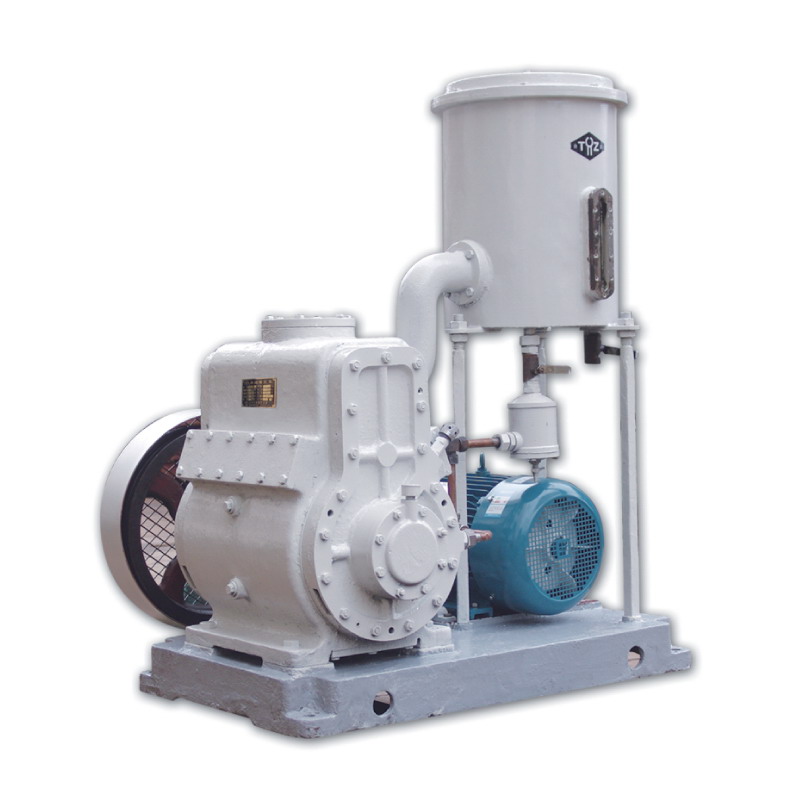
Can Piston Vacuum Pumps Create a Deep Vacuum?
Yes, piston vacuum pumps have the capability to create a deep vacuum. Here’s a detailed explanation:
Piston vacuum pumps are designed to generate and maintain a vacuum by using a reciprocating piston mechanism. They can achieve vacuum levels ranging from millitorr (10-3 Torr) to microns (10-6 Torr), which is considered a deep vacuum range.
When the piston moves downward during the suction stroke, it creates a vacuum within the cylinder. This allows gas or air from the system being evacuated to enter the cylinder. As the piston moves up during the compression stroke, the gas is expelled from the cylinder, reducing its volume and increasing its pressure. This cyclic process continues, gradually reducing the pressure within the system.
One of the factors that contribute to the ability of piston vacuum pumps to create a deep vacuum is the use of an airtight seal between the piston and cylinder walls. This seal prevents the gas from leaking back into the evacuated system, allowing the pump to maintain the desired vacuum level.
It’s important to note that the achievable vacuum level of a piston vacuum pump can depend on various factors, including the design of the pump, the materials used, the quality of the seals, and the operating conditions. Additionally, the flow rate of the pump may be lower compared to other types of vacuum pumps, as piston pumps are typically designed for applications that require low flow rates but high vacuum levels.
In summary, piston vacuum pumps can create a deep vacuum in the millitorr to micron range. With their reciprocating piston mechanism and airtight seals, they are capable of generating and maintaining a vacuum suitable for applications that require deep vacuum conditions.
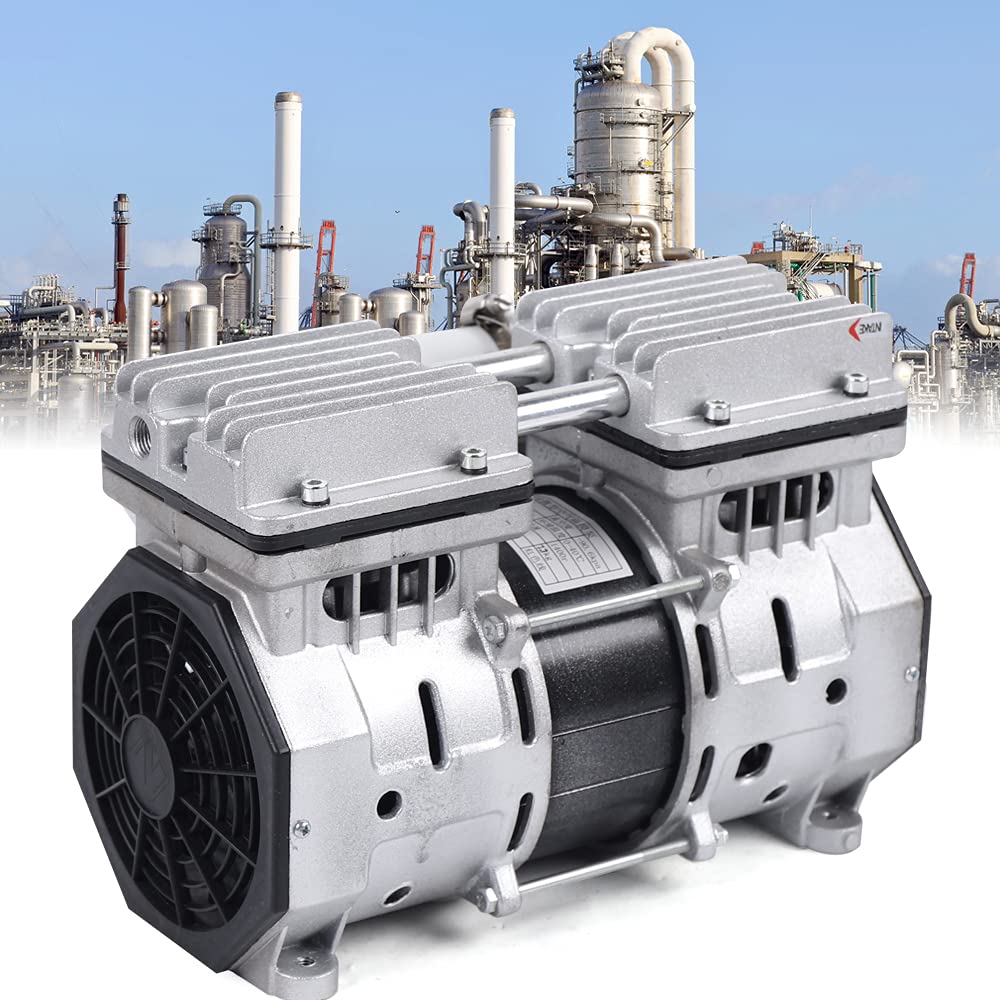
Can Piston Vacuum Pumps Be Used for Vacuum Drying Processes?
Yes, piston vacuum pumps can be used for vacuum drying processes. Here’s a detailed explanation:
1. Vacuum Drying Process:
– Vacuum drying is a process used to remove moisture or other volatile substances from a material or product by subjecting it to reduced pressure.
– The reduced pressure lowers the boiling point of the moisture, allowing it to evaporate at lower temperatures.
– Vacuum drying is commonly used in industries such as food processing, pharmaceuticals, ceramics, and electronics to dry heat-sensitive or delicate materials.
2. Vacuum Generation:
– Piston vacuum pumps are well-suited for generating the required vacuum levels for drying processes.
– These pumps create a vacuum by drawing air or gas out of the drying chamber, reducing the pressure inside.
– The piston inside the pump moves up and down, creating a pumping action that helps to evacuate the chamber and maintain the desired vacuum level.
3. Advantages of Piston Vacuum Pumps for Vacuum Drying:
– Piston vacuum pumps offer several advantages that make them suitable for vacuum drying processes:
– High Vacuum Levels: Piston pumps can achieve relatively high vacuum levels, allowing efficient moisture removal from the material being dried.
– Controllable Vacuum Levels: These pumps often have adjustable speed or flow rate controls, enabling precise control of the vacuum level during the drying process.
– Compatibility with Moisture-Laden Gases: Some drying processes involve the removal of moisture-laden gases. Piston pumps can handle these gases without significant performance degradation.
– Robustness and Reliability: Piston vacuum pumps are known for their robust construction and reliability, making them suitable for continuous or long-duration drying processes.
4. Considerations for Vacuum Drying:
– While piston vacuum pumps can be used for vacuum drying, there are a few considerations to keep in mind:
– Temperature Sensitivity: Some drying processes require low-temperature operation due to the sensitivity of the material being dried. It’s important to select a piston pump that can handle the desired temperature range.
– Moisture Compatibility: Depending on the drying process, the pump’s internal components may come into contact with moisture or other volatile substances. It’s essential to select a pump with suitable materials of construction that can withstand such conditions.
– Condensable Vapors: In vacuum drying processes, condensation of vapors can occur. It’s important to ensure that the piston pump is equipped with appropriate features or accessories, such as condensate traps or separators, to handle condensable vapors.
5. System Integration:
– Integrating the piston vacuum pump into the overall vacuum drying system requires consideration of factors such as proper sizing, sealing mechanisms, and connecting piping or hoses.
– It’s important to ensure compatibility and proper integration between the pump, drying chamber, and any additional equipment or controls used in the process.
In summary, piston vacuum pumps can be used effectively for vacuum drying processes. Their ability to generate high vacuum levels, controllability, compatibility with moisture-laden gases, and robustness make them suitable for a wide range of drying applications. However, it’s important to consider factors like temperature sensitivity, moisture compatibility, condensable vapors, and proper system integration to ensure successful and efficient vacuum drying operations.
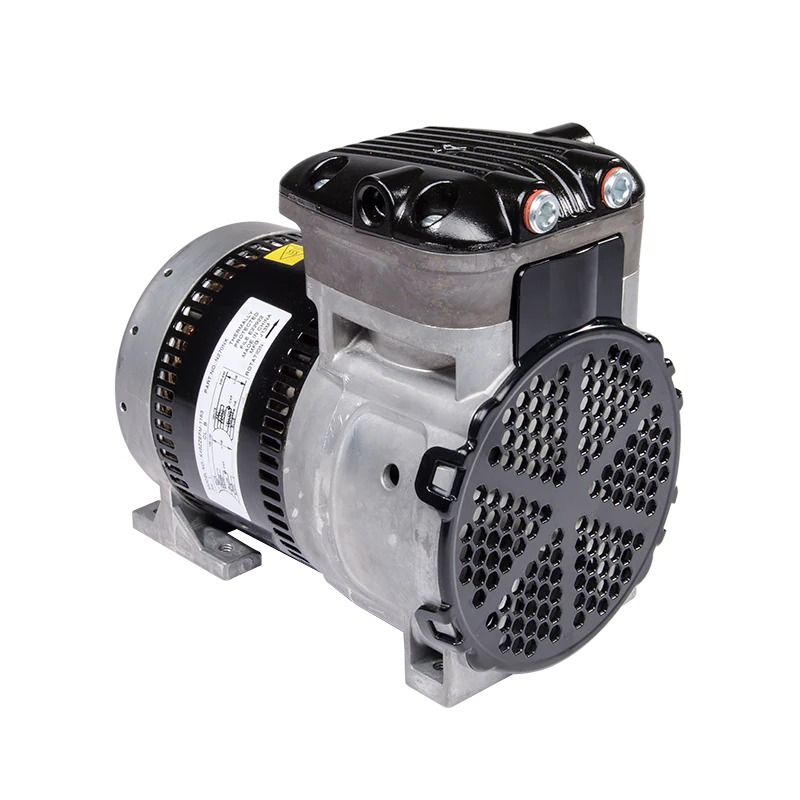
Are There Oil-Free Piston Vacuum Pump Options Available?
Yes, there are oil-free piston vacuum pump options available. Here’s a detailed explanation:
1. Oil-Free Technology:
– Traditional piston vacuum pumps use oil as a lubricant and sealant in their operation.
– However, advancements in vacuum pump technology have led to the development of oil-free piston vacuum pumps.
– Oil-free piston pumps are designed to operate without the need for lubricating oil, eliminating the risk of oil contamination and the need for oil changes.
2. Dry Running Operation:
– Oil-free piston vacuum pumps achieve lubrication and sealing through alternative means.
– They often utilize materials such as self-lubricating polymers or advanced coatings on the piston and cylinder surfaces.
– These materials reduce friction and provide sufficient sealing to maintain vacuum levels without the need for oil.
3. Applications:
– Oil-free piston vacuum pumps are suitable for a wide range of applications where oil contamination is a concern.
– They are commonly used in industries such as food and beverage, pharmaceutical, electronics, laboratories, and medical where a clean and oil-free vacuum environment is required.
4. Advantages:
– The primary advantage of oil-free piston vacuum pumps is their ability to provide a clean and oil-free vacuum.
– They eliminate the risk of oil contamination, which is crucial in sensitive applications such as semiconductor manufacturing or pharmaceutical production.
– Oil-free pumps also simplify maintenance since there is no need for oil changes or regular oil monitoring.
5. Considerations:
– While oil-free piston vacuum pumps offer advantages, they also have some considerations to keep in mind.
– They may have slightly lower ultimate vacuum levels compared to oil-lubricated pumps.
– The absence of oil as a lubricant may result in slightly higher operating temperatures and increased wear on piston and cylinder surfaces.
– It’s important to select an oil-free piston vacuum pump that is suitable for the specific application requirements and consider the trade-offs between performance, cost, and maintenance.
6. Alternative Pump Technologies:
– In some cases, where oil-free operation is critical or specific vacuum levels are required, alternative pump technologies may be more suitable.
– Dry screw pumps, claw pumps, or scroll pumps are examples of oil-free pump technologies that are widely used in various industries.
– These pumps offer oil-free operation, high pumping speeds, and can achieve lower vacuum levels compared to oil-free piston pumps.
In summary, oil-free piston vacuum pumps are available as an alternative to traditional oil-lubricated pumps. They provide a clean and oil-free vacuum environment, making them suitable for applications where oil contamination is a concern. However, it’s important to consider specific application requirements and explore alternative pump technologies if necessary.


editor by CX 2023-12-26