Product Description
movable rotor pump for viscosity liquid (chocolate pump) 1″ Sanitary Lobe Pump with butter-like rotary lobes
Rotary pumps are used in a variety of industries including, pulp and paper, chemical, food, beverage, pharmaceutical, and biotechnology. They are popular in these diverse industries because they offer superb sanitary qualities, high efficiency, reliability, corrosion resistance, and good clean-in-place and sterilize-in-place (CIP/SIP) characteristics.
These pumps offer a variety of lobe options including single, bi-wing, tri-rotary (shown), and multi-rotary. Rotary lobe pumps are non-contacting and have large pumping chambers, allowing them to handle solids such as cherries or olives without damage. They are also used to handle slurries, pastes, yogurt, cream, milk, shampoo and a wide variety of other liquids. If wetted, rotary pump offer self-priming performance. A gentle pumping action minimizes product degradation. Rotary pump also offer reversible flows and can operate dry for long periods of time. Flow is relatively independent of changes in process pressure, so output is constant and continuous. 1″ Sanitary Lobe Pump with butter-like rotary lobes
1″ Sanitary Lobe Pump with butter-like rotary lobes
How Rotary Pumps Work – movable rotor pump for viscosity liquid
Rotary pumps are similar to external gear pumps in operation in that fluid flows around the interior of the casing. Unlike external gear pumps, however, the rotarys do not make contact. Rotary contact is prevented by external timing gears located in the gearbox. Pump shaft support bearings are located in the gearbox, and since the bearings are out of the pumped liquid, pressure is limited by bearing location and shaft deflection.
1″ Sanitary Lobe Pump with butter-like rotary lobes
1. As the rotarys come out of mesh, they create expanding volume on the inlet side of the pump. Liquid flows into the cavity and is trapped by the rotarys as they rotate.
2. Liquid travels around the interior of the casing in the pockets between the rotarys and the casing — it does not pass between the rotarys.
3. Finally, the meshing of the rotarys forces liquid through the outlet port under pressure.
1″ Sanitary Lobe Pump with butter-like rotary lobes
movable rotor pump for viscosity liquid Specification
| Model | Z-3 | Z-6 | Z-8 | Z-12 | Z-20 | Z-30 | |
| Displacement L/100rpm | 3 | 6 | 8 | 12 | 20 | 30 | |
| Speed range rpm | 200~500 | 200~500 | 200~500 | 200~500 | 200~500 | 200~400 | |
| Corresponding flow L/H | 300-800 | 650-1600 | 850-2100 | 1300-3200 | 2100-5400 | 3200-6400 | |
| Moroe power Kw | 0.55 | 0.75 | 1.5 | 2.2 | 3 | 4 | |
| Orifice Size mm | Φ25×1.5 | Φ25×1.5 | Φ25×1.5 | Φ32×1.5 | Φ38×1.5 | Φ50.8×1.5 | |
| Size | L | 710 | 780 | 850 | 980 | 1000 | 1050 |
| H | 290 | 390 | 400 | 450 | 450 | 480 | |
| H1 | 150 | 170 | 170 | 185 | 190 | 220 | |
| W | 150 | 190 | 190 | 220 | 250 | 270 | |
| W1 | 240 | 240 | 280 | 330 | 330 | 350 | |
| Tips | The specification listed here only for reference. | ||||||
1″ Sanitary Lobe Pump with butter-like rotary lobes
Rotary Pump Usage and Applications — movable rotor pump for viscosity liquid
Rotary pumps are frequently used in food applications because rotary pumps handle solids without damaging the product. Particle size pumped can be much larger in rotary pumps than in other sanitary pumps. Since the rotarys do not make contact, and clearances are not as close as in other pumps, this design handles low viscosity liquids with diminished performance. Loading characteristics are not as good as other designs, and suction ability is low. High-viscosity liquids require reduced speeds to achieve satisfactory performance. Reductions of 25% of rated speed and lower are common with high-viscosity liquids.
Common rotary lobe pump applications include, but are not limited to:
- Polymers
- Paper coatings
- Soaps and surfactants
- Paints and dyes
- Rubber and adhesives
- Pharmaceuticals
1″ Sanitary Lobe Pump with butter-like rotary lobes
movable rotor pump for viscosity liquid Food Applications:
Food products such as corn syrup, chocolate, and peanut butter
| Food and cosmetic products capable of being pumped by rotary rotor pumps | ||||
| Alcohol Apple purée Apricots Baby food Batter Beans Beer Beetroot Biscuit Cream Blackcurrants Brine Broth Butter fat Caramel Castor Oil Cat food Cheese curd Cheese whey Cherries Chicken paste Chili con carne Chocolate Chutney Cockles Coconut oil Cod oil |
Coffee liquor Cordials Corn oil Corn syrup Cottage cheese Cotton seed oil Cranberry juice Cream Cream cheese Custard Dog food Dough Eggs – whole Egg yolk Essences Evaporated milk Fish Flavorings Fondants Fruit juice Fruit pulp Fruit – whole Fruit yogurt Gelatin Gherkins Glucose |
Glycerin Gooseberries Gravy Hand cream Honey Horseradish Ice cream Icings Iodine ointment Jams Jelly Ketchup Lard Liquid sugar Lotions Malt Maple syrup Margarine Marmalade Marshmallow Marzipan Mascara Mayonnaise Milk Mincemeat Molasses |
Mousse Mussels Mustard Nail polish Nail varnish Offal Olive oil Onions Palm oil Pastes Peanut butter Pectin Perfumes Piccalilli Pie fillings Pizza toppings Plasma Potato salad Preserves Purées Rice pudding Salad dressing Shrimps Soap Solvents |
Sorbitol syrup Soup Soya sauce Spirits Starches Stews Strawberries Sugar Syrup Tapioca Tea Tomato ketchup Tomato paste Tomato purée Toothpaste Vaseline Vegetables Vinegar Water Wines Wort Yeast Yogurt |
| From Dickenson, T. C. 1995. Pumping Manual, 9th Ed. Elsevier Advanced Technology: Kidlington, Oxford, U.K. 1″ Sanitary Lobe Pump with butter-like rotary lobes | ||||
Advantage and Disadvantage of Rotary Pump movable rotor pump for viscosity liquid
1″ Sanitary Lobe Pump with butter-like rotary lobes
| Advantages | Disadvantages |
| Pass medium solids | Requires timing gears |
| No metal-to-metal contact | Requires 2 seals |
| Superior CIP/SIP capabilities | Reduced lift with thin liquids |
| Long term dry run (with lubrication to seals) | |
| Non-pulsating discharge |
Rotary Pump Construction Material / Configuration Options
movable rotor pump for viscosity liquid
1″ Sanitary Lobe Pump with butter-like rotary lobes
- Externals (head, casing) -SUS304 or 316 stainless steel head and casing
- Externals (gearbox) – Cast iron, stainless steel
- Internals (rotors, shaft) – SS304 or 316 stainless steel, non-galling stainless steel
- Shaft Seal – O-rings, component single or double mechanical seals, industry-standard cartridge mechanical seals
| Oil or Not: | Oil |
|---|---|
| Structure: | Rotary Vacuum Pump |
| Exhauster Method: | Positive Displacement Pump |
| Vacuum Degree: | Vacuum |
| Work Function: | Mainsuction Pump |
| Working Conditions: | Wet |
| Samples: |
US$ 500/Piece
1 Piece(Min.Order) | |
|---|
| Customization: |
Available
|
|
|---|
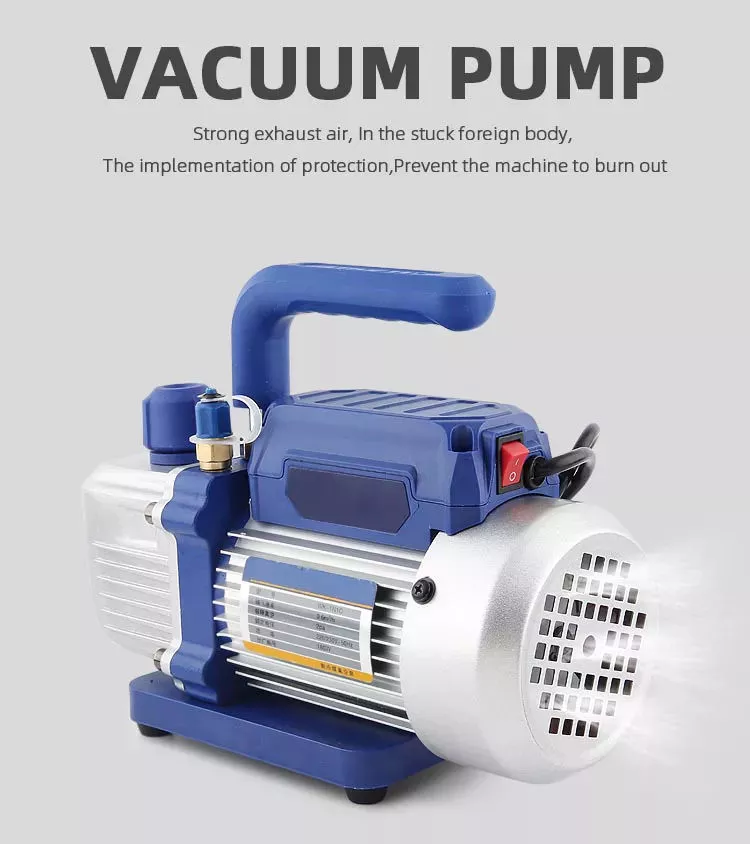
How to check the vacuum pump
A vacuum pump is a machine that draws gas molecules from a volume and maintains a partial vacuum. Its main job is to create a relative vacuum within the stated capabilities. If your vacuum pump isn’t working properly, it may need service. Read on to learn more about the types of vacuum pumps and how to check them.
Principle of industrial vacuum pump
Industrial vacuum pumps are used in industrial processes that require vacuum. These pumps are designed to generate, improve and maintain vacuum. Learn about the different types of industrial vacuum technology. You can start by reading about the most common types of industrial vacuum pumps. These pumps can be used in a variety of industrial processes from cleaning to manufacturing.
Regardless of the technology used to manufacture these pumps, the basic principles behind their operation are the same. The speed and mass flow of the pump will determine its capacity and suitability. A faster flow rate will minimize the time it takes for the machine to empty. Another important factor to consider is the type of vacuum you need.
A liquid ring vacuum pump is an industrial pump that uses a ring of liquid to form a seal. This type of pump is best suited for applications with high vapor loads and high liquid carry-over. Liquid ring vacuum pumps can be divided into two categories: liquid ring vacuum pumps and scroll vacuum pumps.
Industrial vacuum pumps work by removing gas molecules from a chamber. The partial vacuum created allows material to flow through the void. As more molecules are removed, the pressure in the chamber decreases, releasing energy that can be used for a variety of different purposes.
The most common use of industrial vacuum pumps is for electric lights. In these lamps, a vacuum pump removes the gas, causing the bulb to light up. Energy from the vacuum is also used in aircraft to power instruments. In addition to powering industrial vacuum cleaners, they are used in a variety of other environments.
High-performance industrial vacuum systems require specific materials that can withstand extreme pressure. This means that the materials used in these systems need to be properly checked. They must also be free of organic debris and other contaminants before they can be safely placed in the chamber.
Types of vacuum pumps
There are various types of vacuum pumps. Which one to choose should depend on the purpose of the pump and the degree of vacuum that must be achieved. It is mainly divided into three categories: rough vacuum or low vacuum, high vacuum and ultra-high vacuum. They all have varying degrees of scarcity. The higher the pressure, the fewer molecules per cubic centimeter. This in turn improves vacuum quality.
The vacuum pump is critical to the operation of the vacuum system. These devices are divided into three main categories according to their working pressure range. These pumps have different characteristics and technologies that make them ideal for specific applications. The choice of vacuum pump required for a particular application depends on how much vacuum you need, and how much power you are willing to spend.
Vacuum pumps are used in a variety of industrial and scientific processes. Their main function is to remove gas molecules from the sealed volume, leaving a partial vacuum. There are many different types of vacuum pumps, including rotary piston, liquid ring and scroll vacuum pumps. In addition, turbomolecular pumps are used.
Dry vacuum pumps are more expensive than wet vacuum pumps. Wet vacuum pumps use oil as their lubricating fluid. Different types of oils are used depending on the application. Some wet pumps have additional features, including contaminant filtration. However, wet systems have one major disadvantage: the contact between oil and fluid. To avoid this, oil separators are usually used.
There are several different types of vacuum pumps. The basic type is the positive displacement pump. It operates by expanding the chamber and removing gas molecules. The intake valve draws fluid into the chamber, while the exhaust valve opens when the chamber is at maximum expansion. This cycle repeats several times per second. Positive displacement pumps are often used in multistage vacuum systems. 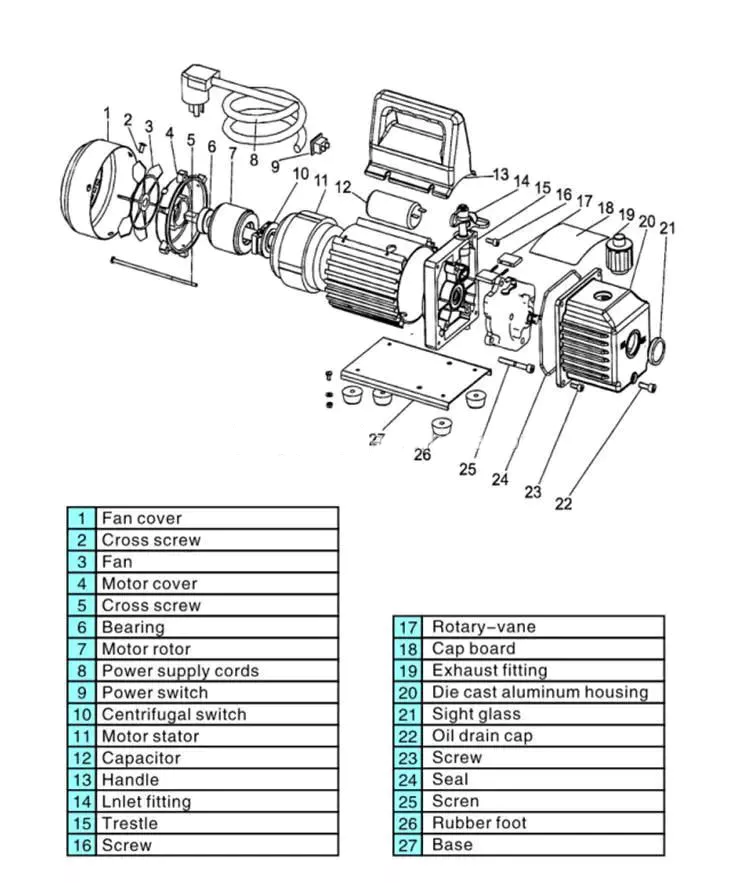
Maintenance of vacuum pump
Regular maintenance is very important to ensure the long-term effective use of the vacuum pump. One way to ensure proper pump performance is to change the oil regularly. Pump oil may be contaminated by vapor condensation. To avoid this problem, close the inlet valve for 20 to 30 minutes before applying vacuum. It is also important to install an inlet cold trap to protect the pump from corrosive vapors.
Another way to prolong the life of your vacuum pump is to periodically remove any solvent in it. This step reduces internal corrosion and prevents premature pump failure. During maintenance, be sure to disconnect the power supply to the vacuum pump. After cleaning, store it in a dry and safe place. The pump should also be disposed of in accordance with local regulations.
Vacuum pumps may require frequent oil changes, especially when used in wet chemistry. The standard rule is to change the oil after 3,000 hours of use, but some pumps require more frequent oil changes. It is also important to clean the oil regularly, as dirty or discolored oil can affect the performance of the pump.
Vacuum pumps are often equipped with on-site glass to allow the user to visually check the oil level. Clean oil will appear transparent, while dirty oil will appear darker. Frequent oil changes are essential, as oil changes can help spot various potential problems. Changes in vacuum pump performance or strange noises are also good indicators of a problem.
After an oil change, the vacuum pump should be cleaned thoroughly with a soft cloth and mild degreaser. Oil changes should take less than ten minutes, and they will extend the life of your equipment. Additionally, the outside of the pump should be wiped with a cloth or rag.
The pump must be properly vented to avoid internal corrosion. If possible, place the pump away from hot equipment or rooms. Overheating can reduce the viscosity of the oil and cause premature pump failure. In addition, it can lead to overwork of other expensive scientific equipment. Heat can also cause cracked rubber parts and oil leaks. 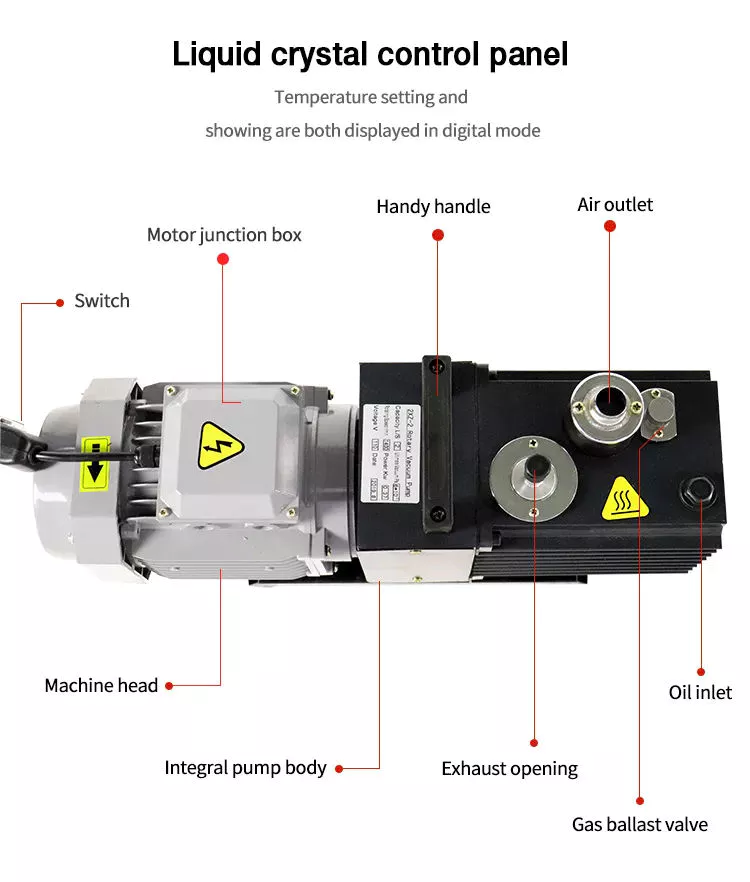
Signs of damage to the vacuum pump
A bad vacuum pump can cause a variety of automotive problems, including poor fuel economy, difficult braking, undercarriage oil leaks, and faulty air conditioning. If any of these problems occur, call a mechanic to check your vehicle’s vacuum pump. You can also check the air conditioner and brake pedal to see if they are working properly.
A loud noise from the pump can also be a symptom of a malfunction. These noises are often caused by the aging and accumulated wear of specific components. If this is the case, the diaphragm, valve plate or seals may need to be replaced. However, if the noise is coming from bearings or other areas, more extensive repairs may be required. Additionally, dust and other contaminants can enter the pump chamber, which can degrade pump performance.
If the vacuum pump won’t start, it could be a blown fuse or a power or voltage problem. Other common causes are flow restrictions or improper installation at the entrance. Also, the vacuum pump may be damaged or the capacitors may be of poor quality. It’s not always easy to tell if a vacuum pump is leaking oil, but a greasy transmission can indicate a vacuum pump failure.
A leaking vacuum pump can also hiss when the car’s engine is running. If you hear it, check the hoses and connections to make sure there are no leaks. A vacuum leak may indicate a faulty vacuum pump, so you need to replace it as soon as possible.
Checking end pressure is easy, but a pressure gauge can also serve as a sign. You can also check for pump vibration by running a short procedure. Excessive vibration can be subtle, but it can greatly affect your process. If you notice excessive pump vibration, you should contact a professional immediately.
Poor pump performance can cause many problems for your company. A bad vacuum pump not only wastes material, it also damages your tools and reputation.


editor by CX 2023-11-10