Product Description
Product Description
2BE series water ring vacuum pump and compressor, based on many years of scientific research results and production experience, combined with the international advanced technology of similar products, developed high efficiency and energy saving products, usually used for pumping no CZPT particles, insoluble in water, no corrosion gas, in order to form a vacuum and pressure in a closed container. By changing the structure material, it can also be used to suck corrosive gas or to use corrosive liquid as working fluid. Widely used in papermaking, chemical, petrochemical, light industry, pharmaceutical, food, metallurgy, building materials, electrical appliances, coal washing, mineral processing, chemical fertilizer and other industries.
This series of pumps uses the CZPT single action structure, has the advantages of simple structure, convenient maintenance, reliable operation, high efficiency and energy saving, and can adapt to large displacement, load impact fluctuation and other harsh conditions.
The key components, such as the distribution plate, impeller and pump shaft, have been optimized to simplify the structure, improve the performance and achieve energy saving. The welding impeller is used, the blade is pressed and formed once, and the shape line is reasonable; Hub processing, fundamentally solve the dynamic balance problem. Impeller and pump shaft are fitted with hot filling interference, reliable performance. It runs smoothly. After the impeller is welded, the whole is subjected to good heat treatment, and the blade has good toughness, so that the impact resistance and bending resistance of the blade can be fundamentally guaranteed, and it can adapt to the bad working conditions of load impact fluctuation.
2BE series pump, with air and water separator, multi-position exhaust port, pump cover is provided with exhaust valve overhaul window, impeller and distribution plate clearance through positioning bearing gland at both ends of the adjustment, easy to install and use, simple operation, easy maintenance.
Pump structure
The performance curve of this series of pumps is measured under the following working conditions: the suction medium is 20°C saturated air, the working liquid temperature is 15°C, the exhaust pressure is 1013mbar, and the deviation of soil is 10%.
Structure declaration
2BEA-10-25 Structure diagram
1.Flat key 2. Shaft 3. Oil deflector 4. Bearing cap 5. Bearings 6. Bearing bracket 7.Brasque cover
8.Brasque body 9. Brasque ring 10. Brasque 11.Valve plate 12. Valve block
13.Front distribution plate 14.Pump body 15. Impeller 16. O seal ring.
17.Back distribution plate 18. Side cover. 19. Flat key 20. Axle sleeve 21. Elastic collar
22.Water retaining ring 23. Adjusting washer 24. Rear bearing body 25. Bearing screw cap
26.Bearing 27. Bolt
2BEA-30-70 Structure diagram
1.Flat key 2. Shaft 3. Oil deflector 4. Front bearing retainer 5. Front bearing body
6. Front bearing inner cover 7. Front side cover 8. Brasque cover 9. Brasque body 10. Brasque ring
11. Brasque 12. Front distribution plate 13. Pump body 14. Impeller 15. O seal ring
16. Valve block 17. Valve plate 18. Back distribution plate 19. Axle sleeve 20. Flat key
21. Back side cover 22. Water retaining ring 23. Rear bearing inner cover 24. Bearing
25. Adjusting washer 26. Oil block 27. Rear bearing outer cover 28. Back bearing body
29. Oil baffle disc 30. Elastic retainer or circular spiral
Product Parameters
| Model | 2BEA SERIES | |
| Minimum suction absolute pressure (hPa) | 33-160 | |
| Suction intensity(m³/min) | Absolute inhalation capacity 60hPa | 3,95-336 |
| Absolute inhalation capacity 100hPa | 4.58-342 | |
| Absolute inhalation capacity 200hPa | 4.87-352 | |
| Absolute inhalation capacity 400hPa | 4.93-353 | |
| Max. shaft power(kw) | 7-453 | |
| Motor power(kw) | 11-560 | |
| Speed(rpm) | 197-1750 | |
| Weight(kg) | 235-11800 | |
| Size | 795*375*355mm-3185*2110*2045mm | |
| Model | 2BEC SERIES | |
| Minimum suction absolute pressure (hPa) | 160 | |
| Suction intensity(m³/min) | Absolute inhalation capacity 60hPa | 63-1700 |
| Absolute inhalation capacity 100hPa | 64-1738 | |
| Absolute inhalation capacity 200hPa | 65-1785 | |
| Absolute inhalation capacity 400hPa | 67-1800 | |
| Absolute inhalation capacity 550hPa | 68-1830 | |
| Max. shaft power(kw) | 61-2100 | |
| Motor power(kw) | 75-2240 | |
| Speed(rpm) | 105-610 | |
| Weight(kg) | 2930-57500 | |
| Size | 2102*1320*1160mm-5485*3560*3400mm | |
Detailed Photos
Operation site
Company presentation
Product gallery
RFQ
Q1. What is your terms of packing?
A: Generally, we pack our goods in neutral export wooden case . If you have legally registered patent, we can pack the goods in
wooden case with your own marks after getting your authorization letters.
Q2. What is your termsof payment?
A: T/T 30% as deposit, and 70% before delivery. We’ll show you the photos of the products and packages before you pay the balance.
Q3. What is your terms of delivery?
A: EXW, FOB, CFR, CIF, etc.
Q4. How about your delivery time?
A: Generally, it will take from 10 dasys to 30 days after receiving your advance payment according to the pump’s material. The
specific delivery time also depends on the items and the quantity of your order.
Q5. Can you produce according to the samples?
A: Yes, we can produce by your samples or technical drawings. We can build the molds and fixtures.
Q6. What is your sample policy?
A: We can supply the sample if we have ready parts in stock, but the customers have to pay the sample cost and the courier cost.
Q7. Do you test all your goods before delivery?
A: Yes, we have 100% test the pumps before delivery .
Q8: How do you make our business long-term and good relationship?
A. We keep good quality and competitive price to ensure our customers benefit ;
B. We respect every customer as our friend and we sincerely do business and make friends with them, no matter where they are from.
| After-sales Service: | Online |
|---|---|
| Warranty: | 1 Years |
| Oil or Not: | Oil Free |
| Structure: | Rotary Vacuum Pump |
| Exhauster Method: | Kinetic Vacuum Pump |
| Vacuum Degree: | High Vacuum |
| Customization: |
Available
|
|
|---|
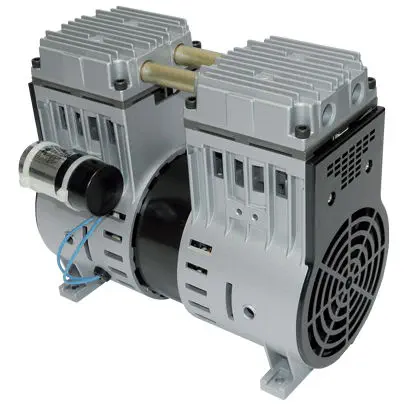
How Does a Piston Vacuum Pump Work?
A piston vacuum pump, also known as a reciprocating vacuum pump, operates using a piston mechanism to create a vacuum. Here’s a detailed explanation of its working principle:
1. Piston and Cylinder Assembly:
– A piston vacuum pump consists of a piston and cylinder assembly.
– The piston is a movable component that fits inside the cylinder and creates a seal between the piston and cylinder walls.
2. Intake and Exhaust Valves:
– The cylinder has two valves: an intake valve and an exhaust valve.
– The intake valve allows gas or air to enter the cylinder during the suction stroke, while the exhaust valve allows the expelled gas to exit during the compression stroke.
3. Suction Stroke:
– During the suction stroke, the piston moves downward, creating a vacuum within the cylinder.
– As the piston moves down, the intake valve opens, allowing gas or air from the system being evacuated to enter the cylinder.
– The volume within the cylinder increases, causing a decrease in pressure and the creation of a partial vacuum.
4. Compression Stroke:
– After the suction stroke, the piston moves upward during the compression stroke.
– As the piston moves up, the intake valve closes, preventing backflow of gas into the evacuated system.
– Simultaneously, the exhaust valve opens, allowing the gas trapped in the cylinder to be expelled.
– The upward movement of the piston reduces the volume within the cylinder, compressing the gas and increasing its pressure.
5. Expulsion of Gas:
– Once the compression stroke is complete, the gas is expelled through the exhaust valve.
– The exhaust valve then closes, ready for the next suction stroke.
– This process of alternating suction and compression strokes continues, gradually reducing the pressure within the evacuated system.
6. Lubrication:
– Piston vacuum pumps require lubrication for smooth operation and to maintain the airtight seal between the piston and cylinder walls.
– Lubricating oil is often introduced into the cylinder to provide lubrication and help maintain the seal.
– The oil also helps to cool the pump by dissipating heat generated during operation.
7. Applications:
– Piston vacuum pumps are commonly used in applications where high vacuum levels and low flow rates are required.
– They are suitable for processes such as laboratory work, vacuum drying, vacuum filtration, and other applications that require moderate vacuum levels.
In summary, a piston vacuum pump operates by creating a vacuum through the reciprocating motion of a piston within a cylinder. The suction stroke creates a vacuum by lowering the pressure within the cylinder, while the compression stroke expels the gas and increases its pressure. This cyclic process continues, gradually reducing the pressure within the system being evacuated. Piston vacuum pumps are commonly used in various applications that require moderate vacuum levels and low flow rates.
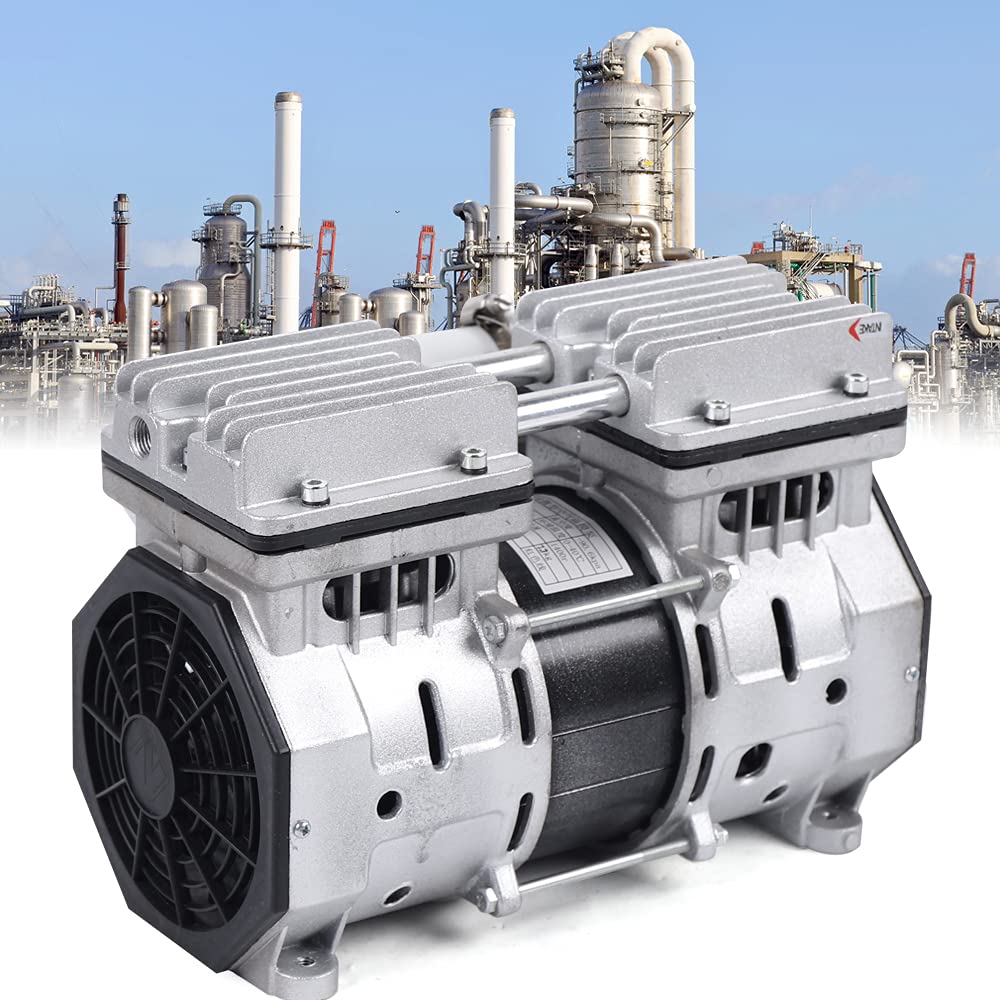
Can Piston Vacuum Pumps Be Used for Vacuum Drying Processes?
Yes, piston vacuum pumps can be used for vacuum drying processes. Here’s a detailed explanation:
1. Vacuum Drying Process:
– Vacuum drying is a process used to remove moisture or other volatile substances from a material or product by subjecting it to reduced pressure.
– The reduced pressure lowers the boiling point of the moisture, allowing it to evaporate at lower temperatures.
– Vacuum drying is commonly used in industries such as food processing, pharmaceuticals, ceramics, and electronics to dry heat-sensitive or delicate materials.
2. Vacuum Generation:
– Piston vacuum pumps are well-suited for generating the required vacuum levels for drying processes.
– These pumps create a vacuum by drawing air or gas out of the drying chamber, reducing the pressure inside.
– The piston inside the pump moves up and down, creating a pumping action that helps to evacuate the chamber and maintain the desired vacuum level.
3. Advantages of Piston Vacuum Pumps for Vacuum Drying:
– Piston vacuum pumps offer several advantages that make them suitable for vacuum drying processes:
– High Vacuum Levels: Piston pumps can achieve relatively high vacuum levels, allowing efficient moisture removal from the material being dried.
– Controllable Vacuum Levels: These pumps often have adjustable speed or flow rate controls, enabling precise control of the vacuum level during the drying process.
– Compatibility with Moisture-Laden Gases: Some drying processes involve the removal of moisture-laden gases. Piston pumps can handle these gases without significant performance degradation.
– Robustness and Reliability: Piston vacuum pumps are known for their robust construction and reliability, making them suitable for continuous or long-duration drying processes.
4. Considerations for Vacuum Drying:
– While piston vacuum pumps can be used for vacuum drying, there are a few considerations to keep in mind:
– Temperature Sensitivity: Some drying processes require low-temperature operation due to the sensitivity of the material being dried. It’s important to select a piston pump that can handle the desired temperature range.
– Moisture Compatibility: Depending on the drying process, the pump’s internal components may come into contact with moisture or other volatile substances. It’s essential to select a pump with suitable materials of construction that can withstand such conditions.
– Condensable Vapors: In vacuum drying processes, condensation of vapors can occur. It’s important to ensure that the piston pump is equipped with appropriate features or accessories, such as condensate traps or separators, to handle condensable vapors.
5. System Integration:
– Integrating the piston vacuum pump into the overall vacuum drying system requires consideration of factors such as proper sizing, sealing mechanisms, and connecting piping or hoses.
– It’s important to ensure compatibility and proper integration between the pump, drying chamber, and any additional equipment or controls used in the process.
In summary, piston vacuum pumps can be used effectively for vacuum drying processes. Their ability to generate high vacuum levels, controllability, compatibility with moisture-laden gases, and robustness make them suitable for a wide range of drying applications. However, it’s important to consider factors like temperature sensitivity, moisture compatibility, condensable vapors, and proper system integration to ensure successful and efficient vacuum drying operations.
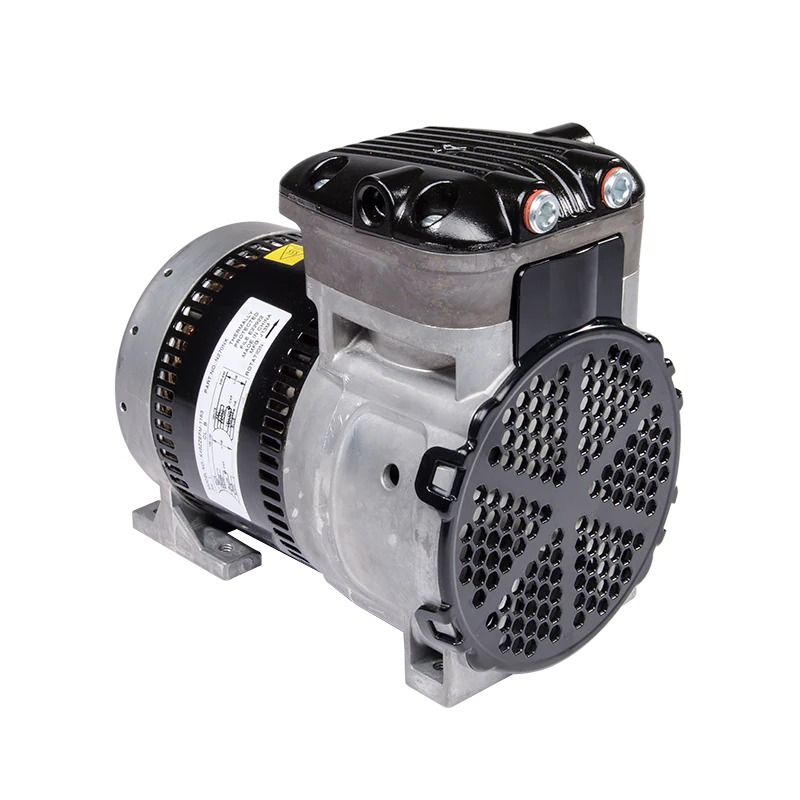
Are There Oil-Free Piston Vacuum Pump Options Available?
Yes, there are oil-free piston vacuum pump options available. Here’s a detailed explanation:
1. Oil-Free Technology:
– Traditional piston vacuum pumps use oil as a lubricant and sealant in their operation.
– However, advancements in vacuum pump technology have led to the development of oil-free piston vacuum pumps.
– Oil-free piston pumps are designed to operate without the need for lubricating oil, eliminating the risk of oil contamination and the need for oil changes.
2. Dry Running Operation:
– Oil-free piston vacuum pumps achieve lubrication and sealing through alternative means.
– They often utilize materials such as self-lubricating polymers or advanced coatings on the piston and cylinder surfaces.
– These materials reduce friction and provide sufficient sealing to maintain vacuum levels without the need for oil.
3. Applications:
– Oil-free piston vacuum pumps are suitable for a wide range of applications where oil contamination is a concern.
– They are commonly used in industries such as food and beverage, pharmaceutical, electronics, laboratories, and medical where a clean and oil-free vacuum environment is required.
4. Advantages:
– The primary advantage of oil-free piston vacuum pumps is their ability to provide a clean and oil-free vacuum.
– They eliminate the risk of oil contamination, which is crucial in sensitive applications such as semiconductor manufacturing or pharmaceutical production.
– Oil-free pumps also simplify maintenance since there is no need for oil changes or regular oil monitoring.
5. Considerations:
– While oil-free piston vacuum pumps offer advantages, they also have some considerations to keep in mind.
– They may have slightly lower ultimate vacuum levels compared to oil-lubricated pumps.
– The absence of oil as a lubricant may result in slightly higher operating temperatures and increased wear on piston and cylinder surfaces.
– It’s important to select an oil-free piston vacuum pump that is suitable for the specific application requirements and consider the trade-offs between performance, cost, and maintenance.
6. Alternative Pump Technologies:
– In some cases, where oil-free operation is critical or specific vacuum levels are required, alternative pump technologies may be more suitable.
– Dry screw pumps, claw pumps, or scroll pumps are examples of oil-free pump technologies that are widely used in various industries.
– These pumps offer oil-free operation, high pumping speeds, and can achieve lower vacuum levels compared to oil-free piston pumps.
In summary, oil-free piston vacuum pumps are available as an alternative to traditional oil-lubricated pumps. They provide a clean and oil-free vacuum environment, making them suitable for applications where oil contamination is a concern. However, it’s important to consider specific application requirements and explore alternative pump technologies if necessary.


editor by CX 2023-10-26