Product Description
Dosing Pump Plastic Pump Metering Pump Dosing Pump Pneumtic Pump CZPT Pump
Applicable industry
Petroleum industry, natural gas extraction, chemical industry, oil refining, thermal power plants, industrial and mining (boilers), food, pharmaceuticals, scientific research, printing and dyeing, papermaking, environmental protection, especially water treatment industries, etc.
The adjustment form of the metering pump: manual adjustment, electric adjustment, frequency conversion adjustment.
Others: explosion-proof motors can be configured, spare parts, wearing parts, tools, etc. are provided free of charge. Can be consigned to the user and responsible for debugging.
Scope of application
Suitable for occasions with high pressure, low pressure, strong (weak) corrosiveness and high measurement accuracy;
For example, it is used for the dosing of additives in the petroleum industry and the extraction of natural gas; the chemical industry is used for dosing proportional chemical media; it is used for the dosing pump for industrial water treatment in environmental protection; and it is used for purifying water in the boiler of thermal power plant. Dosing pump and so on.
Selection
1. Determine the pressure: The rated pressure of the selected metering pump should be slightly higher than the actual maximum pressure required, generally 10-20% higher. Don’t choose too high, too high pressure will waste energy and increase equipment investment and operating costs.
2. Determine the flow rate: The flow rate of the selected metering pump should be equal to or slightly larger than the flow rate required by the process. The use range of the metering pump flow rate is preferably 30 to 100% of the metering pump’s rated flow rate range. At this time, the metering pump has a high repeatability accuracy. Considering economy and practicability, it is recommended that the actual required flow of the metering pump should be 70-90% of the rated flow of the metering pump.
3. Determine the material of the pump head (hydraulic end): After the specific model and specifications of the metering pump are determined, select the material of the flow part according to the properties of the flow medium. This step is very important. If the selection is improper, it will cause corrosion damage to the medium. Leakage of overflow parts or media contaminates the system, etc. In severe cases, it may cause major accidents.
Other aspects: When choosing a metering pump, you also need to consider the accuracy level of the metering pump required. The higher the accuracy level, the greater the investment. The general working temperature of metering pump is -30~100ºC, and the working temperature range of special metering pump is wider (such as high temperature liquid metering pump with insulation jacket, its delivery temperature can reach 500ºC). For the particle size of the medium, the requirement should be less than 0.1mm. For the medium greater than 0.1mm, the flow structure of the pump can be changed to meet the needs. The viscosity of the medium should generally be 0~1000mm/s, and the special metering pump can reach 6000 mm2/s. The flow rate of the mechanical diaphragm metering pump is the maximum flow measured under the calibrated rated pressure (clean water delivery at room temperature) When the pressure drops, the output flow will be higher than the calibrated value.
Related matters
Installation matters
1. Export is higher than import to avoid siphon phenomenon
2. Pump head and injection valve require vertical installation
3. The attached pipe fittings can be tightened by hand, do not use tools; do not use raw material tape at the thread
4. The power supply voltage is stable and grounded
5. The installation environment is clean, spacious and well ventilated
classification
According to the overcurrent part
Plunger, piston type Mechanical diaphragm type Hydraulic diaphragm type
According to the driving mode
Motor drive Electromagnetic drive
According to the working method
Reciprocating type Rotary type (3) Gear type
4. According to the characteristics of the pump
Extra large base Large base Medium base Small base Micro base
Other classification methods: electric control type, air control type, heat preservation type, heating type, high viscosity type, etc.
Principle characteristics
The structure of the pump
The pump is composed of 3 parts: motor, transmission box, and cylinder.
The transmission box component is composed of a worm gear mechanism, a stroke adjustment mechanism and a crank connecting rod mechanism; the high adjustment stroke is implemented by rotating the adjustment hand wheel, thereby changing the eccentricity of the moving shaft to achieve the purpose of changing the plunger (piston) stroke.
The cylinder part is composed of pump head, suction valve group, discharge valve group, plunger and packing seal.
working principle
The motor drives the worm through the coupling and decelerates the main shaft and the eccentric wheel through the worm gear to make a rotary motion. The eccentric wheel drives the reciprocating motion in the sliding adjusting seat of the bow-shaped connecting rod. When the plunger moves to the rear dead center, a vacuum is gradually formed in the pump chamber, the suction valve opens, and liquid is sucked in; when the plunger moves to the CZPT dead center, the suction valve closes and the discharge valve opens, and the liquid moves further toward the plunger. Exhausted during exercise. In the reciprocating cycle of the pump, a continuous pressured and quantitative discharge liquid is formed.
Flow regulation
The flow rate of the pump is adjusted by rotating the adjustment hand wheel to drive the adjustment screw to rotate, thereby changing the distance between the bow-shaped connecting rods and changing the stroke of the plunger (piston) in the pump cavity to determine the flow rate. The scale of the adjustment handwheel determines the stroke of the plunger, with an accuracy rate of 95%.
Features of the pump
The pump has superior performance. The diaphragm metering pump has absolutely no leakage, high safety performance, accurate metering and delivery, the flow can be adjusted arbitrarily from zero to the maximum rated value, and the pressure can be arbitrarily selected from normal pressure to the maximum allowable range.
Intuitive and clear adjustment, stable operation, no noise, small size, light weight, convenient maintenance, and can be used in parallel.
The pump has many varieties, complete performance, suitable for conveying from -30 degrees to 450 degrees, viscosity is 0-800mm/s, maximum discharge pressure can reach 64Mpa, flow range is 0.1-20000L/h, and measurement accuracy is within ±1%.
According to the technological requirements, the pump can be manually adjusted and the flow can be adjusted by frequency conversion, and it can also realize remote control and automatic computer control.
Features
Measuring range: 0-400 liters/hour
Pressure range: 0-1.0 MPa
Drive mode: motor drive
Control method: manual, automatic control (can receive 4-20mA signal to adjust the flow)
1. Cast aluminum shell, high heat dissipation performance, light overall weight, suitable for various acid and alkali liquids, non-toxic and tasteless.
2. Use cam mechanism. There is no leakage on the whole, and it can be installed on the medicine tank or pipeline.
3. The contact medium pump head is made of PVC, optional PTFE, and stainless steel.
4. High cost performance, universally applicable to water treatment industries with low pressure requirements.
5. When the pump is running or stopping, the flow can be adjusted arbitrarily and can also be output quantitatively.
6. The diaphragm is pressed into a multilayer composite structure. The first layer is super tough Teflon acid-resistant film, the second layer is CZPT elastic rubber, the third layer is thick support iron core, the fourth layer is reinforced by reinforced nylon fiber, and the fifth layer is EPDM. The elastic rubber is completely covered, which can effectively increase the service life of the diaphragm.
Parameter Table
| Model | 50Hz | 60Hz | Pressure | Diaphragm (mm) |
Power | |||||
| Flow (LPH) |
Flow (GPH) |
SPM | Flow (GPH) |
Flow (LPH) |
SPM | BAR | PSI | |||
| GM10/1.2 | 10 | 2.6 | 48 | 3.1 | 12 | 58 | 12 | 174 | 60 | 0.37KW |
| GM25/1.0 | 25 | 6.6 | 7.9 | 30 | 10 | 145 | ||||
| GM50/1.0 | 50 | 13 | 96 | 16 | 60 | 115 | 10 | 145 | ||
| GM90/0.7 | 90 | 23 | 48 | 28 | 108 | 58 | 7 | 102 | 112 | |
| GM120/0.7 | 120 | 32 | 38 | 144 | 7 | 102 | ||||
| GM170/0.7 | 170 | 45 | 96 | 54 | 204 | 115 | 7 | 102 | ||
| GM240/0.5 | 240 | 63 | 76 | 288 | 5 | 73 | ||||
| GM330/0.5 | 330 | 86 | 144 | 104 | 396 | 173 | 5 | 73 | ||
| GM400/0.5 | 400 | 105 | 126 | 480 | 5 | 73 | ||||
| GM500/0.5 | 500 | 131 | 157 | 600 | 5 | 73 | ||||
Connection
| Model | PVC | PVDF | SS304/316 |
| GM10-GM25 | 6*9 mm hose | RC1/2″ F | 8*14mm welding union |
| GM50 | DN15 glue union | RC1/2″ F | 10*16mm welding union |
| GM90-GM120 | DN15 glue union | RC1/2″ F | 10*16mm welding union |
| GM170-GM330 | DN15 glue union | RC1/2″ F | 15*22mm welding union |
| GM400-GM500 | DN15 glue union | RC3/4″ F | 15*22mm welding union |
| After-sales Service: | Online Support/Visit Client′s Plant Site |
|---|---|
| Warranty: | 1 Year |
| Certification: | EMC, ISO9001:2008, ISO9001:2000 |
| Protection Grade: | IP54 |
| Voltage: | Customized |
| Impeller Number: | Customized |
| Customization: |
Available
|
|
|---|
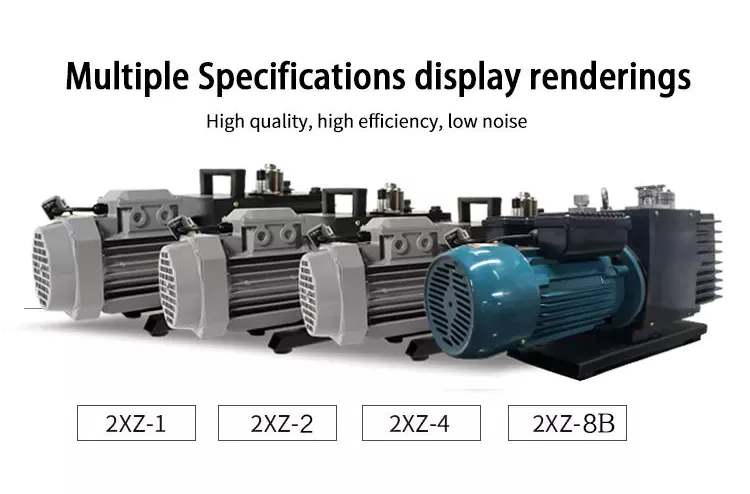
Types of vacuum pumps
A vacuum pump is a device that pulls gas molecules out of a sealed volume and maintains a partial vacuum. Its job is to create a relative vacuum within its capabilities. Several types of vacuum pumps are available, including scroll and rotary piston models. Each has its own characteristics and uses. To learn more, read this article.
Screw Pump
Screw vacuum pumps use a mechanical screw to move an air or gas chamber to the axial housing wall. The movement of the chamber reduces the volume of gas, which is pre-compressed before being expelled through the pressure connection. These pumps can be single-pitch models or variable-pitch models. Variable pitch models feature variable pitch rotors that help distribute heat loads evenly across the rotor. Some models also include a thermostatic control valve that shuts off the pump if the water temperature gets too high. Screw vacuum pumps are available in single-ended or double-ended designs. Single-ended and double-ended screw pumps provide up to 3.7 x 10⁻⁴ Torr and an ultimate vacuum of 900 m3/h (560 cfm), which is sufficient for many industrial processes. Progressive cavity pumps are particularly suitable for vapor compression applications. These pumps also have an internal rotor to minimize layer formation. Combined with air cooling, they are suitable for use in hazardous environments. In addition, the screw rotor design prevents the build-up of substances in the pump cavity that could react with high temperatures. These pumps are also easily removable for quick cleaning. Screw vacuum pumps are also designed for low cost and minimal maintenance. Agknx screw vacuum pumps are designed in Germany and are very reliable and economical. Pump performance depends on cooling system and temperature. The temperature of the water used should be kept within a certain range, otherwise the pump may overheat and fail. Screw vacuum pumps are often used in scientific experiments. They are standard main pumps in large storage rings, gravitational wave detectors, and space simulation chambers. One of the largest ultra-high vacuum chambers in the world is made of screw vacuum pumps. An example is the KATRIN experiment. There are two types of screw vacuum pumps: oil-sealed and dry. Oil-sealed screw pumps use oil as a sealant and coolant. They are suitable for demanding vacuum applications such as woodworking and plastics processing. Dry screw pumps have an air-cooled chamber, and they can achieve higher vacuum levels than oil-sealed pumps.
Rotary Piston Vacuum Pumps
Rotary Piston Vacuum Pumps provide the rugged performance essential for applications requiring vacuum. They can deliver flow rates up to 1280 acfm and reach deep vacuum levels up to 0.0004 Torr. They are available in single-stage and two-stage models. The report also provides detailed information about the key players, their financial status, and business overview. A rotary piston vacuum pump is a versatile and affordable vacuum device. They are available in single-stage and two-stage configurations with higher capacity and higher vacuum. They can be easily maintained by an in-house maintenance team or by a local third-party service shop. Pump manufacturers can also provide services. Rotary piston vacuum pumps are available in single-stage and compound designs. They are ideal for a variety of applications. Their high-performance design enables them to operate at any pressure up to atmospheric pressure. They also have no metal-to-metal contact, which makes them ideal for dirty applications. Whether you need a pump that can operate at high or low pressure, a rotary piston vacuum pump is an excellent choice. When purchasing a rotary piston vacuum pump, it is important to choose a manufacturer with a reputation for providing high-quality service and repairs. In addition to the high quality of the pump, you also need to ensure its availability. You should also consider the cost and quality of the part. A good vacuum pump company should also provide technical support, service support and accessories. Oil-free pumps are a popular choice for laboratories, clean rooms and confined rooms. Their high-quality parts are made from lightweight, corrosion-resistant and specially formulated polymers. Oil-free pumps can handle high levels of air moisture and are excellent at removing contaminants. However, they are not suitable for applications containing organic vapors or acids. Atlas Copco’s GLS rotary piston pumps are a popular choice for industrial vacuum applications. Its space-saving design makes it an ideal solution for harsh environments. It is also very reliable and has low lifecycle costs. It has an automatic lubrication system and water mizer to minimize water consumption. 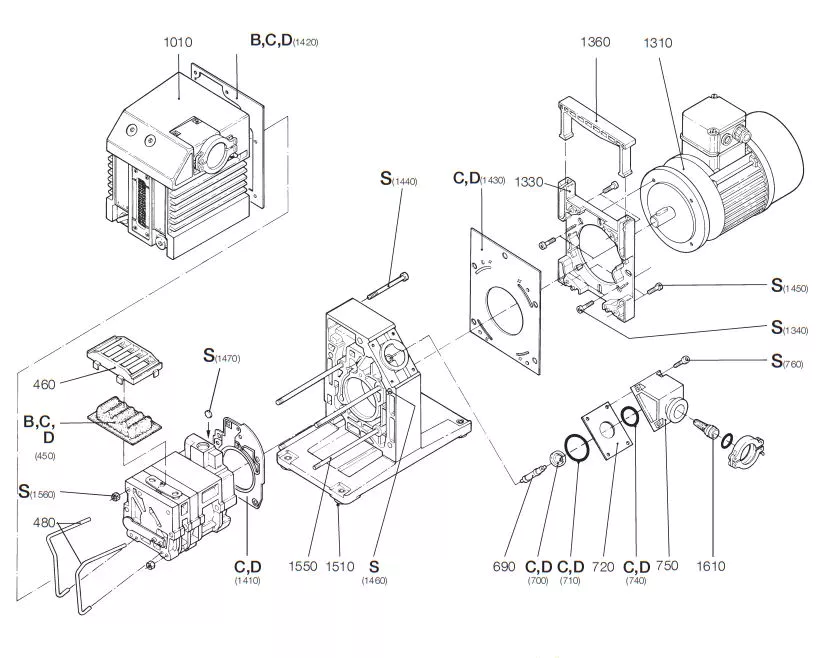
Scroll Vacuum Pumps
<br Scroll Vacuum Pumps can be used to pump air, gases, and other fluids. They are suitable for creating a vacuum in transfer chambers, mass spectrometers, and load lock chambers. They are also ideal for helium leak detectors and other analytical equipment. Scroll vacuum pumps are available in a variety of models, including the diaphragm, turbine, and oil-dry scroll models. They are used in a variety of industries, including the semiconductor, biotechnology, and pharmaceutical industries. Flexible and durable oil-free scroll vacuum pumps are an excellent choice for light industrial, general laboratory, and research applications. They also offer several advantages over other vacuum pumps, including low operating costs and environmental sustainability. Scroll vacuum pumps do not require oil, which is a big advantage in terms of cost. Scroll vacuum pumps are also quieter. Scroll vacuum pumps are designed for low, medium, and high vacuum systems. They create a high vacuum and cannot tolerate particles. Although they are relatively small, they are ideal for vacuum laboratory applications and are also suitable for dry vacuum pumping. They can be combined with chemically resistant PTFE components, making them more suitable for chemical applications. Scroll vacuum pumps feature a unique design that makes them very versatile and efficient. The pump has two helical structures, one is fixed and the other is rotating, which can effectively pump gas and liquid. When the rotor begins to move, the gas is compressed slightly and then flows through the system to the exhaust port. Scroll vacuum pumps are efficient, oil-free and compact. Known for their high tolerance to the atmosphere, they feature sensorless INFORM(r) control to minimize noise and vibration. These vacuum pumps are ideal for low to medium flow applications including analytical equipment, freeze dryers, vacuum coaters and mass spectrometers. The most important advantage of a scroll vacuum pump is its reliability. They can be used for three years or more without problems and are easy to maintain. With proper maintenance, they can reduce repair costs. 
Diaphragm vacuum pumps
Diaphragm vacuum pumps are used in a variety of industrial processes. These pumps use an elastic diaphragm fixed around the outer diameter. They are efficient and can handle most types of liquids. They are commonly used for dewatering, filling and water removal. These pumps are easy to maintain. Diaphragm vacuum pumps are available in a variety of sizes and power outputs. Oil-free diaphragm vacuum pumps do not require oil, lubrication and cooling. These pumps are compatible with many types of laboratory equipment. Diaphragm vacuum pumps are equipped with dual voltage motors and DC drives for greater flexibility and durability. Diaphragm vacuum pumps can achieve higher vacuum levels than rotary vane pumps. They are more efficient than diaphragm pumps. They do not require oil and require less maintenance than their rotary vane counterparts. However, the diaphragms of these pumps may need to be replaced every few years. Diaphragm vacuum pumps are the most popular type of vacuum pump and can be used for a variety of applications. They can be used for everyday work and can be large enough to be used in a vacuum oven or rotary evaporator. Diaphragm vacuum pumps use pulsed motion to move air. They eliminate the need for oil and are highly chemical and steam resistant. They can handle a wide variety of samples, including high viscosity liquids. Diaphragm vacuum pumps are generally smaller than other types of vacuum pumps. Scroll pumps are made of metal and are generally recommended for solvent and water samples. They are not recommended for high acid samples. However, they are suitable for freeze drying. They can also be used for concentration applications. In this way, they have greater displacement capacity and can reach higher ultimate vacuum levels.


editor by CX 2023-11-11