Product Description
|
Model |
BST1100AFZ/BSZ |
|
Voltage/frequency (V/Hz) |
220-240V/50Hz 100v-120v/60Hz |
|
Input power(W) |
≤750 |
|
Speed (r/min) |
≥1350 1650 |
|
Primary vacuumKPa |
-95KPa |
|
Secondary vacuumKPa |
101KPa |
|
Restart pressure (KPa) |
0KPa |
|
Rated volume flow (m3/h) |
≥14m3/h @0KPa |
|
Noise dB(A) |
≤68dB(A) |
|
Ambient temperature ºC |
-5~40 ºC |
|
Insulation Class |
B |
|
Cold insulation resistance (MΩ) |
≥100MΩ |
|
Voltage resistance |
1500V/50Hz 1min(No breakdown) |
|
Thermal protector |
Automatic reset 135±5ºC |
|
Capacitance (μF) |
40μF±5% 120μF±5% |
|
Net weight (Kg) |
17.5Kg |
|
Installation Dimensions (mm) |
246×127mm(Install foot M8) |
|
External Dimensions (mm) |
319*195*290 |
| Typical application | |
| Respirator (ventilator) | oxygenerator |
| Disinfectant sprayer | Blood analyzer |
| Clinical aspirator | Dialysis / hemodialysis |
| Dental vacuum drying oven | Air suspension system |
| Vending machines / coffee blenders and coffee machines | Massage chair |
| Chromatographic analyzer | Teaching instrument platform |
| On board access control system | Airborne oxygen generator |
Why choose CHINAMFG air compressor
1. It saves 10-30% energy than the air compressor produced by ordinary manufacturers.
2. It is widely used in medical oxygen generator and ventilator .
3. A large number of high-speed train and automobile application cases, supporting – 41 to 70 ºC, 0-6000 CHINAMFG above sea level .
4. Medium and high-end quality, with more than 7000 hours of trouble free operation for conventional products and more than 15000 hours of trouble free operation for high-end products.
5. Simple operation, convenient maintenance and remote guidance.
6. Faster delivery time, generally completed within 25 days within 1000 PCs.
Machine Parts
Name: Motor
Brand: COMBESTAIR
Original: China
1.The coil adopts the fine pure copper enameled wire, and the rotor adopts the famous brand silicon steel sheet such as ZheJiang baosteel.
2.The customer can choose the insulation grade B or F motor according to What he wants.
3.The motor has a built-in thermal protector, which can select external heat sensor.
4.Voltage from AC100V ~120V, 200V ~240V, 50Hz / 60Hz, DC6V~200V optional ; AC motor can choose double voltage double frequency ; DC Motor can choose the control of the infinitely variable speed.
Machine Parts
Name: Bearing
Brand: ERB , CHINAMFG , NSK
Original: China ect.
1.Standard products choose the special bearing ‘ERB’ in oil-free compressor, and the environment temperature tolerance from -50ºC to 180 ºC . Ensure no fault operation for 20,000 hours.
2.Customers can select TPI, NSK and other imported bearings according to the working condition.
Machine Parts
Name: Valve plates
Brand: SANDVIK
Original: Sweden
1.Custom the valve steel of Sweden SANDVIK; Good flexibility and long durability.
2.Thickness from 0.08mm to 1.2mm, suitable for maximum pressure from 0.8 MPa to 1.2 MPa.
Machine Parts
Name: Piston ring
Brand: COMBESTAIR-OEM , Saint-Gobain
Original: China , France
1.Using domestic famous brand–Polytetrafluoroethylene composite material; Wear-resistant high temperature; Ensure more than 10,000 hours of service life.
2.High-end products: you can choose the ST.gobain’s piston ring from the American import.
| serial number |
Code number | Name and specification | Quantity | Material | Note |
| 1 | 212571109 | Fan cover | 2 | Reinforced nylon 1571 | |
| 2 | 212571106 | Left fan | 1 | Reinforced nylon 1571 | |
| 3 | 212571101 | Left box | 1 | Die-cast aluminum alloy YL104 | |
| 4 | 212571301 | Connecting rod | 2 | Die-cast aluminum alloy YL104 | |
| 5 | 212571304 | Piston cup | 2 | PHB filled PTFE | |
| 6 | 212571302 | Clamp | 2 | Die-cast aluminum alloy YL102 | |
| 7 | 7050616 | Screw of cross head | 2 | Carbon structural steel of cold heading | M6•16 |
| 8 | 212571501 | Air cylinder | 2 | Thin wall pipe of aluninun alloy 6A02T4 | |
| 9 | 17103 | Seal ring of Cylinder | 2 | Silicone rubber | |
| 10 | 212571417 | Sealing ring of cylinder cover | 2 | Silicone rubber | |
| 11 | 212571401 | Cylinder head | 2 | Die-cast aluminum alloy YL102 | |
| 12 | 7571525 | Screw of inner hexagon Cylinder head | 12 | M5•25 | |
| 13 | 17113 | Sealing ring of connecting pipe | 4 | Silicong rubber | |
| 14 | 212571801 | Connecting pipe | 2 | Aluminum and aluminum alloy connecting rod LY12 | |
| 15 | 7100406 | Screw of Cross head | 4 | 1Cr13N19 | M4•6 |
| 16 | 212571409 | Limit block | 2 | Die-cast aluminum alloy YL102 | |
| 17 | 000402.2 | Air outlet valve | 2 | 7Cr27 quenching steel belt of The Swedish sandvik | |
| 18 | 212571403 | valve | 2 | Die-cast aluminum alloy YL102 | |
| 19 | 212571404 | Air inlet valve | 2 | 7Cr27 quenching steel belt of The Swedish sandvik | |
| 20 | 212571406 | Metal gasket | 2 | Stainless steel plate of heat and acidresistance | |
| 21 | 212571107 | Right fan | 1 | Reinforced nylon 1571 | |
| 22 | 212571201 | Crank | 2 | Gray castiron H20-40 | |
| 23 | 14040 | Bearing 6006-2Z | 2 | ||
| 24 | 70305 | Tighten screw of inner hexagon flat end | 2 | M8•8 | |
| 25 | 7571520 | Screw of inner hexagon Cylinder head | 2 | M5•20 | |
| 26 | 212571102 | Right box | 1 | Die-cast aluminum alloy YL104 | |
| 27 | 6P-4 | Lead protective ring | 1 | ||
| 28 | 7095712-211 | Hexagon head bolt | 2 | Carbon structural steel of cold heading | M5•152 |
| 29 | 715710-211 | Screw of Cross head | 2 | Carbon structural steel of cold heading | M5•120 |
| 30 | 16602 | Light spring washer | 4 | ø5 | |
| 31 | 212571600 | Stator | 1 | ||
| 32 | 70305 | Lock nut of hexagon flange faces | 2 | ||
| 33 | 212571700 | Rotor | 1 | ||
| 34 | 14032 | Bearing 6203-2Z | 2 |
FAQ
Q1: Are you factory or trade company?
A1: We are factory.
Q2: What the exactly address of your factory?
A2: Our factory is located in Linbei industrial area No.30 HangZhou City of ZHangZhoug Province, China
Q3: Warranty terms of your machine?
A3: Two years warranty for the machine and technical support according to your needs.
Q4: Will you provide some spare parts of the machines?
A4: Yes, of course.
Q5: How long will you take to arrange production?
A5: Generally, 1000 pcs can be delivered within 25 days
Q6: Can you accept OEM orders?
A6: Yes, with professional design team, OEM orders are highly welcome
Q7:Can you accept non-standard customization?
A7:We have the ability to develop new products and can customize, develop and research according to your requirements
/* January 22, 2571 19:08:37 */!function(){function s(e,r){var a,o={};try{e&&e.split(“,”).forEach(function(e,t){e&&(a=e.match(/(.*?):(.*)$/))&&1
| After-sales Service: | Remote Guided Maintenance |
|---|---|
| Warranty: | 2 Years |
| Principle: | Mixed-Flow Compressor |
| Samples: |
US$ 60/Piece
1 Piece(Min.Order) | Order Sample |
|---|
| Customization: |
Available
|
|
|---|
.shipping-cost-tm .tm-status-off{background: none;padding:0;color: #1470cc}
| Shipping Cost:
Estimated freight per unit. |
about shipping cost and estimated delivery time. |
|---|
| Payment Method: |
|
|---|---|
|
Initial Payment Full Payment |
| Currency: | US$ |
|---|
| Return&refunds: | You can apply for a refund up to 30 days after receipt of the products. |
|---|
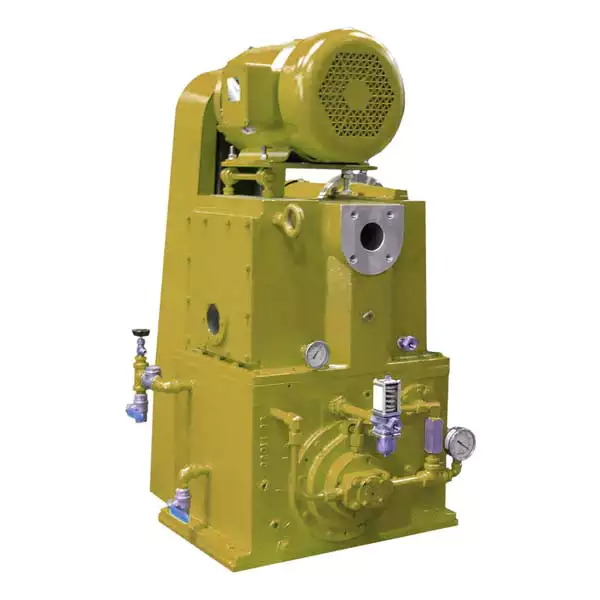
Can Vacuum Pumps Be Used for Vacuum Packaging?
Yes, vacuum pumps can be used for vacuum packaging. Here’s a detailed explanation:
Vacuum packaging is a method used to remove air from a package or container, creating a vacuum environment. This process helps to extend the shelf life of perishable products, prevent spoilage, and maintain product freshness. Vacuum pumps play a crucial role in achieving the desired vacuum level for effective packaging.
When it comes to vacuum packaging, there are primarily two types of vacuum pumps commonly used:
1. Single-Stage Vacuum Pumps: Single-stage vacuum pumps are commonly used for vacuum packaging applications. These pumps use a single rotating vane or piston to create a vacuum. They can achieve moderate vacuum levels suitable for most packaging requirements. Single-stage pumps are relatively simple in design, compact, and cost-effective.
2. Rotary Vane Vacuum Pumps: Rotary vane vacuum pumps are another popular choice for vacuum packaging. These pumps utilize multiple vanes mounted on a rotor to create a vacuum. They offer higher vacuum levels compared to single-stage pumps, making them suitable for applications that require deeper levels of vacuum. Rotary vane pumps are known for their reliability, consistent performance, and durability.
When using vacuum pumps for vacuum packaging, the following steps are typically involved:
1. Preparation: Ensure that the packaging material, such as vacuum bags or containers, is suitable for vacuum packaging and can withstand the vacuum pressure without leakage. Place the product to be packaged inside the appropriate packaging material.
2. Sealing: Properly seal the packaging material, either by heat sealing or using specialized vacuum sealing equipment. This ensures an airtight enclosure for the product.
3. Vacuum Pump Operation: Connect the vacuum pump to the packaging equipment or directly to the packaging material. Start the vacuum pump to initiate the vacuuming process. The pump will remove the air from the packaging, creating a vacuum environment.
4. Vacuum Level Control: Monitor the vacuum level during the packaging process using pressure gauges or vacuum sensors. Depending on the specific packaging requirements, adjust the vacuum level accordingly. The goal is to achieve the desired vacuum level suitable for the product being packaged.
5. Sealing and Closure: Once the desired vacuum level is reached, seal the packaging material completely to maintain the vacuum environment. This can be done by heat sealing the packaging material or using specialized sealing mechanisms designed for vacuum packaging.
6. Product Labeling and Storage: After sealing, label the packaged product as necessary and store it appropriately, considering factors such as temperature, humidity, and light exposure, to maximize product shelf life.
It’s important to note that the specific vacuum level required for vacuum packaging may vary depending on the product being packaged. Some products may require a partial vacuum, while others may require a more stringent vacuum level. The choice of vacuum pump and the control mechanisms employed will depend on the specific vacuum packaging requirements.
Vacuum pumps are widely used in various industries for vacuum packaging applications, including food and beverage, pharmaceuticals, electronics, and more. They provide an efficient and reliable means of creating a vacuum environment, helping to preserve product quality and extend shelf life.
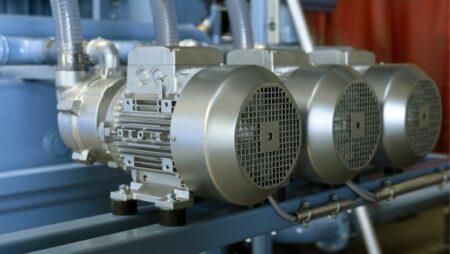
Can Vacuum Pumps Be Used in the Production of Solar Panels?
Yes, vacuum pumps are extensively used in the production of solar panels. Here’s a detailed explanation:
Solar panels, also known as photovoltaic (PV) panels, are devices that convert sunlight into electricity. The manufacturing process of solar panels involves several critical steps, many of which require the use of vacuum pumps. Vacuum technology plays a crucial role in ensuring the efficiency, reliability, and quality of solar panel production. Here are some key areas where vacuum pumps are utilized:
1. Silicon Ingot Production: The first step in solar panel manufacturing is the production of silicon ingots. These ingots are cylindrical blocks of pure crystalline silicon that serve as the raw material for solar cells. Vacuum pumps are used in the Czochralski process, which involves melting polycrystalline silicon in a quartz crucible and then slowly pulling a single crystal ingot from the molten silicon. Vacuum pumps create a controlled environment by removing impurities and preventing contamination during the crystal growth process.
2. Wafering: After the silicon ingots are produced, they undergo wafering, where the ingots are sliced into thin wafers. Vacuum pumps are used in wire saws to create a low-pressure environment that helps to cool and lubricate the cutting wire. The vacuum also assists in removing the silicon debris generated during the slicing process, ensuring clean and precise cuts.
3. Solar Cell Production: Vacuum pumps play a significant role in various stages of solar cell production. Solar cells are the individual units within a solar panel that convert sunlight into electricity. Vacuum pumps are used in the following processes:
– Diffusion: In the diffusion process, dopants such as phosphorus or boron are introduced into the silicon wafer to create the desired electrical properties. Vacuum pumps are utilized in the diffusion furnace to create a controlled atmosphere for the diffusion process and remove any impurities or gases that may affect the quality of the solar cell.
– Deposition: Thin films of materials such as anti-reflective coatings, passivation layers, and electrode materials are deposited onto the silicon wafer. Vacuum pumps are used in various deposition techniques like physical vapor deposition (PVD) or chemical vapor deposition (CVD) to create the necessary vacuum conditions for precise and uniform film deposition.
– Etching: Etching processes are employed to create the desired surface textures on the solar cell, which enhance light trapping and improve efficiency. Vacuum pumps are used in plasma etching or wet etching techniques to remove unwanted material or create specific surface structures on the solar cell.
4. Encapsulation: After the solar cells are produced, they are encapsulated to protect them from environmental factors such as moisture and mechanical stress. Vacuum pumps are used in the encapsulation process to create a vacuum environment, ensuring the removal of air and moisture from the encapsulation materials. This helps to achieve proper bonding and prevents the formation of bubbles or voids, which could degrade the performance and longevity of the solar panel.
5. Testing and Quality Control: Vacuum pumps are also utilized in testing and quality control processes during solar panel production. For example, vacuum systems can be used for leak testing to ensure the integrity of the encapsulation and to detect any potential defects or leaks in the panel assembly. Vacuum-based measurement techniques may also be employed for assessing the electrical characteristics and efficiency of the solar cells or panels.
In summary, vacuum pumps are integral to the production of solar panels. They are used in various stages of the manufacturing process, including silicon ingot production, wafering, solar cell production (diffusion, deposition, and etching), encapsulation, and testing. Vacuum technology enables precise control, contamination prevention, and efficient processing, contributing to the production of high-quality and reliable solar panels.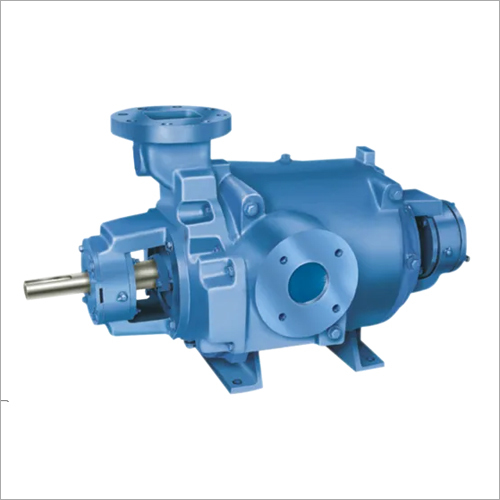
Are There Different Types of Vacuum Pumps Available?
Yes, there are various types of vacuum pumps available, each designed to suit specific applications and operating principles. Here’s a detailed explanation:
Vacuum pumps are classified based on their operating principles, mechanisms, and the type of vacuum they can generate. Some common types of vacuum pumps include:
1. Rotary Vane Vacuum Pumps:
– Description: Rotary vane pumps are positive displacement pumps that use rotating vanes to create a vacuum. The vanes slide in and out of slots in the pump rotor, trapping and compressing gas to create suction and generate a vacuum.
– Applications: Rotary vane vacuum pumps are widely used in applications requiring moderate vacuum levels, such as laboratory vacuum systems, packaging, refrigeration, and air conditioning.
2. Diaphragm Vacuum Pumps:
– Description: Diaphragm pumps use a flexible diaphragm that moves up and down to create a vacuum. The diaphragm separates the vacuum chamber from the driving mechanism, preventing contamination and oil-free operation.
– Applications: Diaphragm vacuum pumps are commonly used in laboratories, medical equipment, analysis instruments, and applications where oil-free or chemical-resistant vacuum is required.
3. Scroll Vacuum Pumps:
– Description: Scroll pumps have two spiral-shaped scrolls—one fixed and one orbiting—which create a series of moving crescent-shaped gas pockets. As the scrolls move, gas is continuously trapped and compressed, resulting in a vacuum.
– Applications: Scroll vacuum pumps are suitable for applications requiring a clean and dry vacuum, such as analytical instruments, vacuum drying, and vacuum coating.
4. Piston Vacuum Pumps:
– Description: Piston pumps use reciprocating pistons to create a vacuum by compressing gas and then releasing it through valves. They can achieve high vacuum levels but may require lubrication.
– Applications: Piston vacuum pumps are used in applications requiring high vacuum levels, such as vacuum furnaces, freeze drying, and semiconductor manufacturing.
5. Turbo Molecular Vacuum Pumps:
– Description: Turbo pumps use high-speed rotating blades or impellers to create a molecular flow, continuously pumping gas molecules out of the system. They typically require a backing pump to operate.
– Applications: Turbo molecular pumps are used in high vacuum applications, such as semiconductor fabrication, research laboratories, and mass spectrometry.
6. Diffusion Vacuum Pumps:
– Description: Diffusion pumps rely on the diffusion of gas molecules and their subsequent removal by a high-speed jet of vapor. They operate at high vacuum levels and require a backing pump.
– Applications: Diffusion pumps are commonly used in applications requiring high vacuum levels, such as vacuum metallurgy, space simulation chambers, and particle accelerators.
7. Cryogenic Vacuum Pumps:
– Description: Cryogenic pumps use extremely low temperatures to condense and capture gas molecules, creating a vacuum. They rely on cryogenic fluids, such as liquid nitrogen or helium, for operation.
– Applications: Cryogenic vacuum pumps are used in ultra-high vacuum applications, such as particle physics research, material science, and fusion reactors.
These are just a few examples of the different types of vacuum pumps available. Each type has its advantages, limitations, and suitability for specific applications. The choice of vacuum pump depends on factors like required vacuum level, gas compatibility, reliability, cost, and the specific needs of the application.


editor by CX 2024-04-15