Guarantee: 1 yr
Tailored support: OEM, ODM
Design Amount: GWSPS500
Software: Foods and Beverage Industry, Pharmaceutical sector, Ultrahigh vacuum unit, Vacuum sputtering machine, IC plasma cleaning device, IC plasma sprucing machine, IC packaging device, IC transportation chamber, LED vacuum annealing furnace, Load lock/transfer chambers, Glove box, LED packaging device, Liquid crystal injection and packaging, Vacuum annealing furnace, Vacuum diffusion oven, 3D steel printing, One crystal progress furnace, Microwave cleansing and microwave drying machine, E-beam/Laser melting, Vacuum degassing, Vacuum fuel substitution, Freezing dryer, Vacuum storage, Low temperature plasma sterilizer, Dental gear, Lithium battery drying and packaging device, Spectroscopy/scHangZhou electron microscopy, Area surroundings simulation device, Helium Leak detector, Mass spectrometer, Cryopump regeneration, Oil totally free ultrahigh vacuum unit, Vacuum products, Oil free of charge clean vacuum
Electrical power Supply: Electric
Stress: Low Pressure
Framework: Scroll Pump
Certification: CE, EAC, Mini Oilless Diaphragm Vacuum Pump Lab ISO9001 certificated
Feature: No oil, minimal noise, maintenance cost-free,provide cleanse vacuum
Mechanical Seal: Clearance sealed
Motor: 3 period,fifty-60Hz,1425/1725rpm,110-416V,750W.Plug for United states of america,EU,United kingdom,India
Common or Nonstandard: Standard
Substance: Aluminum alloy
Color: Gray
Packaging Particulars: Standard honeycomb carton packaging, exterior winding plastic stretch film security
s
GWSPS Oil cost-free Scroll Vacuum Pump
GWSPS oil free of charge scroll vacuum pump is created with pump head assembly, crank pin assembly, bracket assembly, air flush assembly, and exhaust valve assembly. Two spiral cylinders, 1 offset and orbiting in opposition to the other set with an offset of 180° to kind many crescent-formed pockets of diverse measurements. By indicates of an eccentric push, the orbiting scroll is produced to orbit about the set scroll, minimizing the volume of the pockets and compressing fuel from outdoors toward the within thereby pumping the gas from vacuum chamber.
Specialized Specifications
| Model | GWSPS500 | ||
| Displacement | 50Hz | cfm | fourteen.7 |
| m3/h | 24. | ||
| l/s | six.7 | ||
| l/min | 402. | ||
| 60Hz | cfm | seventeen.6 | |
| mthree/h | 28.8 | ||
| l/s | 8.1 | ||
| l/min | 482. | ||
| Ultimate Pressure | Torr | ≤3.7*ten-two | |
| psi | ≤7.5*10-4 | ||
| mbar | ≤5.*10-2 | ||
| Pa | ≤5 | ||
| Sound Amount | dB(A) | ≤61 | |
| Leakage | mbar·l/s | 1*ten-7 | |
| Max. Inlet/Exhaust Pressure | MPa | .1 / .13 | |
| Ambient Procedure Temp. | ℉ | forty one~104 | |
| Motor 3 period | Electrical power | kW | .seventy five |
| Voltage | V | two hundred~230 or 380~415 (50Hz), 200~230 or 460 (60Hz) | |
| Speed | rpm | 1425 (50Hz),1725 (60Hz) | |
| Inlet/Exhaust Flange | KF40/KF16 | ||
| Proportions | three section | mm | 590*320*345 |
| Web Excess weight | three phase | kg | 38 |
| Cooling Type | Air cooled | ||
Protection Safety measures
Be sure the inlet gasoline temperature should be lower than 122℉.
Building in Specifics
Efficiency curves
Features and Positive aspects
Oil free of charge cleanse vacuum
No oil back again-diffusion, no oil mist exhaust,
provide clear vacuum environment
Vast item lineup
Pumping velocity covers 1.8~35.4cfm, minimal vacuum stage 7.5*ten-3~6.*10-2Torr
Suited for all variety of energy supply about the globe
one hundred ten/220/380/460V, fifty/60Hz for choose
Reduced vibration, minimal sounds
fifty seven~63 dB(A), easy procedure
Substantial efficiency, relieve of maintenance
No drinking water cooled, no oil lubricated, F006 G2-G3inch High pressure vacuum inline black vacuum filter for Air ring blower vacuum pump every day routine maintenance cost-free
Apps
Semiconductor industry
Vacuum sputtering device.
IC plasma cleaning machine.
IC plasma sprucing equipment.
IC packaging equipment.
IC transmission chamber.
Photoelectric market
LED vacuum annealing furnace.
Load lock/transfer chambers.
Glove box.
LED packaging machine.
Liquid crystal injection and packaging.
Substance sector
Vacuum annealing furnace.
Vacuum diffusion oven.
3D metal printing.
One crystal growth furnace.
Microwave drying device.
E-beam/Laser melting.
Vacuum degassing.
Vacuum fuel substitution.
Meals and drug sector
Freezing dryer.
Vacuum storage.
Healthcare tools
Lower temperature plasma sterilizer.
Vacuum storage.
Dental tools.
Power sector
SF6 Gas restoration equipment.
Lithium battery drying and packaging device.
Analyzing instrument and unit
Spectroscopy/scHangZhou electron microscopy
Area environment simulation device
Helium Leak detector
Mass spectrometer
Cryopump regeneration
Accelerators/synchrotrons
Vacuum equipment
Oil free of charge ultrahigh vacuum unit
Oil free of charge vacuum unit
Certificates
GEOWELL produced a highway of impartial R&D of oil-free scroll vacuum pump technologies. From standard theoretical study, software development to mass generation, GEOWELL accrued much more than sixty specialized patents and proprietary technologies, and certificated with CE of Europe, EAC of RUSSIA and ISO9001.
The Top quality Handle
GEOWELL has built-in top quality principle into each facet of product producing. Top quality management starts off from raw supplies incoming, constructed up and apply standards operating methods from incoming uncooked components, manufacturing, assembly, to cargo, all carry out quality inspection. strictly implements screening specifications, and can make data as only criterion for high quality inspection.
Packaging & Shipping
Company Information
GEOWELL VACUUM CO.,LTD. is a Hi-TECH business in China dedicating in manufacturing, analysis and improvement, marketing of oil cost-free scroll vacuum pumps and vacuum compressors since 2002. GEOWELL has been offering end users and partners with top quality good quality items that are efficient and trusted, GEOWELL feel the integration of higher efficiency and substantial trustworthiness solution and provider will bring the maximum price to each our clients and ourselves.
Exhibitions
Concern & Answers
Q: How long can I get the comments following we despatched the inquiry?
A: We will reply you within twelve hours in doing work working day.
Q: Are you direct producer?
A: Of course, we are immediate maker with manufacturing unit and worldwide division we manufacture and sell all our products by ourselves.
Q: When can you supply the item to us?
A: Given that we are a manufacturing unit with large warehouse, we have abundant items in retailer, so we can shipping and delivery in 7 days right after get your deposit.
Q: Can I add emblem to the merchandise?
A: Of training course, but we usually have quantity need. You can make contact with with us for details.
Q: How to assure the good quality and following sales support of your merchandise?
A: We perform rigid detection throughout production from uncooked materials arrive in to product providing cargo. Every single solution should go via 4 actions inspection from casting, machining, assembling, and efficiency screening inside our factory just before shipment, also intact packaging take a look at are insured.
Q: What is your guarantee expression?
A: There is a twelve months guarantee for our export merchandise from the date of shipment. If warranty has run out, our consumer should pay out for the substitution element.
Q: Is the sample obtainable?
A: Sure, usually we send our samples by Fedex, DHL, TNT, UPS, EMS, SF, Depon, it will just take around 3 to 4 times for our buyer acquire them, 12V DC Modest suction pump high top quality little damaging stress pump for laboratory but customer will demand all value connected to the samples, these kinds of as sample price and air freight. We will refund our client the sample value following receiving the order.
Basic knowledge of vacuum pump
A vacuum pump is a device that draws gas molecules from a sealed volume and maintains a partial vacuum. Its main job is to create a relative vacuum within a given volume or volumes. There are many types of vacuum pumps. This article will describe how they work, their types, and their applications. 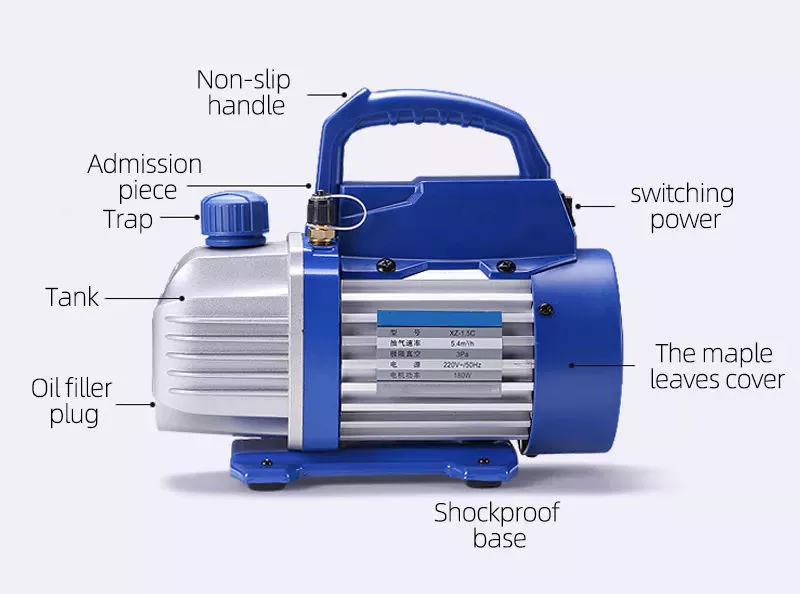
How it works
A vacuum pump is a mechanical device that removes gas from a system by applying it to a higher pressure than the surrounding atmosphere. The working principle of the vacuum pump is based on the principle of gas transfer and entrapment. Vacuum pumps can be classified according to their vacuum level and the number of molecules that can be removed per cubic centimeter of space. In medium to high vacuum, viscous flow occurs when gas molecules collide with each other. Increasing the vacuum causes molecular or transitional flow.
A vacuum pump has several components that make it a versatile tool. One of the main components is the motor, which consists of a rotor and a stator. The rotor and stator contain coils that generate a magnetic field when excited. Both parts must be mounted on a base that supports the weight of the pump. There is also an oil drain that circulates oil throughout the system for lubrication and cooling purposes.
Another type of vacuum pump is the liquid ring vacuum pump. It works by positioning the impeller above or below the blades. Liquid ring pumps can also adjust the speed of the impeller. However, if you plan to use this type of pump, it is advisable to consult a specialist.
Vacuum pumps work by moving gas molecules to areas of higher or lower pressure. As the pressure decreases, the removal of the molecules becomes more difficult. Industrial vacuum systems require pumps capable of operating in the 1 to 10-6 Torr range.
Type
There are different types of vacuum pumps. They are used in many different applications, such as laboratories. The main purpose of these pumps is to remove air or gas molecules from the vacuum chamber. Different types of pumps use different techniques to achieve this. Some types of pumps use positive displacement, while others use liquid ring, molecular transfer, and entrapment techniques.
Some of these pumps are used in industrial processes, including making vacuum tubes, CRTs, electric lights, and semiconductor processing. They are also used in motor vehicles to power hydraulic components and aircraft. The gyroscope is usually controlled by these pumps. In some cases, they are also used in medical settings.
How a vacuum pump works depends on the type of gas being pumped. There are three main types: positive displacement, negative displacement, and momentum transfer. Depending on the type of lubrication, these principles can be further divided into different types of pumps. For example, dry vacuum pumps are less sensitive to gases and vapors.
Another type of vacuum pump is called a rotary vane pump. This type of pump has two main components, the rotor and the vacuum chamber. These pumps work by rotating moving parts against the pump casing. The mating surfaces of rotary pumps are designed with very small clearances to prevent fluid leakage to the low pressure side. They are suitable for vacuum applications requiring low pulsation and high continuous flow. However, they are not suitable for use with grinding media.
There are many types of vacuum pumps and it is important to choose the right one for your application. The type of pump depends on the needs and purpose of the system. The larger ones can work continuously, and the smaller ones are more suitable for intermittent use. 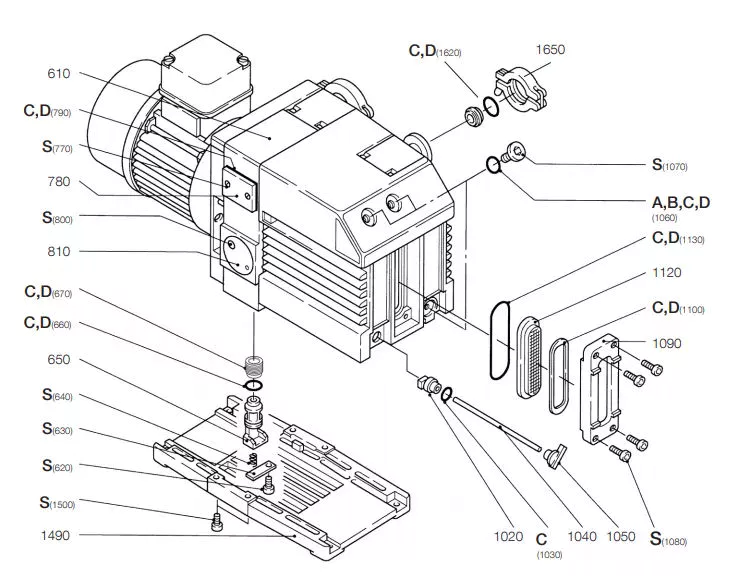
Apply
Vacuum pumps are used in a variety of industrial and scientific processes. For example, they are used in the production of vacuum tubes, CRTs, and electric lamps. They are also used in semiconductor processing. Vacuum pumps are also used as mechanical supports for other equipment. For example, there may be multiple vacuum pumps on the engine of a motor vehicle that powers the hydraulic components of an aircraft. In addition, they are often used in fusion research.
The most common type of vacuum pump used in the laboratory is the rotary vane pump. It works by directing airflow through a series of rotating blades in a circular housing. As the blades pass through the casing, they remove gas from the cavity and create a vacuum. Rotary pumps are usually single or double-stage and can handle pressures between 10 and 6 bar. It also has a high pumping speed.
Vacuum pumps are also used to fabricate solar cells on wafers. This involves a range of processes including doping, diffusion, dry etching, plasma-enhanced chemical vapor deposition, and bulk powder generation. These applications depend on the type of vacuum pump used in the process, and the vacuum pump chosen should be designed for the environment.
While there are several types of vacuum pumps available, their basic working principles remain the same. Each has different functions and capacities, depending on the type of vacuum. Generally divided into positive displacement pump, rotary vane pump, liquid ring pump, and molecular delivery pump.
Maintenance
The party responsible for general maintenance and repairs is the Principal Investigator (PI). Agknxs must be followed and approved by the PI and other relevant laboratory personnel. The Agknx provides guidelines for routine maintenance of vacuum pump equipment. Agknxs are not intended to replace detailed routine inspections of vacuum pump equipment, which should be performed by certified/qualified service personnel. If the device fails, the user should contact PI or RP for assistance.
First, check the vacuum pump for any loose parts. Make sure the inlet and outlet pressure gauges are open. When the proper pressure is shown, open the gate valve. Also, check the vacuum pump head and flow. Flow and head should be within the range indicated on the label. Bearing temperature should be within 35°F and maximum temperature should not exceed 80°F. The vacuum pump bushing should be replaced when it is severely worn.
If the vacuum pump has experienced several abnormal operating conditions, a performance test should be performed. Results should be compared to reference values to identify abnormalities. To avoid premature pump failure, a systematic approach to predictive maintenance is essential. This is a relatively new area in the semiconductor industry, but leading semiconductor companies and major vacuum pump suppliers have yet to develop a consistent approach.
A simplified pump-down test method is proposed to evaluate the performance of vacuum pumps. The method includes simulated aeration field tests and four pump performance indicators. Performance metrics are evaluated under gas-loaded, idle, and gas-load-dependent test conditions. 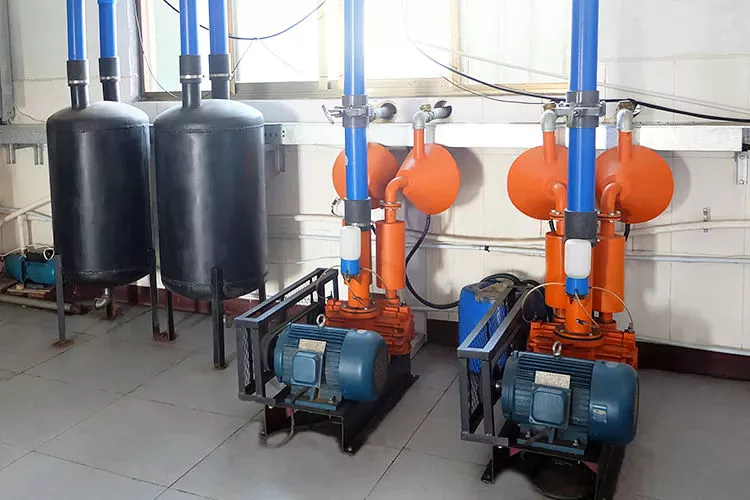
Cost
The total cost of a vacuum pump consists of two main components: the initial investment and ongoing maintenance costs. The latter is the most expensive component, as it consumes about four to five times the initial investment. Therefore, choosing a more energy-efficient model is a good way to reduce the total system cost and payback period.
The initial cost of a vacuum pump is about $786. Oil-lubricated rotary vane pumps are the cheapest, while oil-free rotary vane pumps are slightly more expensive. Non-contact pumps also cost slightly more. The cost of a vacuum pump is not high, but it is a factor that needs careful consideration.
When choosing a vacuum pump, it is important to consider the type of gas being pumped. Some pumps are only suitable for pumping air, while others are designed to pump helium. Oil-free air has a different pumping rate profile than air. Therefore, you need to consider the characteristics of the medium to ensure that the pump meets your requirements. The cost of a vacuum pump can be much higher than the purchase price, as the daily running and maintenance costs can be much higher.
Lubricated vacuum pumps tend to be more durable and less expensive, but they may require more maintenance. Maintenance costs will depend on the type of gas that needs to be pumped. Lighter gases need to be pumped slowly, while heavier gases need to be pumped faster. The maintenance level of a vacuum pump also depends on how often it needs to be lubricated.
Diaphragm vacuum pumps require regular maintenance and oil changes. The oil in the diaphragm pump should be changed every 3000 hours of use. The pump is also resistant to chemicals and corrosion. Therefore, it can be used in acidic and viscous products.


editor by czh 2023-02-15