Product Description
|
Model |
BST260AFZ/BSZ |
|
Voltage/frequency (V/Hz) |
220-240V/50Hz;110-115v/60Hz |
|
Input power(W) |
≤150 |
|
Speed (r/min) |
≥1380 1650 |
|
Primary vacuumKPa |
-93KPa |
|
Secondary vacuumKPa |
-98KPa |
|
Restart pressure (KPa) |
0KPa |
|
Rated volume flow (m3/h) |
4.2m3/h@0KPa; |
|
Noise dB(A) |
≤54dB(A) |
|
Ambient temperature ºC |
-5~40 ºC |
|
Insulation Class |
B |
|
Cold insulation resistance (MΩ) |
≥100MΩ |
|
Voltage resistance |
1500V/50Hz 1min (No breakdown) |
|
Thermal protector |
Automatic reset 135±5ºC |
|
Capacitance (μF) |
6 μF±5% 12μF±5% |
|
Net weight (Kg) |
5.4Kg |
|
Installation Dimensions (mm) |
83×127mm(Install thread 4-M6) |
|
External Dimensions (mm) |
214×103×163 mm |
| Typical application | |
| Respirator (ventilator) | oxygenerator |
| Disinfectant sprayer | Blood analyzer |
| Clinical aspirator | Dialysis / hemodialysis |
| Dental vacuum drying oven | Air suspension system |
| Vending machines / coffee blenders and coffee machines | Massage chair |
| Chromatographic analyzer | Teaching instrument platform |
| On board access control system | Airborne oxygen generator |
Why choose CHINAMFG air compressor
1. It saves 10-30% energy than the air compressor produced by ordinary manufacturers.
2. It is widely used in medical oxygen generator and ventilator .
3. A large number of high-speed train and automobile application cases, supporting – 41 to 70 ºC, 0-6000 CHINAMFG above sea level .
4. Medium and high-end quality, with more than 7000 hours of trouble free operation for conventional products and more than 15000 hours of trouble free operation for high-end products.
5. Simple operation, convenient maintenance and remote guidance.
6. Faster delivery time, generally completed within 25 days within 1000 PCs.
Machine Parts
Name: Motor
Brand: COMBESTAIR
Original: China
1.The coil adopts the fine pure copper enameled wire, and the rotor adopts the famous brand silicon steel sheet such as ZheJiang baosteel.
2.The customer can choose the insulation grade B or F motor according to What he wants.
3.The motor has a built-in thermal protector, which can select external heat sensor.
4.Voltage from AC100V ~120V, 200V ~240V, 50Hz / 60Hz, DC6V~200V optional ; AC motor can choose double voltage double frequency ; DC Motor can choose the control of the infinitely variable speed.
Machine Parts
Name: Bearing
Brand: ERB , CHINAMFG , NSK
Original: China ect.
1.Standard products choose the special bearing ‘ERB’ in oil-free compressor, and the environment temperature tolerance from -50ºC to 180 ºC . Ensure no fault operation for 20,000 hours.
2.Customers can select TPI, NSK and other imported bearings according to the working condition.
Machine Parts
Name: Valve plates
Brand: SANDVIK
Original: Sweden
1.Custom the valve steel of Sweden SANDVIK; Good flexibility and long durability.
2.Thickness from 0.08mm to 1.2mm, suitable for maximum pressure from 0.8 MPa to 1.2 MPa.
Machine Parts
Name: Piston ring
Brand: COMBESTAIR-OEM , Saint-Gobain
Original: China , France
1.Using domestic famous brand–Polytetrafluoroethylene composite material; Wear-resistant high temperature; Ensure more than 10,000 hours of service life.
2.High-end products: you can choose the ST.gobain’s piston ring from the American import.
| serial number |
Code number | Name and specification | Quantity | Material | Note |
| 1 | 212571109 | Fan cover | 2 | Reinforced nylon 1571 | |
| 2 | 212571106 | Left fan | 1 | Reinforced nylon 1571 | |
| 3 | 212571101 | Left box | 1 | Die-cast aluminum alloy YL104 | |
| 4 | 212571301 | Connecting rod | 2 | Die-cast aluminum alloy YL104 | |
| 5 | 212571304 | Piston cup | 2 | PHB filled PTFE | |
| 6 | 212571302 | Clamp | 2 | Die-cast aluminum alloy YL102 | |
| 7 | 7050616 | Screw of cross head | 2 | Carbon structural steel of cold heading | M6•16 |
| 8 | 212571501 | Air cylinder | 2 | Thin wall pipe of aluninun alloy 6A02T4 | |
| 9 | 17103 | Seal ring of Cylinder | 2 | Silicone rubber | |
| 10 | 212571417 | Sealing ring of cylinder cover | 2 | Silicone rubber | |
| 11 | 212571401 | Cylinder head | 2 | Die-cast aluminum alloy YL102 | |
| 12 | 7571525 | Screw of inner hexagon Cylinder head | 12 | M5•25 | |
| 13 | 17113 | Sealing ring of connecting pipe | 4 | Silicong rubber | |
| 14 | 212571801 | Connecting pipe | 2 | Aluminum and aluminum alloy connecting rod LY12 | |
| 15 | 7100406 | Screw of Cross head | 4 | 1Cr13N19 | M4•6 |
| 16 | 212571409 | Limit block | 2 | Die-cast aluminum alloy YL102 | |
| 17 | 000402.2 | Air outlet valve | 2 | 7Cr27 quenching steel belt of The Swedish sandvik | |
| 18 | 212571403 | valve | 2 | Die-cast aluminum alloy YL102 | |
| 19 | 212571404 | Air inlet valve | 2 | 7Cr27 quenching steel belt of The Swedish sandvik | |
| 20 | 212571406 | Metal gasket | 2 | Stainless steel plate of heat and acidresistance | |
| 21 | 212571107 | Right fan | 1 | Reinforced nylon 1571 | |
| 22 | 212571201 | Crank | 2 | Gray castiron H20-40 | |
| 23 | 14040 | Bearing 6006-2Z | 2 | ||
| 24 | 70305 | Tighten screw of inner hexagon flat end | 2 | M8•8 | |
| 25 | 7571520 | Screw of inner hexagon Cylinder head | 2 | M5•20 | |
| 26 | 212571102 | Right box | 1 | Die-cast aluminum alloy YL104 | |
| 27 | 6P-4 | Lead protective ring | 1 | ||
| 28 | 7095712-211 | Hexagon head bolt | 2 | Carbon structural steel of cold heading | M5•152 |
| 29 | 715710-211 | Screw of Cross head | 2 | Carbon structural steel of cold heading | M5•120 |
| 30 | 16602 | Light spring washer | 4 | ø5 | |
| 31 | 212571600 | Stator | 1 | ||
| 32 | 70305 | Lock nut of hexagon flange faces | 2 | ||
| 33 | 212571700 | Rotor | 1 | ||
| 34 | 14032 | Bearing 6203-2Z | 2 |
FAQ
Q1: Are you factory or trade company?
A1: We are factory.
Q2: What the exactly address of your factory?
A2: Our factory is located in Linbei industrial area No.30 HangZhou City of ZHangZhoug Province, China
Q3: Warranty terms of your machine?
A3: Two years warranty for the machine and technical support according to your needs.
Q4: Will you provide some spare parts of the machines?
A4: Yes, of course.
Q5: How long will you take to arrange production?
A5: Generally, 1000 pcs can be delivered within 25 days
Q6: Can you accept OEM orders?
A6: Yes, with professional design team, OEM orders are highly welcome
Q7:Can you accept non-standard customization?
A7:We have the ability to develop new products and can customize, develop and research according to your requirements
/* January 22, 2571 19:08:37 */!function(){function s(e,r){var a,o={};try{e&&e.split(“,”).forEach(function(e,t){e&&(a=e.match(/(.*?):(.*)$/))&&1
| After-sales Service: | Remote Guided Maintenance |
|---|---|
| Warranty: | 2 Years |
| Principle: | Mixed-Flow Compressor |
| Samples: |
US$ 50/Piece
1 Piece(Min.Order) | Order Sample |
|---|
| Customization: |
Available
|
|
|---|
.shipping-cost-tm .tm-status-off{background: none;padding:0;color: #1470cc}
| Shipping Cost:
Estimated freight per unit. |
about shipping cost and estimated delivery time. |
|---|
| Payment Method: |
|
|---|---|
|
Initial Payment Full Payment |
| Currency: | US$ |
|---|
| Return&refunds: | You can apply for a refund up to 30 days after receipt of the products. |
|---|
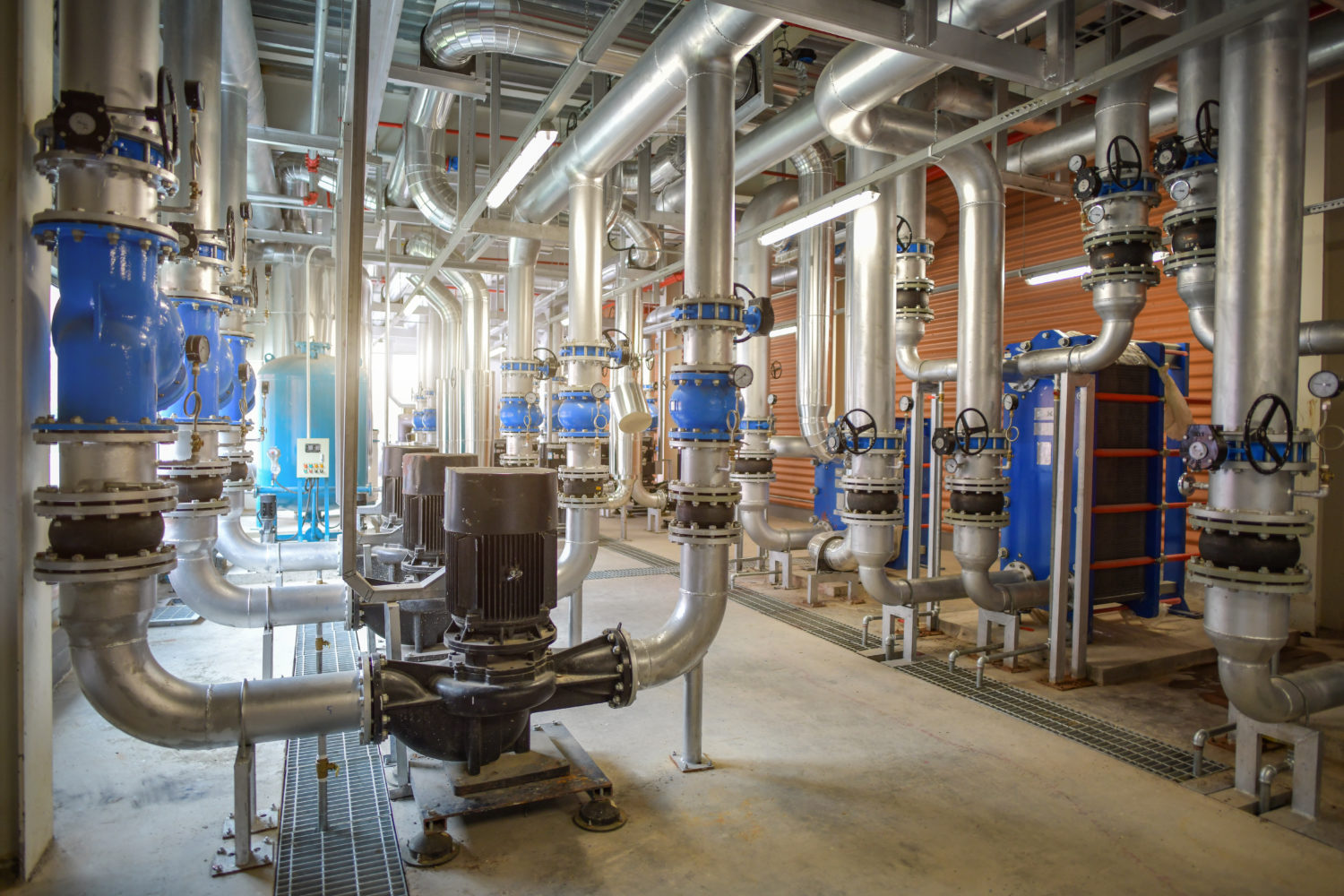
Can Vacuum Pumps Be Used in the Automotive Industry?
Yes, vacuum pumps are widely used in the automotive industry for various applications. Here’s a detailed explanation:
The automotive industry relies on vacuum pumps for several critical functions and systems within vehicles. Vacuum pumps play a crucial role in enhancing performance, improving fuel efficiency, and enabling the operation of various automotive systems. Here are some key applications of vacuum pumps in the automotive industry:
1. Brake Systems: Vacuum pumps are commonly used in vacuum-assisted brake systems, also known as power brakes. These systems utilize vacuum pressure to amplify the force applied by the driver to the brake pedal, making braking more efficient and responsive. Vacuum pumps help generate the required vacuum for power brake assistance, ensuring reliable and consistent braking performance.
2. Emission Control Systems: Vacuum pumps are integral components of emission control systems in vehicles. They assist in operating components such as the Exhaust Gas Recirculation (EGR) valve and the Evaporative Emission Control (EVAP) system. Vacuum pumps help create the necessary vacuum conditions for proper functioning of these systems, reducing harmful emissions and improving overall environmental performance.
3. HVAC Systems: Heating, Ventilation, and Air Conditioning (HVAC) systems in vehicles often utilize vacuum pumps for various functions. Vacuum pumps help control the vacuum-operated actuators that regulate the direction, temperature, and airflow of the HVAC system. They ensure efficient operation and precise control of the vehicle’s interior climate control system.
4. Turbocharger and Supercharger Systems: In performance-oriented vehicles, turbocharger and supercharger systems are used to increase engine power and efficiency. Vacuum pumps play a role in these systems by providing vacuum pressure for actuating wastegates, blow-off valves, and other control mechanisms. These components help regulate the boost pressure and ensure optimal performance of the forced induction system.
5. Fuel Delivery Systems: Vacuum pumps are employed in certain types of fuel delivery systems, such as mechanical fuel pumps. These pumps utilize vacuum pressure to draw fuel from the fuel tank and deliver it to the engine. While mechanical fuel pumps are less commonly used in modern vehicles, vacuum pumps are still found in some specialized applications.
6. Engine Management Systems: Vacuum pumps are utilized in engine management systems for various functions. They assist in operating components such as vacuum-operated actuators, vacuum reservoirs, and vacuum sensors. These components play a role in engine performance, emissions control, and overall system functionality.
7. Fluid Control Systems: Vacuum pumps are used in fluid control systems within vehicles, such as power steering systems. Vacuum-assisted power steering systems utilize vacuum pressure to assist the driver in steering, reducing the effort required. Vacuum pumps provide the necessary vacuum for power steering assistance, enhancing maneuverability and driver comfort.
8. Diagnostic and Testing Equipment: Vacuum pumps are also utilized in automotive diagnostic and testing equipment. These pumps create vacuum conditions necessary for testing and diagnosing various vehicle systems, such as intake manifold leaks, brake system integrity, and vacuum-operated components.
It’s important to note that different types of vacuum pumps may be used depending on the specific automotive application. Common vacuum pump technologies in the automotive industry include diaphragm pumps, rotary vane pumps, and electric vacuum pumps.
In summary, vacuum pumps have numerous applications in the automotive industry, ranging from brake systems and emission control to HVAC systems and engine management. They contribute to improved safety, fuel efficiency, environmental performance, and overall vehicle functionality.
How Do Vacuum Pumps Contribute to Energy Savings?
Vacuum pumps play a significant role in energy savings in various industries and applications. Here’s a detailed explanation:
Vacuum pumps contribute to energy savings through several mechanisms and efficiencies. Some of the key ways in which vacuum pumps help conserve energy are:
1. Improved Process Efficiency: Vacuum pumps are often used to remove gases and create low-pressure or vacuum conditions in industrial processes. By reducing the pressure, vacuum pumps enable the removal of unwanted gases or vapors, improving the efficiency of the process. For example, in distillation or evaporation processes, vacuum pumps help lower the boiling points of liquids, allowing them to evaporate or distill at lower temperatures. This results in energy savings as less heat is required to achieve the desired separation or concentration.
2. Reduced Energy Consumption: Vacuum pumps are designed to operate efficiently and consume less energy compared to other types of equipment that perform similar functions. Modern vacuum pump designs incorporate advanced technologies, such as variable speed drives, energy-efficient motors, and optimized control systems. These features allow vacuum pumps to adjust their operation based on demand, reducing energy consumption during periods of lower process requirements. By consuming less energy, vacuum pumps contribute to overall energy savings in industrial operations.
3. Leak Detection and Reduction: Vacuum pumps are often used in leak detection processes to identify and locate leaks in systems or equipment. By creating a vacuum or low-pressure environment, vacuum pumps can assess the integrity of a system and identify any sources of leakage. Detecting and repairing leaks promptly helps prevent energy wastage associated with the loss of pressurized fluids or gases. By addressing leaks, vacuum pumps assist in reducing energy losses and improving the overall energy efficiency of the system.
4. Energy Recovery Systems: In some applications, vacuum pumps can be integrated into energy recovery systems. For instance, in certain manufacturing processes, the exhaust gases from vacuum pumps may contain heat or have the potential for energy recovery. By utilizing heat exchangers or other heat recovery systems, the thermal energy from the exhaust gases can be captured and reused to preheat incoming fluids or provide heat to other parts of the process. This energy recovery approach further enhances the overall energy efficiency by utilizing waste heat that would otherwise be lost.
5. System Optimization and Control: Vacuum pumps are often integrated into centralized vacuum systems that serve multiple processes or equipment. These systems allow for better control, monitoring, and optimization of the vacuum generation and distribution. By centralizing the vacuum production and employing intelligent control strategies, energy consumption can be optimized based on the specific process requirements. This ensures that vacuum pumps operate at the most efficient levels, resulting in energy savings.
6. Maintenance and Service: Proper maintenance and regular servicing of vacuum pumps are essential for their optimal performance and energy efficiency. Routine maintenance includes tasks such as cleaning, lubrication, and inspection of pump components. Well-maintained pumps operate more efficiently, reducing energy consumption. Additionally, prompt repair of any faulty parts or addressing performance issues helps maintain the pump’s efficiency and prevents energy waste.
In summary, vacuum pumps contribute to energy savings through improved process efficiency, reduced energy consumption, leak detection and reduction, integration with energy recovery systems, system optimization and control, as well as proper maintenance and service. By utilizing vacuum pumps efficiently and effectively, industries can minimize energy waste, optimize energy usage, and achieve significant energy savings in various applications and processes.
Can Vacuum Pumps Be Used in Food Processing?
Yes, vacuum pumps are widely used in food processing for various applications. Here’s a detailed explanation:
Vacuum pumps play a crucial role in the food processing industry by enabling the creation and maintenance of vacuum or low-pressure environments. They offer several benefits in terms of food preservation, packaging, and processing. Here are some common applications of vacuum pumps in food processing:
1. Vacuum Packaging: Vacuum pumps are extensively used in vacuum packaging processes. Vacuum packaging involves removing air from the packaging container to create a vacuum-sealed environment. This process helps extend the shelf life of food products by inhibiting the growth of spoilage-causing microorganisms and reducing oxidation. Vacuum pumps are used to evacuate the air from the packaging, ensuring a tight seal and maintaining the quality and freshness of the food.
2. Freeze Drying: Vacuum pumps are essential in freeze drying or lyophilization processes used in food processing. Freeze drying involves removing moisture from food products while they are frozen, preserving their texture, flavor, and nutritional content. Vacuum pumps create a low-pressure environment that allows frozen water to directly sublimate from solid to vapor, resulting in the removal of moisture from the food without causing damage or loss of quality.
3. Vacuum Cooling: Vacuum pumps are utilized in vacuum cooling processes for rapid and efficient cooling of food products. Vacuum cooling involves placing the food in a vacuum chamber and reducing the pressure. This lowers the boiling point of water, facilitating the rapid evaporation of moisture and heat from the food, thereby cooling it quickly. Vacuum cooling helps maintain the freshness, texture, and quality of delicate food items such as fruits, vegetables, and bakery products.
4. Vacuum Concentration: Vacuum pumps are employed in vacuum concentration processes in the food industry. Vacuum concentration involves removing excess moisture from liquid food products to increase their solids content. By creating a vacuum, the boiling point of the liquid is reduced, allowing for gentle evaporation of water while preserving the desired flavors, nutrients, and viscosity of the product. Vacuum concentration is commonly used in the production of juices, sauces, and concentrates.
5. Vacuum Mixing and Deaeration: Vacuum pumps are used in mixing and deaeration processes in food processing. In the production of certain food products such as chocolates, confectioneries, and sauces, vacuum mixing is employed to remove air bubbles, achieve homogeneity, and improve product texture. Vacuum pumps aid in the removal of entrapped air and gases, resulting in smooth and uniform food products.
6. Vacuum Filtration: Vacuum pumps are utilized in food processing for vacuum filtration applications. Vacuum filtration involves separating solids from liquids or gases using a filter medium. Vacuum pumps create suction that draws the liquid or gas through the filter, leaving behind the solid particles. Vacuum filtration is commonly used in processes such as clarifying liquids, removing impurities, and separating solids from liquids in the production of beverages, oils, and dairy products.
7. Marinating and Brining: Vacuum pumps are employed in marinating and brining processes in the food industry. By applying a vacuum to the marinating or brining container, the pressure is reduced, allowing the marinade or brine to penetrate the food more efficiently. Vacuum marinating and brining help enhance flavor absorption, reduce marinating time, and improve the overall taste and texture of the food.
8. Controlled Atmosphere Packaging: Vacuum pumps are used in controlled atmosphere packaging (CAP) systems in the food industry. CAP involves modifying the gas composition within food packaging to extend the shelf life and maintain the quality of perishable products. Vacuum pumps aid in the removal of oxygen or other unwanted gases from the package, allowing the introduction of a desired gas mixture that preserves the food’s freshness and inhibits microbial growth.
These are just a few examples of how vacuum pumps are used in food processing. The ability to create and control vacuum or low-pressure environments is a valuable asset in preserving food quality, enhancing shelf life, and facilitating various processing techniques in the food industry.


editor by CX 2024-04-13