รายละเอียดสินค้า
Water ring pumps were initially utilised as self-priming pumps. It is composed of impeller, pump entire body, suction and exhaust disk, drinking water ring formed in the pump entire body wall, suction port, exhaust port, auxiliary exhaust valve and so on.
Drinking water ring pump method
Drinking water ring pump method (4 sheets)
In numerous procedures of industrial manufacturing, this sort of as vacuum filtration, vacuum h2o diversion, vacuum feeding, vacuum evaporation, vacuum focus, vacuum regathering and vacuum degassing, drinking water ring pump has been broadly utilised. Because of the fast development of vacuum application technological innovation, h2o ring pump has been paid far more attention to the crude vacuum acquisition. Because the gasoline compression in the h2o ring pump is isothermal, it can remove flammable and explosive gases, in addition to the elimination of dust, water containing gasoline, therefore, the application of h2o ring pump is escalating.
The pump entire body is geared up with an acceptable amount of h2o as the operating liquid. When the impeller rotates clockwise, the water is thrown around by the impeller. Due to the centrifugal drive, the water forms a shut ring of around equivalent thickness, which is decided by the condition of the pump cavity. The lower interior surface area of the drinking water ring is just tangent to the impeller hub, and the higher interior area of the water ring is just in contact with the leading of the blade (in simple fact, the blade has a certain insertion depth in the h2o ring). At this point, a crescent-shaped place is fashioned between the impeller hub and the drinking water ring, and this space is divided into several small cavities equal to the variety of blades by the impeller. If the lower portion of the impeller 0° as the starting point, then the impeller in the rotation of 180° ahead of the quantity of the tiny cavity from little to massive, and connected with the suction port on the finish experience, at this time the gas is inhaled, when the conclude of the suction tiny cavity is isolated from the suction port When the impeller continues to rotate, the small cavity from big to tiny, so that the fuel is compressed When the small cavity is related with the exhaust port, the fuel will be discharged from the pump.
To sum up, the drinking water ring pump relies on the modify of the pump chamber volume to accomplish suction, compression and exhaust, so it belongs to the variable-volume vacuum pump.
The impeller is installed in the pump physique eccentrically. When the impeller rotates, the h2o moving into the pump body is thrown all around by the impeller. Owing to the centrifugal pressure, the drinking water forms a closed drinking water ring of equivalent thickness comparable to the shape of the pump cavity. The upper interior surface of the water ring is just tangent to the wheel hub of the impeller, and the lower interior surface area of the water ring is just in contact with the prime of the blade. At this stage, a crescent-shaped room is formed amongst the impeller hub and the water ring, and this space is divided into many modest cavities equal to the amount of blades by the impeller. If the upper portion of the impeller ° as commencing point, and then in entrance of the rotating impeller, one hundred eighty °, the little cavity volume slowly changed from modest to big, the stress reduced consistently, and the mines with suction mouth of the suction or discharge tray, when the pressure within the small cavity area is less than the strain of the pump container, in accordance to the theory of balance of gasoline force, the gasoline is pumped proceeds to be attract in tiny cavity, is in the procedure of suction. When the suction is accomplished with the suction port isolation, the volume of the tiny chamber is steadily decreasing, the stress is escalating, at this time is in the compression method, when the compressed fuel reached the exhaust force in advance, from the auxiliary exhaust valve in advance. From the area, interlinked with vent modest cavity quantity additional reduce the pressure increase even more, when the gasoline force is higher than the exhaust stress, the compressed air to escape from the vent is in the procedure of the ongoing procedure of the pump, repeatedly carrying on the suction, compression, exhaust approach, so as to obtain the purpose of continuous extraction.
positive aspects
Straightforward construction, reduced producing precision demands, easy to process.
Compact framework, substantial pump revolution, normally can be immediately related with the motor, no reduction device. For that reason, with little composition size, big displacement can be received, and the flooring spot is also little.
Compressed fuel is basically isothermal, that is, the temperature of compressed gasoline adjustments extremely minor.
Since there is no metallic friction floor in the pump cavity, there is no want to lubricate the pump, and the dress in is very modest. Sealing amongst rotating elements and fastened elements can be accomplished directly by h2o sealing.
Even suction, steady and dependable function, straightforward operation, convenient routine maintenance.
Typical faults and troubleshooting methods
Initial, vacuum pump degree is not adequate
Feasible causes: Insufficient motor electricity provide prospects to inadequate velocity. Inadequate drinking water offer The gap amongst the impeller and the distribution plate is as well huge Mechanical seal damage resulting in drinking water leakage Impeller wear as well much Circulating drinking water cannot be drained.
Elimination method: examine regardless of whether the electrical power offer voltage is within the rated voltage variety of the motor Enhance drinking water supply (have to be controlled in the proper selection, normally it will direct to motor overload heating) Adjust the clearance in between impeller and distribution plate (normally .fifteen-.20mm) Replace the mechanical seal Substitute the impeller Verify the drinking water outlet piping.
Two, can not start or commence the sound
Feasible triggers: The power provide voltage of the motor is insufficient. Motor phase failure operation The pump is not used for a extended time, resulting in corrosion Pump suction particles Impeller drag distribution plate.
Troubleshooting approach: Check regardless of whether the power provide voltage is as well low Check regardless of whether the motor wiring is firm If the pump does not direct to corrosion for a extended time, you can insert a rust remover or open the pump protect to artificially get rid of rust Open the pump cover to get rid of particles Modify the length among impeller and distribution plate.
3, motor overheating
Possible leads to: too much water supply prospects to motor overload Motor stage loss The vent is blocked The impeller drags other parts.
Elimination technique: lessen the drinking water supply to the regular assortment (refer to the pump’s operating recommendations for liquid source) Verify whether or not the wiring is firm Check the exhaust port Open the pump cover to adjust the clearance between impeller and other areas.
Four, insufficient movement
Achievable causes: Pipe leakage Resistance decline will increase
Elimination method: check the mechanical seal at the joint Check pipes and check valves for faults.
Normal routine maintenance
(1) In normal function, consideration should be compensated to check out the functioning and lubrication of bearings. The temperature (bearing and outer circle) is typically 15ºC ~ 20ºC greater than the ambient temperature, and the highest temperature is not authorized to exceed 30ºC ~ 35ºC, that is, the genuine temperature at the outer circle of the bearing frame ought to not exceed 55ºC ~ 60ºC The regular working bearings must be refuelled 3 ~ 4 moments a 12 months, the bearings should be cleaned at least as soon as a year, and all the lubricating oil should be changed.
(2) In standard work, the packing must be pressed frequently. If the packing can’t guarantee the necessary sealing functionality thanks to put on, the new packing ought to be replaced. If the mechanical seal is employed and leakage is located, check out whether or not the static and static ring of the mechanical seal is broken or the auxiliary seal is aging. In these kinds of situations, new parts must be replaced.
(3) In the appearance of unique sound, can eliminate the strain plate on the 2 finishes of the include, verify no matter whether the 2 stop faces of the impeller and the distributor are broken, but also check out no matter whether the exhaust valve plate is typical.
Selection criteria
1, water ring pump vacuum specifications unit 2, drinking water ring pump pumping speed demands 3, drinking water ring pump running circumstances 4, h2o ring pump motor power 5, drinking water ring pump voltage demands 6, drinking water ring pump material specifications.
Issues needing interest
Take away the
Prior to disassembly, the drinking water in the pump cavity must be unveiled, and the fuel-drinking water separator and suction tube components need to be eliminated. In the procedure of disassembly, all the gaskets must be very carefully eliminated. If there is injury, the identical gasket must be replaced. The pump shall be taken off from the rear finish (with out coupling or pulley stop) in the subsequent get:
(1) Get rid of the rear shaft bearing cap, loosen the 2 round nuts with hook hand, take away the bearing seat and bearing
(2) Loosen the packing gland nut and get rid of the packing gland
(3) get rid of the hexagonal bolt connecting the pump go over and the pump body and the bolt at the base foot of the pump protect, take away the again end cover
(4) eliminate the pump entire body
(5) Loosen the foot bolt at the other stop
(6) take away the coupling and get rid of the important on the shaft
(7) Get rid of the bearing elements just before
(8) Get rid of the front finish protect and take away the shaft and impeller with each other.
After disassembly, the elements must be coated with oil on the mating surface, thread must also be coated with oil to safeguard.
|
/ ชุด | |
1 ชุด (สั่งขั้นต่ำ) |
###
| บริการหลังการขาย: | หนึ่งปี |
|---|---|
| การรับประกัน: | หนึ่งปี |
| ใช้น้ำมันหรือไม่: | ปราศจากน้ำมัน |
| โครงสร้าง: | ปั๊มสุญญากาศแบบโรตารี่ |
| วิธีการดูดอากาศ: | ปั๊มปริมาตรคงที่ |
| ระดับสุญญากาศ: | สุญญากาศต่ำ |
|
/ ชุด | |
1 ชุด (สั่งขั้นต่ำ) |
###
| บริการหลังการขาย: | หนึ่งปี |
|---|---|
| การรับประกัน: | หนึ่งปี |
| ใช้น้ำมันหรือไม่: | ปราศจากน้ำมัน |
| โครงสร้าง: | ปั๊มสุญญากาศแบบโรตารี่ |
| วิธีการดูดอากาศ: | ปั๊มปริมาตรคงที่ |
| ระดับสุญญากาศ: | สุญญากาศต่ำ |
ความรู้พื้นฐานเกี่ยวกับปั๊มสุญญากาศ
ปั๊มสุญญากาศเป็นอุปกรณ์ที่ดูดโมเลกุลของก๊าซออกจากปริมาตรที่ปิดสนิทและรักษาสภาพสุญญากาศบางส่วน หน้าที่หลักคือการสร้างสุญญากาศสัมพัทธ์ภายในปริมาตรที่กำหนด มีปั๊มสุญญากาศหลายประเภท บทความนี้จะอธิบายวิธีการทำงาน ประเภท และการใช้งานของปั๊มสุญญากาศแต่ละประเภท 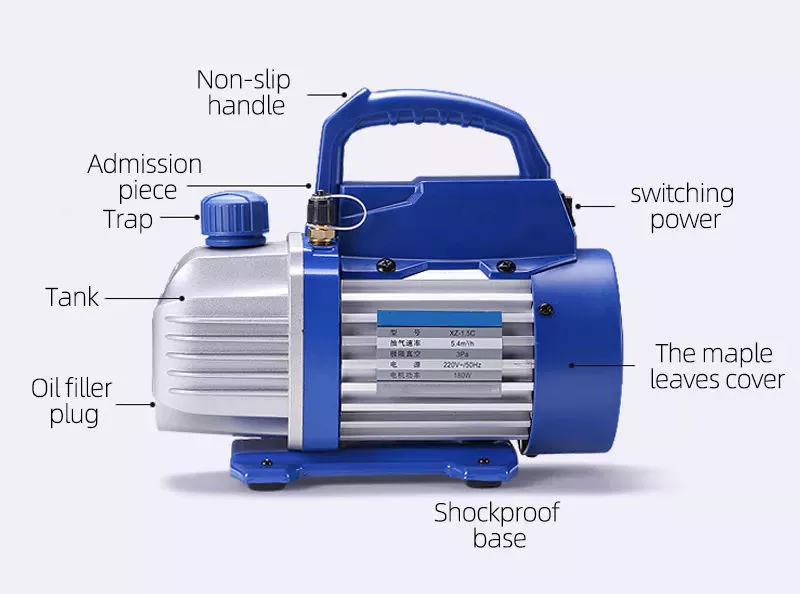
วิธีการทำงาน
ปั๊มสุญญากาศเป็นอุปกรณ์เชิงกลที่กำจัดแก๊สออกจากระบบโดยการเพิ่มความดันให้สูงกว่าความดันบรรยากาศโดยรอบ หลักการทำงานของปั๊มสุญญากาศนั้นอยู่บนพื้นฐานของหลักการถ่ายเทและการกักเก็บแก๊ส ปั๊มสุญญากาศสามารถจำแนกได้ตามระดับสุญญากาศและจำนวนโมเลกุลที่สามารถกำจัดได้ต่อลูกบาศก์เซนติเมตรของพื้นที่ ในระดับสุญญากาศปานกลางถึงสูง จะเกิดการไหลแบบหนืดเมื่อโมเลกุลของแก๊สชนกัน การเพิ่มระดับสุญญากาศจะทำให้เกิดการไหลแบบโมเลกุลหรือการไหลแบบเปลี่ยนผ่าน
ปั๊มสุญญากาศมีส่วนประกอบหลายอย่างที่ทำให้เป็นเครื่องมืออเนกประสงค์ ส่วนประกอบหลักอย่างหนึ่งคือมอเตอร์ ซึ่งประกอบด้วยโรเตอร์และสเตเตอร์ โรเตอร์และสเตเตอร์มีขดลวดที่สร้างสนามแม่เหล็กเมื่อได้รับพลังงาน ทั้งสองส่วนต้องติดตั้งบนฐานที่รองรับน้ำหนักของปั๊ม นอกจากนี้ยังมีท่อระบายน้ำมันที่หมุนเวียนน้ำมันไปทั่วระบบเพื่อหล่อลื่นและระบายความร้อน
ปั๊มสุญญากาศอีกประเภทหนึ่งคือปั๊มสุญญากาศแบบวงแหวนของเหลว หลักการทำงานคือการวางใบพัดไว้เหนือหรือใต้ใบมีด ปั๊มแบบวงแหวนของเหลวยังสามารถปรับความเร็วของใบพัดได้ด้วย อย่างไรก็ตาม หากคุณวางแผนที่จะใช้ปั๊มประเภทนี้ ควรปรึกษาผู้เชี่ยวชาญก่อน
ปั๊มสุญญากาศทำงานโดยการเคลื่อนย้ายโมเลกุลของก๊าซไปยังบริเวณที่มีความดันสูงหรือต่ำกว่า เมื่อความดันลดลง การกำจัดโมเลกุลก็จะยากขึ้น ระบบสุญญากาศในอุตสาหกรรมต้องการปั๊มที่สามารถทำงานได้ในช่วงความดัน 1 ถึง 10⁻⁶ Torr
พิมพ์
ปั๊มสุญญากาศมีหลายประเภท มีการใช้งานหลากหลาย เช่น ในห้องปฏิบัติการ จุดประสงค์หลักของปั๊มเหล่านี้คือการกำจัดโมเลกุลของอากาศหรือก๊าซออกจากห้องสุญญากาศ ปั๊มแต่ละประเภทใช้เทคนิคที่แตกต่างกันเพื่อให้บรรลุเป้าหมายนี้ บางชนิดใช้หลักการแทนที่เชิงบวก ในขณะที่บางชนิดใช้เทคนิควงแหวนของเหลว การถ่ายโอนโมเลกุล และการดักจับ
ปั๊มเหล่านี้บางส่วนใช้ในกระบวนการทางอุตสาหกรรม รวมถึงการผลิตหลอดสุญญากาศ จอ CRT หลอดไฟ และกระบวนการผลิตเซมิคอนดักเตอร์ นอกจากนี้ยังใช้ในยานยนต์เพื่อขับเคลื่อนชิ้นส่วนไฮดรอลิกและเครื่องบิน โดยปกติแล้วไจโรสโคปจะถูกควบคุมโดยปั๊มเหล่านี้ ในบางกรณี ปั๊มเหล่านี้ยังใช้ในทางการแพทย์อีกด้วย
หลักการทำงานของปั๊มสุญญากาศขึ้นอยู่กับชนิดของก๊าซที่ถูกสูบ โดยมีอยู่ 3 ประเภทหลัก ได้แก่ ปั๊มแบบปริมาตรคงที่ ปั๊มแบบปริมาตรลบ และปั๊มแบบถ่ายโอนโมเมนตัม นอกจากนี้ ยังสามารถแบ่งหลักการเหล่านี้ออกเป็นประเภทของปั๊มต่างๆ ได้อีก ขึ้นอยู่กับชนิดของสารหล่อลื่น เช่น ปั๊มสุญญากาศแบบแห้งจะมีความไวต่อก๊าซและไอระเหยน้อยกว่า
ปั๊มสุญญากาศอีกประเภทหนึ่งเรียกว่า ปั๊มใบพัดหมุน (Rotary Vane Pump) ปั๊มประเภทนี้มีส่วนประกอบหลักสองส่วน คือ โรเตอร์และห้องสุญญากาศ ปั๊มเหล่านี้ทำงานโดยการหมุนชิ้นส่วนที่เคลื่อนที่ได้ไปกระทบกับตัวเรือนปั๊ม พื้นผิวสัมผัสของปั๊มใบพัดหมุนได้รับการออกแบบให้มีช่องว่างเล็กน้อยมากเพื่อป้องกันการรั่วไหลของของเหลวไปยังด้านที่มีแรงดันต่ำ ปั๊มประเภทนี้เหมาะสำหรับงานสุญญากาศที่ต้องการการสั่นสะเทือนต่ำและอัตราการไหลต่อเนื่องสูง อย่างไรก็ตาม ไม่เหมาะสำหรับใช้กับวัสดุบดละเอียด
ปั๊มสุญญากาศมีหลายประเภท และสิ่งสำคัญคือต้องเลือกปั๊มที่เหมาะสมกับการใช้งาน ประเภทของปั๊มขึ้นอยู่กับความต้องการและวัตถุประสงค์ของระบบ ปั๊มขนาดใหญ่สามารถทำงานได้อย่างต่อเนื่อง ในขณะที่ปั๊มขนาดเล็กเหมาะสำหรับการใช้งานเป็นช่วงๆ 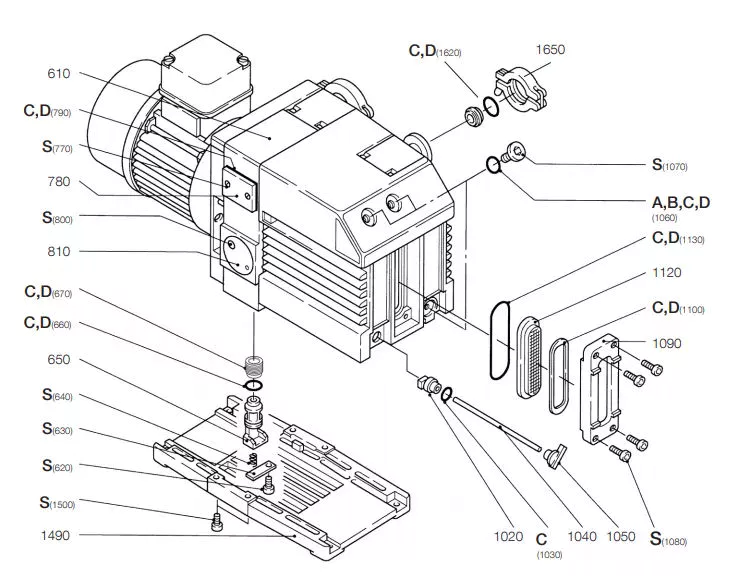
นำมาใช้
ปั๊มสุญญากาศถูกนำไปใช้ในกระบวนการทางอุตสาหกรรมและวิทยาศาสตร์หลากหลายประเภท ตัวอย่างเช่น ใช้ในการผลิตหลอดสุญญากาศ จอ CRT และหลอดไฟ นอกจากนี้ยังใช้ในกระบวนการผลิตเซมิคอนดักเตอร์ ปั๊มสุญญากาศยังใช้เป็นอุปกรณ์ช่วยพยุงทางกลสำหรับอุปกรณ์อื่นๆ ตัวอย่างเช่น อาจมีปั๊มสุญญากาศหลายตัวในเครื่องยนต์ของยานยนต์ที่ใช้ขับเคลื่อนส่วนประกอบไฮดรอลิกของเครื่องบิน นอกจากนี้ยังมักใช้ในการวิจัยฟิวชั่นด้วย
ปั๊มสุญญากาศชนิดที่ใช้กันทั่วไปในห้องปฏิบัติการคือปั๊มแบบใบพัดหมุน (Rotary Vane Pump) หลักการทำงานคือการส่งกระแสลมผ่านใบพัดหมุนหลายใบในตัวเรือนทรงกลม เมื่อใบพัดเคลื่อนที่ผ่านตัวเรือน จะดูดก๊าซออกจากช่องว่างและสร้างสุญญากาศ ปั๊มแบบใบพัดหมุนมักมีขั้นตอนเดียวหรือสองขั้นตอน และสามารถรับแรงดันได้ระหว่าง 10 ถึง 6 บาร์ นอกจากนี้ยังมีอัตราการสูบจ่ายสูงอีกด้วย
ปั๊มสุญญากาศยังใช้ในการผลิตเซลล์แสงอาทิตย์บนแผ่นเวเฟอร์ ซึ่งเกี่ยวข้องกับกระบวนการต่างๆ เช่น การเจือสาร การแพร่ การกัดแบบแห้ง การตกตะกอนไอสารเคมีแบบเสริมด้วยพลาสมา และการสร้างผงจำนวนมาก การใช้งานเหล่านี้ขึ้นอยู่กับประเภทของปั๊มสุญญากาศที่ใช้ในกระบวนการ และปั๊มสุญญากาศที่เลือกควรได้รับการออกแบบให้เหมาะสมกับสภาพแวดล้อม
แม้ว่าจะมีปั๊มสุญญากาศหลายประเภทให้เลือกใช้ แต่หลักการทำงานพื้นฐานยังคงเหมือนเดิม แต่ละประเภทมีฟังก์ชันและกำลังการผลิตที่แตกต่างกัน ขึ้นอยู่กับประเภทของสุญญากาศ โดยทั่วไปแบ่งออกเป็น ปั๊มแบบปริมาตรคงที่ ปั๊มแบบใบพัดหมุน ปั๊มแบบวงแหวนของเหลว และปั๊มแบบส่งโมเลกุล
การซ่อมบำรุง
ผู้รับผิดชอบการบำรุงรักษาและการซ่อมแซมทั่วไปคือหัวหน้าโครงการวิจัย (Principal Investigator: PI) ต้องปฏิบัติตามและได้รับการอนุมัติจาก PI และบุคลากรห้องปฏิบัติการที่เกี่ยวข้อง Agknx ให้แนวทางสำหรับการบำรุงรักษาอุปกรณ์ปั๊มสุญญากาศเป็นประจำ Agknx ไม่ได้มีวัตถุประสงค์เพื่อทดแทนการตรวจสอบอุปกรณ์ปั๊มสุญญากาศอย่างละเอียดเป็นประจำ ซึ่งควรดำเนินการโดยช่างผู้ชำนาญการที่ได้รับการรับรอง/มีคุณสมบัติ หากอุปกรณ์ทำงานผิดปกติ ผู้ใช้ควรติดต่อ PI หรือ RP เพื่อขอความช่วยเหลือ
ขั้นแรก ตรวจสอบปั๊มสุญญากาศว่ามีชิ้นส่วนใดหลวมหรือไม่ ตรวจสอบให้แน่ใจว่าเกจวัดแรงดันขาเข้าและขาออกเปิดอยู่ เมื่อแสดงแรงดันที่ถูกต้องแล้ว ให้เปิดวาล์วประตู นอกจากนี้ ตรวจสอบแรงดันและอัตราการไหลของปั๊มสุญญากาศ อัตราการไหลและแรงดันควรอยู่ในช่วงที่ระบุไว้บนฉลาก อุณหภูมิของแบริ่งควรอยู่ภายใน 35°F และอุณหภูมิสูงสุดไม่ควรเกิน 80°F ควรเปลี่ยนบูชของปั๊มสุญญากาศเมื่อสึกหรออย่างรุนแรง
หากปั๊มสุญญากาศมีสภาวะการทำงานผิดปกติหลายครั้ง ควรทำการทดสอบประสิทธิภาพ และเปรียบเทียบผลลัพธ์กับค่าอ้างอิงเพื่อระบุความผิดปกติ การบำรุงรักษาเชิงป้องกันอย่างเป็นระบบจึงมีความสำคัญอย่างยิ่งเพื่อหลีกเลี่ยงการชำรุดของปั๊มก่อนกำหนด นี่เป็นเรื่องใหม่ในอุตสาหกรรมเซมิคอนดักเตอร์ แต่บริษัทเซมิคอนดักเตอร์ชั้นนำและผู้ผลิตปั๊มสุญญากาศรายใหญ่ยังคงต้องพัฒนาระบบที่สอดคล้องกันต่อไป
มีการเสนอวิธีการทดสอบการลดแรงดันแบบง่ายเพื่อประเมินประสิทธิภาพของปั๊มสุญญากาศ วิธีการนี้ประกอบด้วยการทดสอบภาคสนามจำลองการเติมอากาศและตัวชี้วัดประสิทธิภาพของปั๊มสี่ตัว ตัวชี้วัดประสิทธิภาพจะได้รับการประเมินภายใต้สภาวะการทดสอบที่มีก๊าซบรรจุ สภาวะขณะไม่ได้ใช้งาน และสภาวะการทดสอบที่ขึ้นอยู่กับปริมาณก๊าซบรรจุ 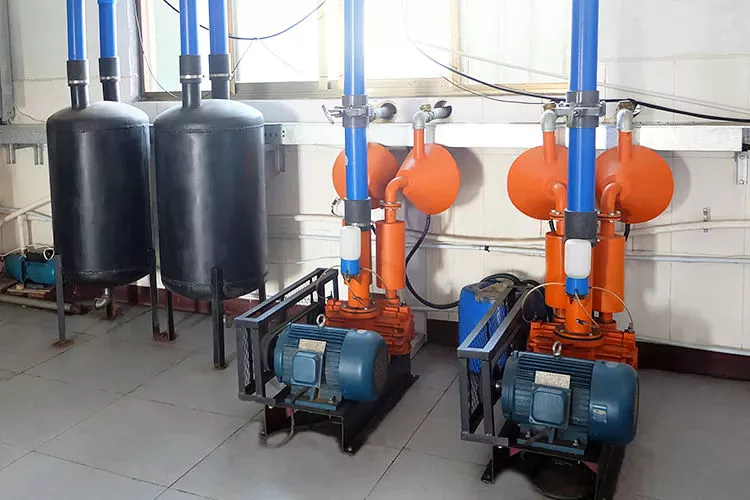
ค่าใช้จ่าย
ต้นทุนรวมของปั๊มสุญญากาศประกอบด้วยสองส่วนหลัก ได้แก่ การลงทุนเริ่มต้นและค่าบำรุงรักษาอย่างต่อเนื่อง โดยส่วนหลังเป็นส่วนประกอบที่แพงที่สุด เนื่องจากมีค่าใช้จ่ายประมาณสี่ถึงห้าเท่าของการลงทุนเริ่มต้น ดังนั้น การเลือกใช้รุ่นที่ประหยัดพลังงานมากกว่าจึงเป็นวิธีที่ดีในการลดต้นทุนรวมของระบบและระยะเวลาคืนทุน
ต้นทุนเริ่มต้นของปั๊มสุญญากาศอยู่ที่ประมาณ $786 ปั๊มแบบโรตารี่ใบพัดที่ใช้น้ำมันหล่อลื่นมีราคาถูกที่สุด ในขณะที่ปั๊มแบบโรตารี่ใบพัดที่ไม่ใช้น้ำมันหล่อลื่นมีราคาแพงกว่าเล็กน้อย ปั๊มแบบไม่สัมผัสก็มีราคาสูงกว่าเล็กน้อยเช่นกัน ต้นทุนของปั๊มสุญญากาศนั้นไม่สูง แต่เป็นปัจจัยที่ต้องพิจารณาอย่างรอบคอบ
ในการเลือกปั๊มสุญญากาศ สิ่งสำคัญคือต้องพิจารณาประเภทของก๊าซที่ต้องการสูบ ปั๊มบางชนิดเหมาะสำหรับการสูบอากาศเท่านั้น ในขณะที่บางชนิดออกแบบมาเพื่อสูบฮีเลียม อากาศที่ปราศจากน้ำมันมีอัตราการสูบที่แตกต่างจากอากาศ ดังนั้น คุณต้องพิจารณาคุณลักษณะของตัวกลางเพื่อให้แน่ใจว่าปั๊มตรงตามความต้องการของคุณ ต้นทุนของปั๊มสุญญากาศอาจสูงกว่าราคาซื้อมาก เนื่องจากค่าใช้จ่ายในการใช้งานและการบำรุงรักษาในแต่ละวันอาจสูงกว่ามาก
ปั๊มสุญญากาศแบบหล่อลื่นมักทนทานกว่าและราคาถูกกว่า แต่ก็อาจต้องการการบำรุงรักษามากกว่า ค่าใช้จ่ายในการบำรุงรักษาจะขึ้นอยู่กับชนิดของก๊าซที่ต้องสูบ ก๊าซที่เบากว่าต้องสูบช้าๆ ในขณะที่ก๊าซที่หนักกว่าต้องสูบเร็วขึ้น ระดับการบำรุงรักษาของปั๊มสุญญากาศยังขึ้นอยู่กับความถี่ในการหล่อลื่นด้วย
ปั๊มสุญญากาศแบบไดอะแฟรมจำเป็นต้องได้รับการบำรุงรักษาและเปลี่ยนถ่ายน้ำมันอย่างสม่ำเสมอ ควรเปลี่ยนถ่ายน้ำมันในปั๊มไดอะแฟรมทุกๆ 3000 ชั่วโมงการใช้งาน ปั๊มชนิดนี้ทนต่อสารเคมีและการกัดกร่อนได้ดี ดังนั้นจึงสามารถใช้กับผลิตภัณฑ์ที่เป็นกรดและมีความหนืดสูงได้


editor by czh 2023-03-27