Descripción del artículo
Water ring pumps were initially utilised as self-priming pumps. It is composed of impeller, pump entire body, suction and exhaust disk, drinking water ring formed in the pump entire body wall, suction port, exhaust port, auxiliary exhaust valve and so on.
Drinking water ring pump method
Drinking water ring pump method (4 sheets)
In numerous procedures of industrial manufacturing, this sort of as vacuum filtration, vacuum h2o diversion, vacuum feeding, vacuum evaporation, vacuum focus, vacuum regathering and vacuum degassing, drinking water ring pump has been broadly utilised. Because of the fast development of vacuum application technological innovation, h2o ring pump has been paid far more attention to the crude vacuum acquisition. Because the gasoline compression in the h2o ring pump is isothermal, it can remove flammable and explosive gases, in addition to the elimination of dust, water containing gasoline, therefore, the application of h2o ring pump is escalating.
The pump entire body is geared up with an acceptable amount of h2o as the operating liquid. When the impeller rotates clockwise, the water is thrown around by the impeller. Due to the centrifugal drive, the water forms a shut ring of around equivalent thickness, which is decided by the condition of the pump cavity. The lower interior surface area of the drinking water ring is just tangent to the impeller hub, and the higher interior area of the water ring is just in contact with the leading of the blade (in simple fact, the blade has a certain insertion depth in the h2o ring). At this point, a crescent-shaped place is fashioned between the impeller hub and the drinking water ring, and this space is divided into several small cavities equal to the variety of blades by the impeller. If the lower portion of the impeller 0° as the starting point, then the impeller in the rotation of 180° ahead of the quantity of the tiny cavity from little to massive, and connected with the suction port on the finish experience, at this time the gas is inhaled, when the conclude of the suction tiny cavity is isolated from the suction port When the impeller continues to rotate, the small cavity from big to tiny, so that the fuel is compressed When the small cavity is related with the exhaust port, the fuel will be discharged from the pump.
To sum up, the drinking water ring pump relies on the modify of the pump chamber volume to accomplish suction, compression and exhaust, so it belongs to the variable-volume vacuum pump.
The impeller is installed in the pump physique eccentrically. When the impeller rotates, the h2o moving into the pump body is thrown all around by the impeller. Owing to the centrifugal pressure, the drinking water forms a closed drinking water ring of equivalent thickness comparable to the shape of the pump cavity. The upper interior surface of the water ring is just tangent to the wheel hub of the impeller, and the lower interior surface area of the water ring is just in contact with the prime of the blade. At this stage, a crescent-shaped room is formed amongst the impeller hub and the water ring, and this space is divided into many modest cavities equal to the amount of blades by the impeller. If the upper portion of the impeller ° as commencing point, and then in entrance of the rotating impeller, one hundred eighty °, the little cavity volume slowly changed from modest to big, the stress reduced consistently, and the mines with suction mouth of the suction or discharge tray, when the pressure within the small cavity area is less than the strain of the pump container, in accordance to the theory of balance of gasoline force, the gasoline is pumped proceeds to be attract in tiny cavity, is in the procedure of suction. When the suction is accomplished with the suction port isolation, the volume of the tiny chamber is steadily decreasing, the stress is escalating, at this time is in the compression method, when the compressed fuel reached the exhaust force in advance, from the auxiliary exhaust valve in advance. From the area, interlinked with vent modest cavity quantity additional reduce the pressure increase even more, when the gasoline force is higher than the exhaust stress, the compressed air to escape from the vent is in the procedure of the ongoing procedure of the pump, repeatedly carrying on the suction, compression, exhaust approach, so as to obtain the purpose of continuous extraction.
positive aspects
Straightforward construction, reduced producing precision demands, easy to process.
Compact framework, substantial pump revolution, normally can be immediately related with the motor, no reduction device. For that reason, with little composition size, big displacement can be received, and the flooring spot is also little.
Compressed fuel is basically isothermal, that is, the temperature of compressed gasoline adjustments extremely minor.
Since there is no metallic friction floor in the pump cavity, there is no want to lubricate the pump, and the dress in is very modest. Sealing amongst rotating elements and fastened elements can be accomplished directly by h2o sealing.
Even suction, steady and dependable function, straightforward operation, convenient routine maintenance.
Typical faults and troubleshooting methods
Initial, vacuum pump degree is not adequate
Feasible causes: Insufficient motor electricity provide prospects to inadequate velocity. Inadequate drinking water offer The gap amongst the impeller and the distribution plate is as well huge Mechanical seal damage resulting in drinking water leakage Impeller wear as well much Circulating drinking water cannot be drained.
Elimination method: examine regardless of whether the electrical power offer voltage is within the rated voltage variety of the motor Enhance drinking water supply (have to be controlled in the proper selection, normally it will direct to motor overload heating) Adjust the clearance in between impeller and distribution plate (normally .fifteen-.20mm) Replace the mechanical seal Substitute the impeller Verify the drinking water outlet piping.
Two, can not start or commence the sound
Feasible triggers: The power provide voltage of the motor is insufficient. Motor phase failure operation The pump is not used for a extended time, resulting in corrosion Pump suction particles Impeller drag distribution plate.
Troubleshooting approach: Check regardless of whether the power provide voltage is as well low Check regardless of whether the motor wiring is firm If the pump does not direct to corrosion for a extended time, you can insert a rust remover or open the pump protect to artificially get rid of rust Open the pump cover to get rid of particles Modify the length among impeller and distribution plate.
3, motor overheating
Possible leads to: too much water supply prospects to motor overload Motor stage loss The vent is blocked The impeller drags other parts.
Elimination technique: lessen the drinking water supply to the regular assortment (refer to the pump’s operating recommendations for liquid source) Verify whether or not the wiring is firm Check the exhaust port Open the pump cover to adjust the clearance between impeller and other areas.
Four, insufficient movement
Achievable causes: Pipe leakage Resistance decline will increase
Elimination method: check the mechanical seal at the joint Check pipes and check valves for faults.
Normal routine maintenance
(1) In normal function, consideration should be compensated to check out the functioning and lubrication of bearings. The temperature (bearing and outer circle) is typically 15ºC ~ 20ºC greater than the ambient temperature, and the highest temperature is not authorized to exceed 30ºC ~ 35ºC, that is, the genuine temperature at the outer circle of the bearing frame ought to not exceed 55ºC ~ 60ºC The regular working bearings must be refuelled 3 ~ 4 moments a 12 months, the bearings should be cleaned at least as soon as a year, and all the lubricating oil should be changed.
(2) In standard work, the packing must be pressed frequently. If the packing can’t guarantee the necessary sealing functionality thanks to put on, the new packing ought to be replaced. If the mechanical seal is employed and leakage is located, check out whether or not the static and static ring of the mechanical seal is broken or the auxiliary seal is aging. In these kinds of situations, new parts must be replaced.
(3) In the appearance of unique sound, can eliminate the strain plate on the 2 finishes of the include, verify no matter whether the 2 stop faces of the impeller and the distributor are broken, but also check out no matter whether the exhaust valve plate is typical.
Selection criteria
1, water ring pump vacuum specifications unit 2, drinking water ring pump pumping speed demands 3, drinking water ring pump running circumstances 4, h2o ring pump motor power 5, drinking water ring pump voltage demands 6, drinking water ring pump material specifications.
Issues needing interest
Take away the
Prior to disassembly, the drinking water in the pump cavity must be unveiled, and the fuel-drinking water separator and suction tube components need to be eliminated. In the procedure of disassembly, all the gaskets must be very carefully eliminated. If there is injury, the identical gasket must be replaced. The pump shall be taken off from the rear finish (with out coupling or pulley stop) in the subsequent get:
(1) Get rid of the rear shaft bearing cap, loosen the 2 round nuts with hook hand, take away the bearing seat and bearing
(2) Loosen the packing gland nut and get rid of the packing gland
(3) get rid of the hexagonal bolt connecting the pump go over and the pump body and the bolt at the base foot of the pump protect, take away the again end cover
(4) eliminate the pump entire body
(5) Loosen the foot bolt at the other stop
(6) take away the coupling and get rid of the important on the shaft
(7) Get rid of the bearing elements just before
(8) Get rid of the front finish protect and take away the shaft and impeller with each other.
After disassembly, the elements must be coated with oil on the mating surface, thread must also be coated with oil to safeguard.
|
/ Colocar | |
1 juego (Pedido mínimo) |
###
| Servicio postventa: | Un año |
|---|---|
| Garantía: | Un año |
| Aceite o no: | Sin aceite |
| Estructura: | Bomba de vacío rotativa |
| Método de extracción: | Bomba de desplazamiento positivo |
| Grado de vacío: | Bajo vacío |
|
/ Colocar | |
1 juego (Pedido mínimo) |
###
| Servicio postventa: | Un año |
|---|---|
| Garantía: | Un año |
| Aceite o no: | Sin aceite |
| Estructura: | Bomba de vacío rotativa |
| Método de extracción: | Bomba de desplazamiento positivo |
| Grado de vacío: | Bajo vacío |
Conocimientos básicos de la bomba de vacío
Una bomba de vacío es un dispositivo que extrae moléculas de gas de un volumen sellado y mantiene un vacío parcial. Su función principal es crear un vacío relativo dentro de un volumen o volúmenes determinados. Existen muchos tipos de bombas de vacío. Este artículo describirá su funcionamiento, sus tipos y sus aplicaciones. 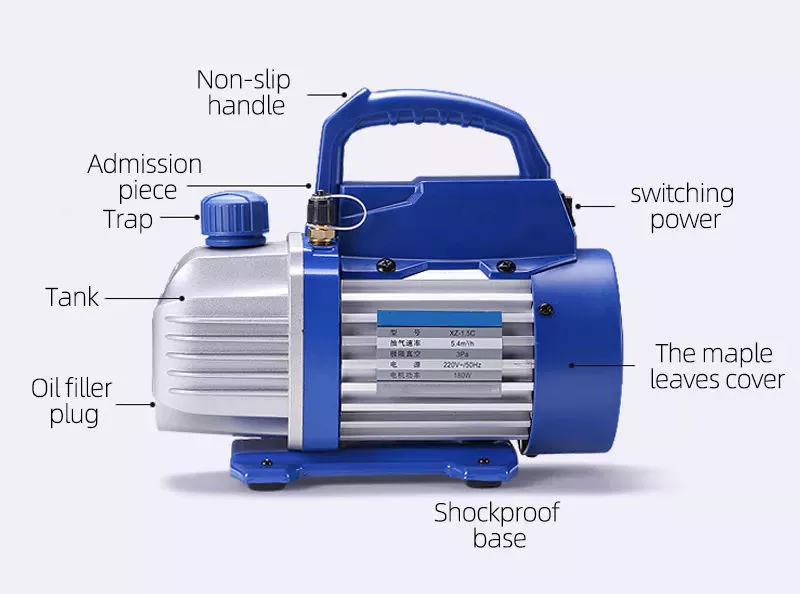
Cómo funciona
Una bomba de vacío es un dispositivo mecánico que extrae gas de un sistema aplicándolo a una presión superior a la de la atmósfera circundante. Su principio de funcionamiento se basa en el principio de transferencia y atrapamiento de gases. Las bombas de vacío se clasifican según su nivel de vacío y la cantidad de moléculas que pueden extraer por centímetro cúbico de espacio. En vacíos medios y altos, el flujo viscoso se produce cuando las moléculas de gas colisionan entre sí. El aumento del vacío provoca un flujo molecular o de transición.
Una bomba de vacío tiene varios componentes que la convierten en una herramienta versátil. Uno de los componentes principales es el motor, que consta de un rotor y un estator. El rotor y el estator contienen bobinas que generan un campo magnético al ser excitados. Ambas piezas deben montarse sobre una base que soporte el peso de la bomba. También cuenta con un drenaje de aceite que lo hace circular por todo el sistema para lubricación y refrigeración.
Otro tipo de bomba de vacío es la bomba de vacío de anillo líquido. Funciona colocando el impulsor por encima o por debajo de las aspas. Las bombas de anillo líquido también pueden ajustar la velocidad del impulsor. Sin embargo, si planea utilizar este tipo de bomba, es recomendable consultar con un especialista.
Las bombas de vacío funcionan desplazando moléculas de gas a zonas de mayor o menor presión. A medida que la presión disminuye, la eliminación de las moléculas se vuelve más difícil. Los sistemas de vacío industriales requieren bombas capaces de operar en el rango de 1 a 10⁻¹ Torr.
Tipo
Existen diferentes tipos de bombas de vacío. Se utilizan en diversas aplicaciones, como en laboratorios. Su principal objetivo es extraer moléculas de aire o gas de la cámara de vacío. Cada tipo de bomba utiliza diferentes técnicas para lograrlo. Algunas utilizan desplazamiento positivo, mientras que otras emplean técnicas de anillo líquido, transferencia molecular y atrapamiento.
Algunas de estas bombas se utilizan en procesos industriales, como la fabricación de tubos de vacío, tubos de rayos catódicos (TRC), lámparas eléctricas y el procesamiento de semiconductores. También se emplean en vehículos de motor para impulsar componentes hidráulicos y aeronaves. El giroscopio suele controlarse mediante estas bombas. En algunos casos, también se utilizan en entornos médicos.
El funcionamiento de una bomba de vacío depende del tipo de gas que se bombea. Existen tres tipos principales: de desplazamiento positivo, de desplazamiento negativo y de transferencia de momento. Según el tipo de lubricación, estos principios pueden subdividirse en diferentes tipos de bombas. Por ejemplo, las bombas de vacío secas son menos sensibles a los gases y vapores.
Otro tipo de bomba de vacío se denomina bomba rotativa de paletas. Este tipo de bomba consta de dos componentes principales: el rotor y la cámara de vacío. Estas bombas funcionan girando piezas móviles contra la carcasa. Las superficies de contacto de las bombas rotativas están diseñadas con holguras mínimas para evitar fugas de fluido hacia el lado de baja presión. Son adecuadas para aplicaciones de vacío que requieren baja pulsación y un caudal continuo elevado. Sin embargo, no son aptas para su uso con medios de molienda.
Existen muchos tipos de bombas de vacío y es importante elegir la adecuada para su aplicación. El tipo de bomba depende de las necesidades y la finalidad del sistema. Las más grandes pueden funcionar de forma continua, mientras que las más pequeñas son más adecuadas para uso intermitente. 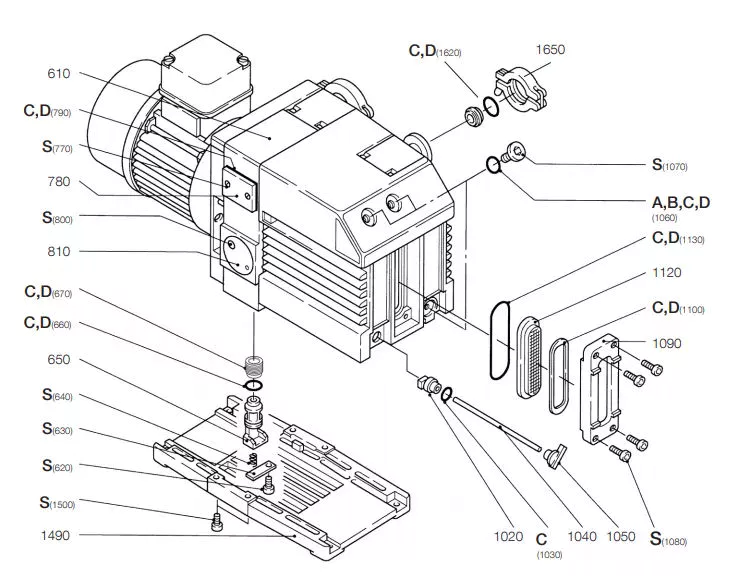
Aplicar
Las bombas de vacío se utilizan en diversos procesos industriales y científicos. Por ejemplo, se emplean en la producción de tubos de vacío, CRT y lámparas eléctricas. También se emplean en el procesamiento de semiconductores. También se utilizan como soportes mecánicos para otros equipos. Por ejemplo, puede haber varias bombas de vacío en el motor de un vehículo que impulsa los componentes hidráulicos de una aeronave. Además, se utilizan a menudo en la investigación sobre la fusión.
El tipo más común de bomba de vacío utilizada en el laboratorio es la bomba de paletas rotativas. Funciona dirigiendo el flujo de aire a través de una serie de álabes giratorios en una carcasa circular. Al atravesar la carcasa, los álabes extraen el gas de la cavidad y crean vacío. Las bombas rotativas suelen ser de una o dos etapas y admiten presiones de entre 10 y 6 bar. Además, ofrecen una alta velocidad de bombeo.
Las bombas de vacío también se utilizan para fabricar células solares en obleas. Esto implica diversos procesos, como el dopaje, la difusión, el grabado en seco, la deposición química de vapor asistida por plasma y la generación de polvo a granel. Estas aplicaciones dependen del tipo de bomba de vacío utilizada en el proceso, y la bomba de vacío elegida debe estar diseñada para el entorno.
Si bien existen varios tipos de bombas de vacío, sus principios básicos de funcionamiento son los mismos. Cada una tiene diferentes funciones y capacidades, según el tipo de vacío. Generalmente se dividen en bombas de desplazamiento positivo, bombas de paletas rotativas, bombas de anillo líquido y bombas de suministro molecular.
Mantenimiento
El responsable del mantenimiento general y las reparaciones es el Investigador Principal (IP). El Investigador Principal (IP) y el personal de laboratorio correspondiente deben seguir y aprobar las Agknxs. Estas Agknxs proporcionan directrices para el mantenimiento rutinario de las bombas de vacío. Las Agknxs no sustituyen las inspecciones rutinarias detalladas de las bombas de vacío, que deben ser realizadas por personal de servicio certificado/calificado. Si el dispositivo falla, el usuario debe contactar al Investigador Principal o al RP para obtener asistencia.
Primero, revise la bomba de vacío para detectar piezas sueltas. Asegúrese de que los manómetros de entrada y salida estén abiertos. Cuando se muestre la presión correcta, abra la válvula de compuerta. También revise la carga y el caudal de la bomba de vacío. El caudal y la carga deben estar dentro del rango indicado en la etiqueta. La temperatura del cojinete debe estar dentro de los 35 °F y la temperatura máxima no debe superar los 80 °F. El buje de la bomba de vacío debe reemplazarse si presenta desgaste excesivo.
Si la bomba de vacío ha experimentado varias condiciones de funcionamiento anormales, se debe realizar una prueba de rendimiento. Los resultados se deben comparar con los valores de referencia para identificar anomalías. Para evitar fallos prematuros de la bomba, es esencial un enfoque sistemático de mantenimiento predictivo. Este es un área relativamente nueva en la industria de los semiconductores, pero las principales empresas de semiconductores y los principales proveedores de bombas de vacío aún no han desarrollado un enfoque uniforme.
Se propone un método simplificado de prueba de vaciado por bombeo para evaluar el rendimiento de las bombas de vacío. El método incluye pruebas de campo de aireación simuladas y cuatro indicadores de rendimiento de la bomba. Las métricas de rendimiento se evalúan en condiciones de prueba con carga de gas, en reposo y dependientes de la carga de gas. 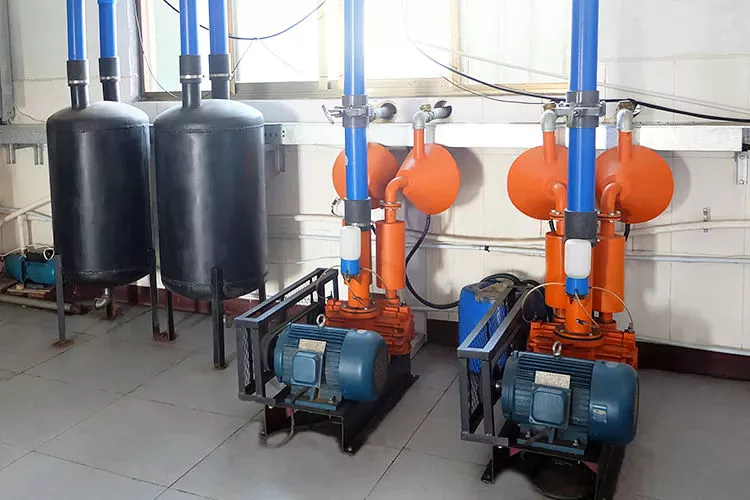
Costo
El coste total de una bomba de vacío consta de dos componentes principales: la inversión inicial y los costes de mantenimiento continuo. Este último es el componente más caro, ya que consume entre cuatro y cinco veces la inversión inicial. Por lo tanto, elegir un modelo más eficiente energéticamente es una buena manera de reducir el coste total del sistema y el periodo de amortización.
El costo inicial de una bomba de vacío es de aproximadamente $786. Las bombas de paletas rotativas lubricadas con aceite son las más económicas, mientras que las bombas de paletas rotativas sin aceite son ligeramente más caras. Las bombas sin contacto también son ligeramente más caras. El costo de una bomba de vacío no es alto, pero es un factor que debe considerarse cuidadosamente.
Al elegir una bomba de vacío, es importante considerar el tipo de gas que se bombea. Algunas bombas solo son aptas para bombear aire, mientras que otras están diseñadas para bombear helio. El aire sin aceite tiene un perfil de caudal diferente al del aire. Por lo tanto, es necesario considerar las características del medio para garantizar que la bomba cumpla con sus requisitos. El costo de una bomba de vacío puede ser mucho mayor que el precio de compra, ya que los costos diarios de funcionamiento y mantenimiento pueden ser mucho mayores.
Las bombas de vacío lubricadas suelen ser más duraderas y económicas, pero pueden requerir mayor mantenimiento. El costo del mantenimiento dependerá del tipo de gas que se bombee. Los gases más ligeros deben bombearse lentamente, mientras que los más pesados deben bombearse más rápido. El mantenimiento de una bomba de vacío también depende de la frecuencia con la que necesite lubricarse.
Las bombas de vacío de diafragma requieren mantenimiento y cambios de aceite regulares. El aceite de la bomba de diafragma debe cambiarse cada 3000 horas de uso. Además, la bomba es resistente a los productos químicos y a la corrosión, por lo que puede utilizarse con productos ácidos y viscosos.


editor by czh 2023-03-27